Photo by Scotland Huber
More than 50 artworks are sited throughout deCordova Sculpture Park and Museum in Lincoln. Some blend into towering tree groves, while others jut out from rocky hillsides or permeate the grassy lawns. The landscape plays a role in every piece and emerges as a living artwork all on its own.
“We are dedicated to the care and commissioning of sculptures that rotate through the Park, alongside the significant and enduring nature that surrounds them,” said Sarah Montross, Museum Director & Chief Curator of deCordova. “The land holds many stories and plays a leading role in how we engage with the artworks here.”
The Sculpture Park’s terrains—both naturally occurring and cultivated—are as diverse as their stories. During a single visit, you can discover the leftovers of a vanished Ice Age, towering non-native trees, and critical habitats for a diverse array of wildlife; And that’s only the first page of an extensive story.
A Cultivated Canopy of Trees
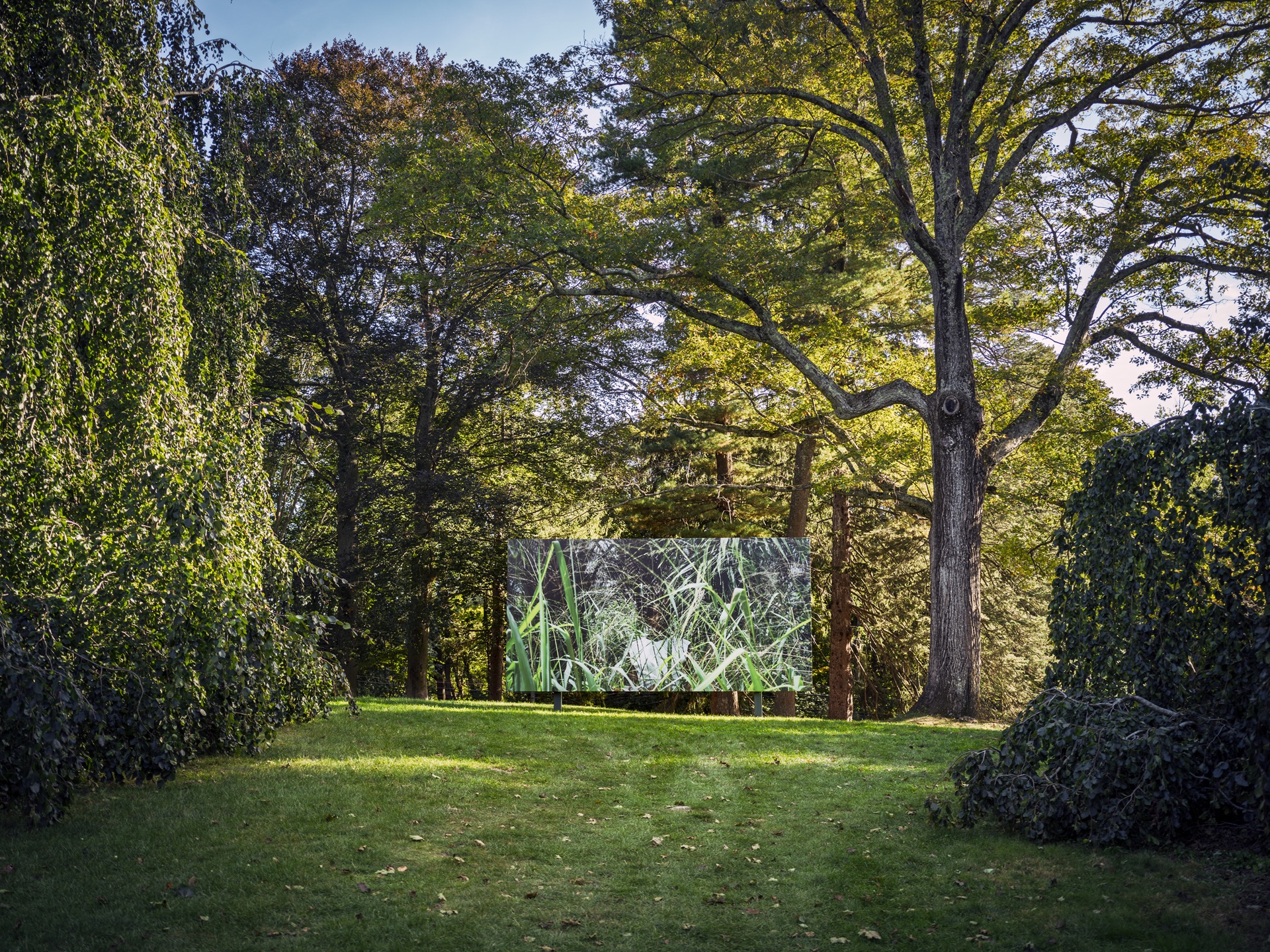
Zohra Opoku (b. 1976, lives and works in Accra, Ghana), "Sassa" from "Self-Portraits" series, 2016-ongoing, steel, billboard fabric, Courtesy of the artist and Mariane Ibrahim (Chicago, Paris, Mexico City). Photo by Alex Yudzon.
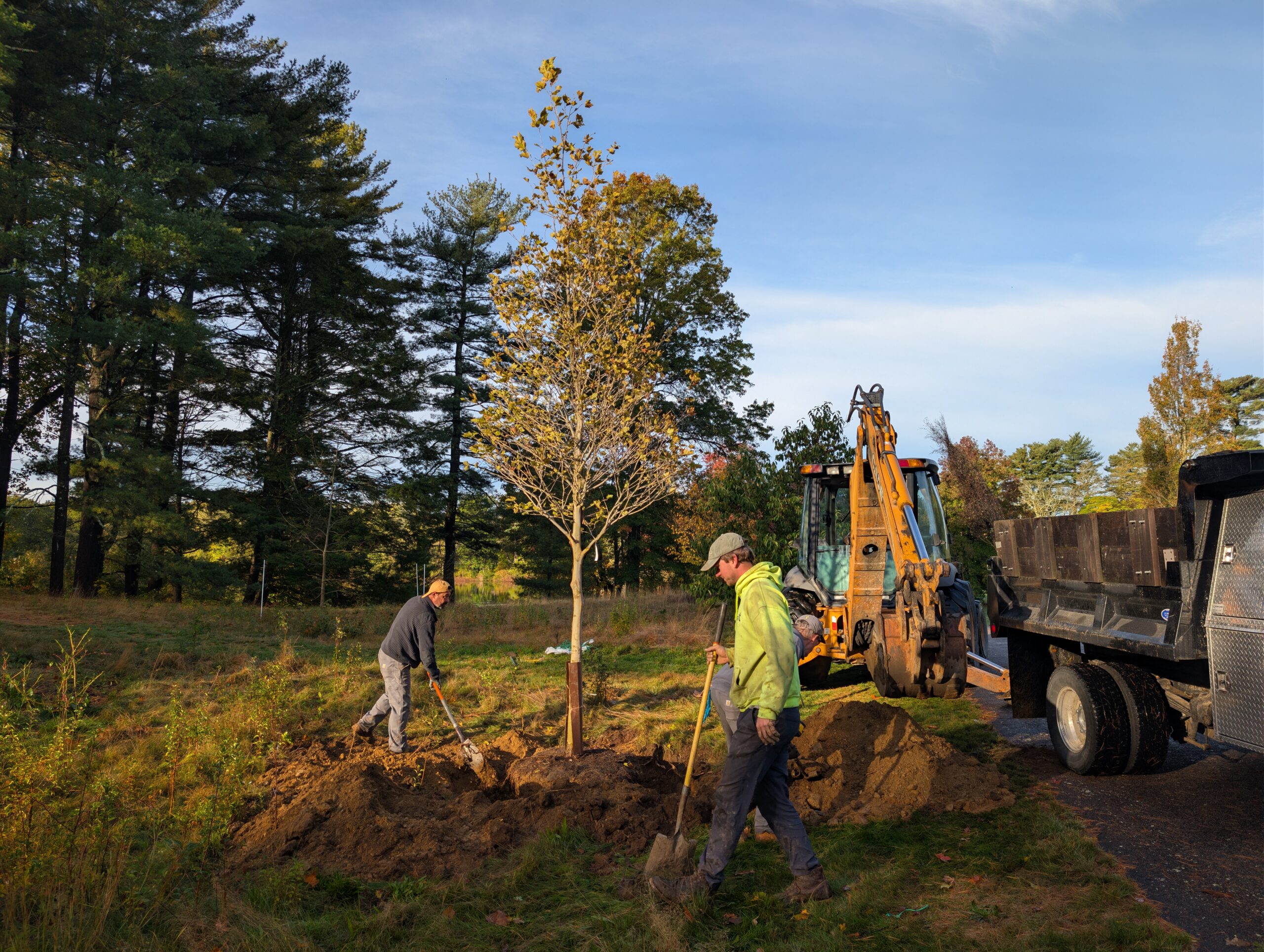
Strolling along the many pathways interlacing the Sculpture Park, winding limbs and bright colors weave throughout the canopy above from a variety of trees, many of which are not native to this landscape. It’s believed some of these mature specimens were collected during Julian de Cordova’s (1851-1945) world travels or gifts from a friend at The Arnold Arboretum of Harvard University. According to the Lincoln Tree Tour, rumors from the time suggest the trees were no longer wanted for the arboretum and thus relocated to Julian’s home in Lincoln.
“You can become easily transfixed by the umbrella-like branches of a European weeping beech, the deep purple or striking red leaves of a copper beech or Japanese maple [respectively], or the tall conical shape of a Japanese cedar,” said Montross. “We see these trees as creative forces unto themselves, and artists are often drawn to their patterns of growth and resilience, particularly those that have adapted to this landscape.
Many of these trees have established themselves as focal points not only for their own beauty, but also for complementing artworks. Appearing through one of the granite arches in Ron Rudnicki’s Rain Gates, a Japanese cedar—Japan’s national tree—stands tall with its short, soft needles arranged in a spiral pattern. Two European weeping beeches frame Zohra Opoku’s Sassa from her Self-Portraits series with their long, umbrella-like branches creating a cascading canopy.
“We sometimes think about it as the natural features complementing the artwork, or as the background, but it’s a two-way road,” said Montross. “This landscape is one of constant change—seasonally and across time—and many artists center the ecology or geology of this place through their work.”
Remnants of the Ice Age
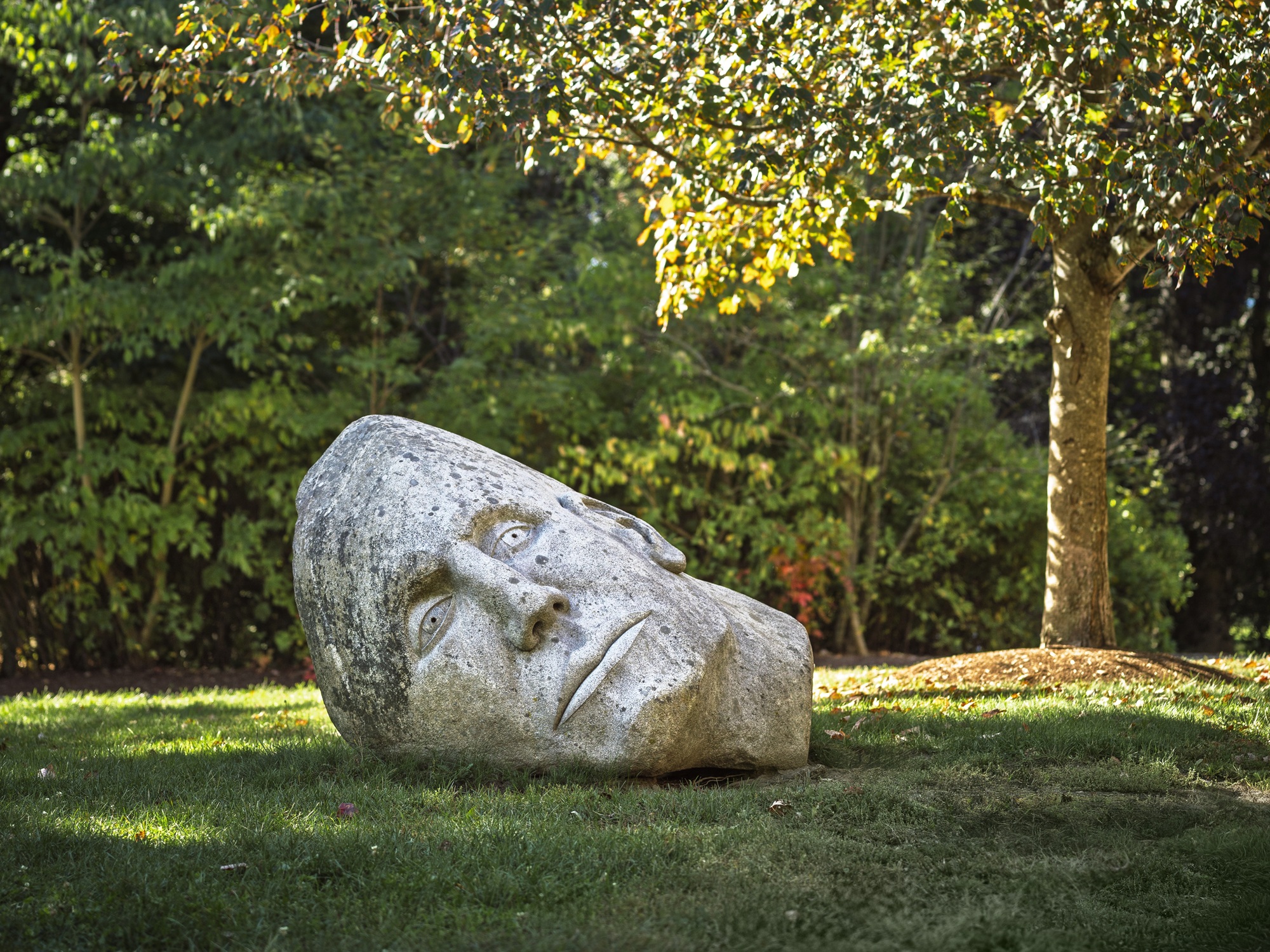
Joseph Wheelwright. "Listening Stone". 1995. Granite. 40" x 44" x 60". Photo by Alex Yudzon.
One of the reasons this extensive mix of trees can inhabit deCordova’s grounds is the sandy, well-drained, acidic soils common from glacial deposits. Traces like this from the last Ice Age are woven through the landscape when a glacier approximately half a mile thick covered Lincoln.
“The ice indiscriminately collected everything from bacteria to boulders as big as houses, slowly scraping along, carving new landscape forms in its wake,” write artists Ellie Irons and Aubrie James in the commissioned brochure and map Land Portal, which brings visitors on a walking tour to several lesser-known ecological and geological features of deCordova’s landscape.
These now-defining features are in full view in Alice’s Garden, where two large boulders appear different from the surrounding bedrock, suggesting they were carried to the site by glaciers. Artists have also embraced these icy relics; Joseph Wheelwright’s Listening Stone, sited close to the Carriage House, transforms a five‑foot‑long granite erratic into an oversized head with clearly recognizable features.
Critical Wetland Habitat
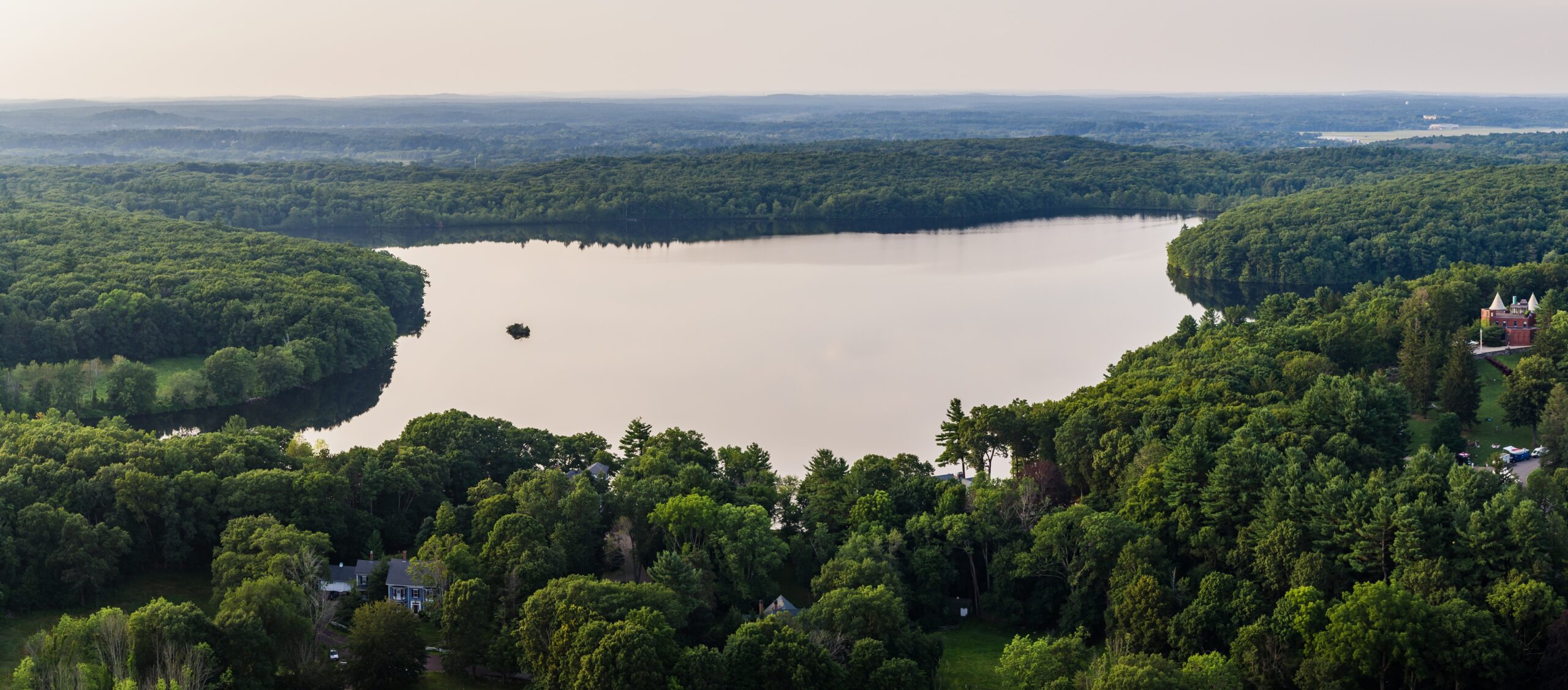
Photo by Above Summit.
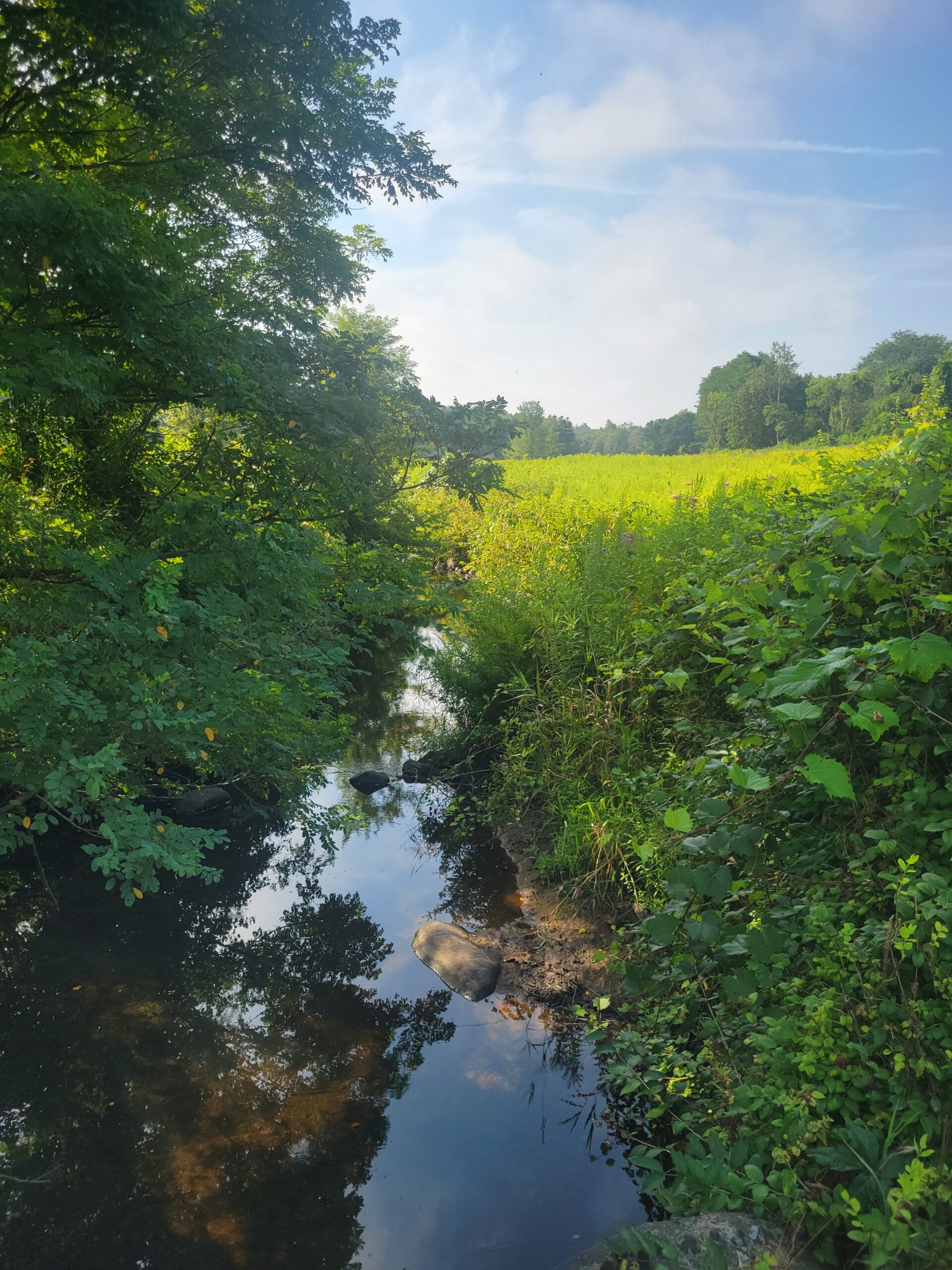
Another defining characteristic of deCordova’s landscape created by the retreating glacier—and also featured in Land Portal—is the wetlands. Years ago, an outdoor amphitheater covered a portion of this critical habitat, but today the area has been returned to nature. The wetland edges are easy to spot as the forest floor dips into softer, wetter ground; a transition marked during recent surveys with a line of numbered blue flags.
“Wetlands [like those found near deCordova] play a vital role not only for the Town but also for a variety of wildlife,” said Michele Grzenda, Conservation Director for the Town of Lincoln. “Keeping its natural qualities is essential to safeguarding our water supply, providing stormwater filtration and flood prevention, and ensuring the future of critical species in our local ecology.”
These species—including some that are rare and protected in Massachusetts—depend on these preserved wetlands, including wood frogs, yellow-spotted salamanders, eagles, and Common loons. Spring peepers also rely on these areas during breeding season when their loud, high-pitched calls welcome the arrival of warmer weather.
“We’ve seen breeding loons on Flint’s Pond in the past couple of years, something that would have been unheard of decades ago,” said Grzenda. “It shows that all the work we’ve done to better protect this pond and adjoining wetland and forested habitat is really paying off.”
Together, these highlighted natural elements only scratch the surface of the Sculpture Park’s geology and ecology. Across 30 acres, and intertwined among more than 50 artworks, are captivating landscapes, habitats, and wildlife waiting to take center stage.
Begin your exploration on your next visit to deCordova Sculpture Park and Museum in Lincoln!
Plan Your Trip