By Kyle Davi, Trustees Staff
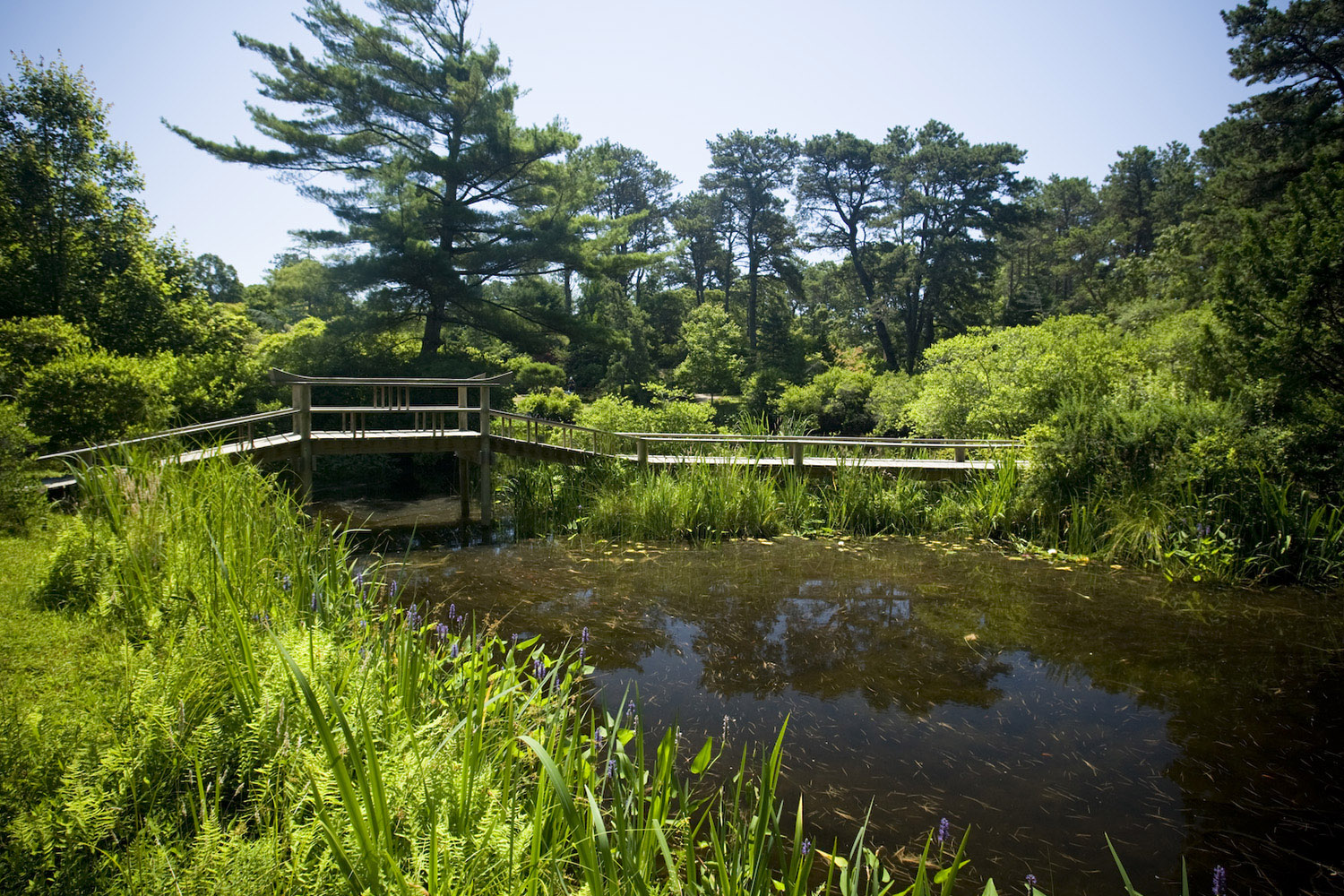
Mytoi, Chappaquiddick Island. Photo by Tom Kates.
Standing in rich contrast to the salt marshes and sandy beaches that surround it, Mytoi on Martha’s Vineyard celebrates 50 years of Trustees protection in 2026. All 14 acres of these Japanese-inspired gardens were gifted to the organization by Mary P. Wakeman (1901–1984), a conservation leader who also helped preserve nearby Wasque and parts of the adjacent Cape Poge Wildlife Refuge.
“Chappaquiddick would look very different today if it wasn’t for Mary Wakeman,” said Darci Schofield, Trustees Director of the Islands. “Not only was she generous with her own estate, but her energy and enthusiasm for protecting the land rallied a conservation movement across Martha’s Vineyard.”
Wakeman’s contributions to The Trustees—and conservation across Martha’s Vineyard—earned her the Trustees Conservation Award in 1970. Later renamed to Conservationist of the Year, the award was granted in 1997 to a similar champion all the way up on Massachusetts’ northern coast: Dr. John Ward Kimball (1931–2026).
Grandson to Charles W. Ward—after whom Ward Reservation in Andover is named—Dr. Kimball spent decades shepherding additional parcels into the now 728-acre reservation. Its sprawling landscapes and miles of trails through diverse ecological habitats more than doubled in size under Dr. Kimball’s steadfast supervision until his passing at age 95 earlier this year.
“I had the fortune to work with John for nearly 30 years as we maintained the expanding reservation together,” said Adam Rollfs, Trustees Stewardship Manager, who started at Charles W. Ward Reservation in the late 1990s. “He was extremely driven and always worked hard, including into his later years, to ensure the land was cared for properly.”
Even as total opposites in location and ecology, the special places brought under Trustees protection by Wakeman and Dr. Kimball tell a remarkably similar story of passion and persistence—one that forever impacted the landscapes both conservationists called home.
A Major Force on a Cherished Island
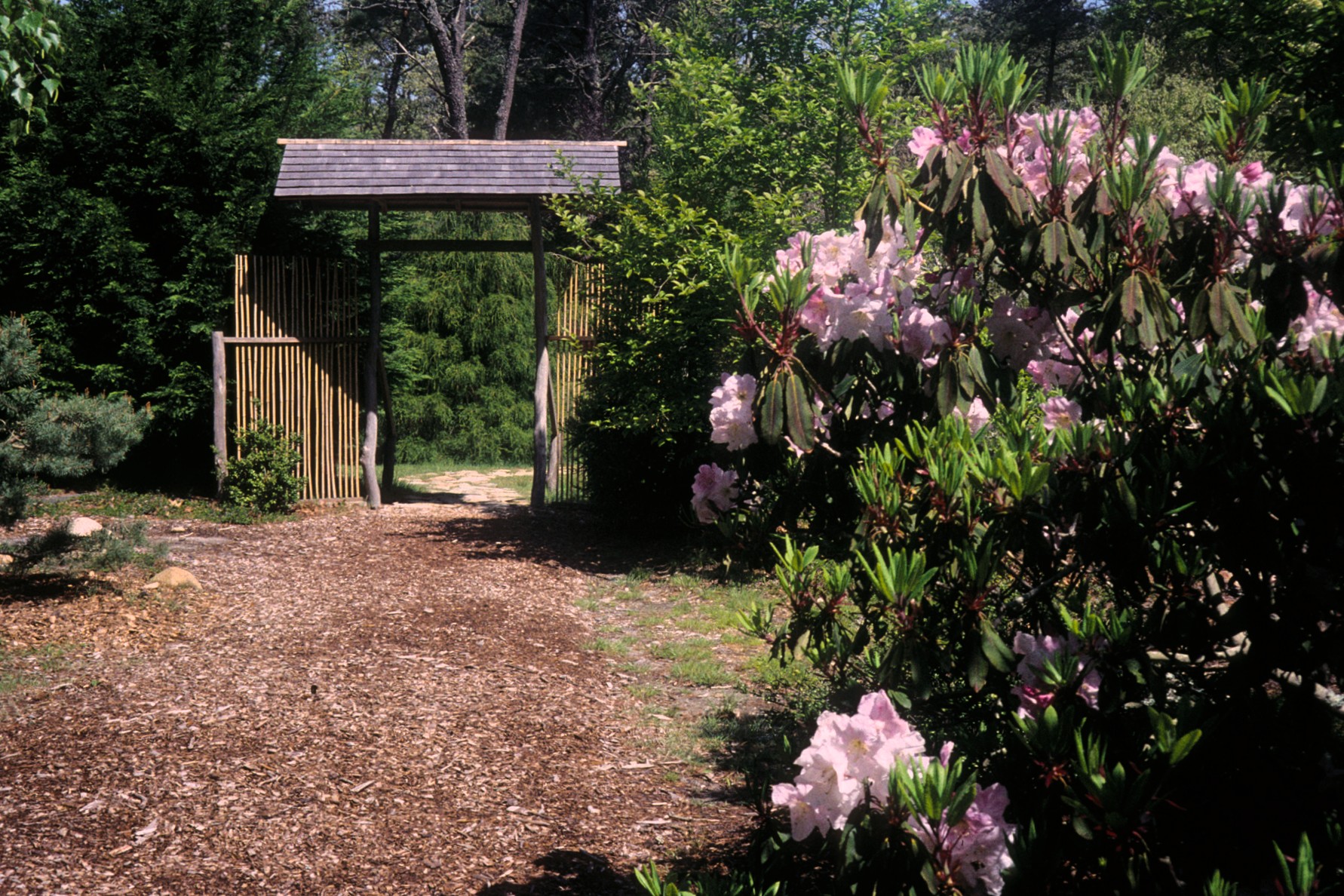
Mytoi's entrance torii, Chappaquiddick Island.
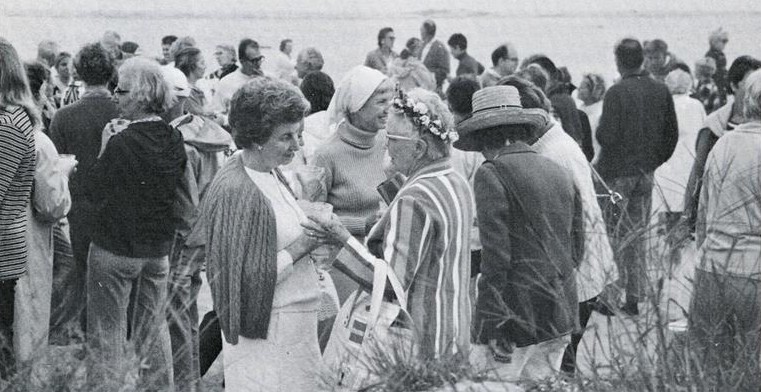
Archival image from The Trustees' 1970 Annual Report featuring a clambake at Wasque where Mary Wakeman was awarded the 1970 Trustees Conservationist Award.
“I come from a long line of farmers who loved the land [and who were] taught to take care of it,” declared Mary Wakeman, as written in the 1993 book Saving Special Places by The Trustees’ first Executive Director, Gordon Abbott, Jr.
The former Midwest resident began living full-time on Martha’s Vineyard in 1949, where she devoted the next 35 years of her life to land conservation. She became a founding trustee of both the Vineyard Open Land Foundation and the Vineyard Conservation Society. After the passing of Mytoi’s creator, Hugh Jones, his family gifted stewardship of the intricate gardens to Wakeman.
“While not a traditional Japanese garden, it’s a Chappaquiddick distillation of that Japanese aesthetic,” said Linday Allison, a Trustees Volunteer for 47 years who helped rejuvenate Mytoi after Hurricane Bob’s devastation in 1991. “In the middle of nowhere—two ferries plus a dusty dirt road away for most—there’s this amazing distillation of a unique culture you never expected to find.”
One of Allison’s favorite aspects of Mytoi is the sense of solitude and discovery it imparts on visitors. This has been a continual feature of the public garden since Wakeman took over and evolved it into a beloved oasis open for everyone to enjoy. The Trustees continues her legacy since she gifted it to the organization in 1976.
But Wakeman did more than steward the land entrusted to her—she ignited community-wide movements and actively sought out fragile landscapes to protect. Little Neck—a rookery for snowy egret and other migratory birds—was preserved as part of Cape Poge Wildlife Refuge thanks to her efforts, and she was a leader of the project to save Wasque from development in 1967.
“Mary’s house was actually the fundraising headquarters for her and Oliver D. Filley Jr.’s campaign to safeguard this southeastern corner of Martha’s Vineyard,” said Schofield. “There was a subdivision plan for 775 house lots in a grid pattern of streets, avenues, parks, and clubhouses threatening the globally rare sandplains, habitat for rare and endangered wildlife, and access to Wasque’s pristine beaches. Because of Mary’s tenacity, Wasque is now beloved and enjoyed by the community and visitors every day.”
In recognition of her extraordinary dedication and vision, Wakeman received the 1970 Trustees Conservation Award for “distinguished service in the field of conservation and the environment.” She was also honored with the naming of the Wakeman Conservation Center—a collaborative space originally shared between six Martha’s Vineyard nonprofits where information and expertise could be aggregated—a year before her passing.
Today, every step through Mytoi and sweeping view across Wasque or Cape Poge carries her imprint, a testament to the woman whose tireless advocacy preserved Chappaquiddick’s natural character for future generations.
A Teacher, Donor, and Caretaker
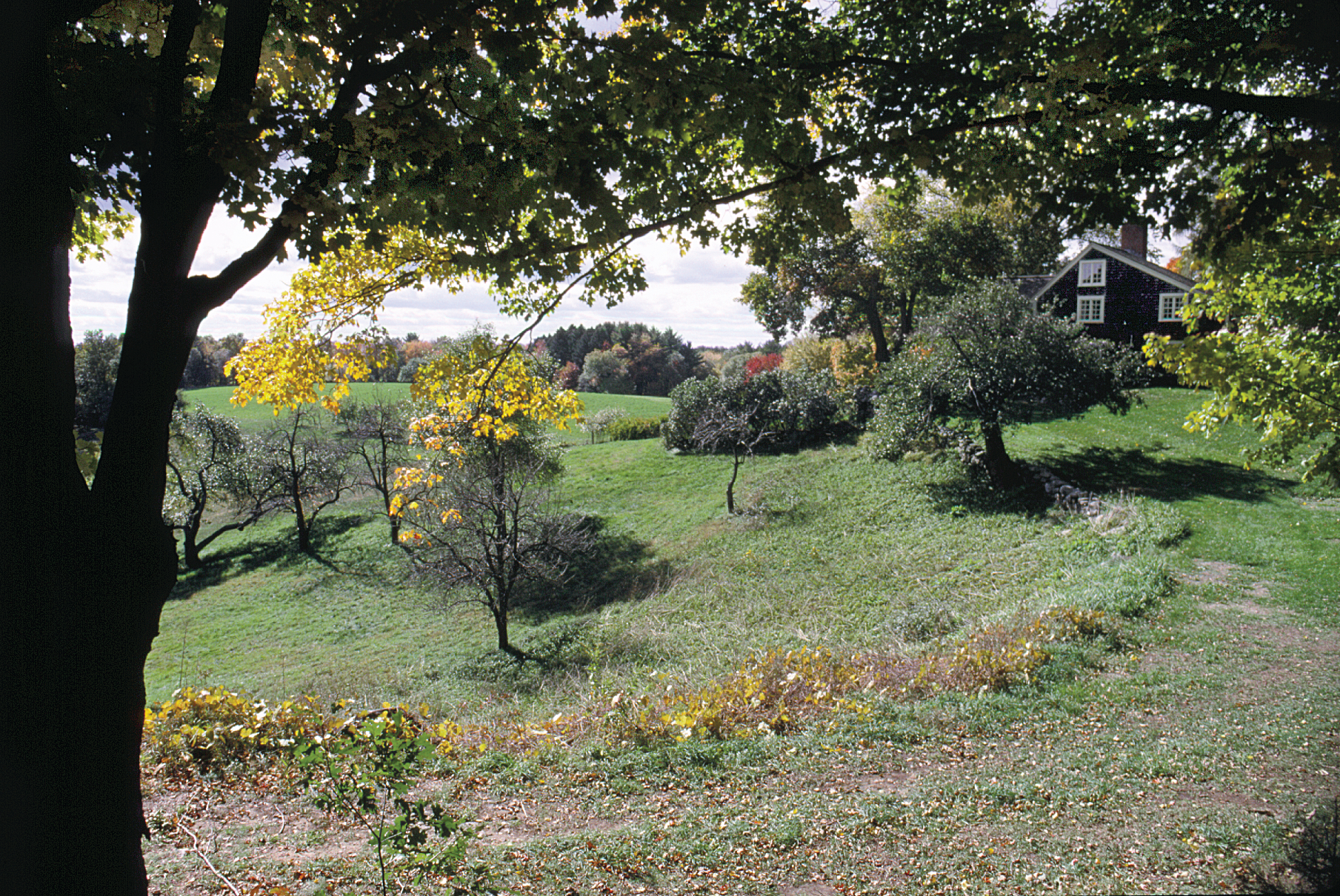
Charles W. Ward Reservation, Andover. Photo by T. Reichard.
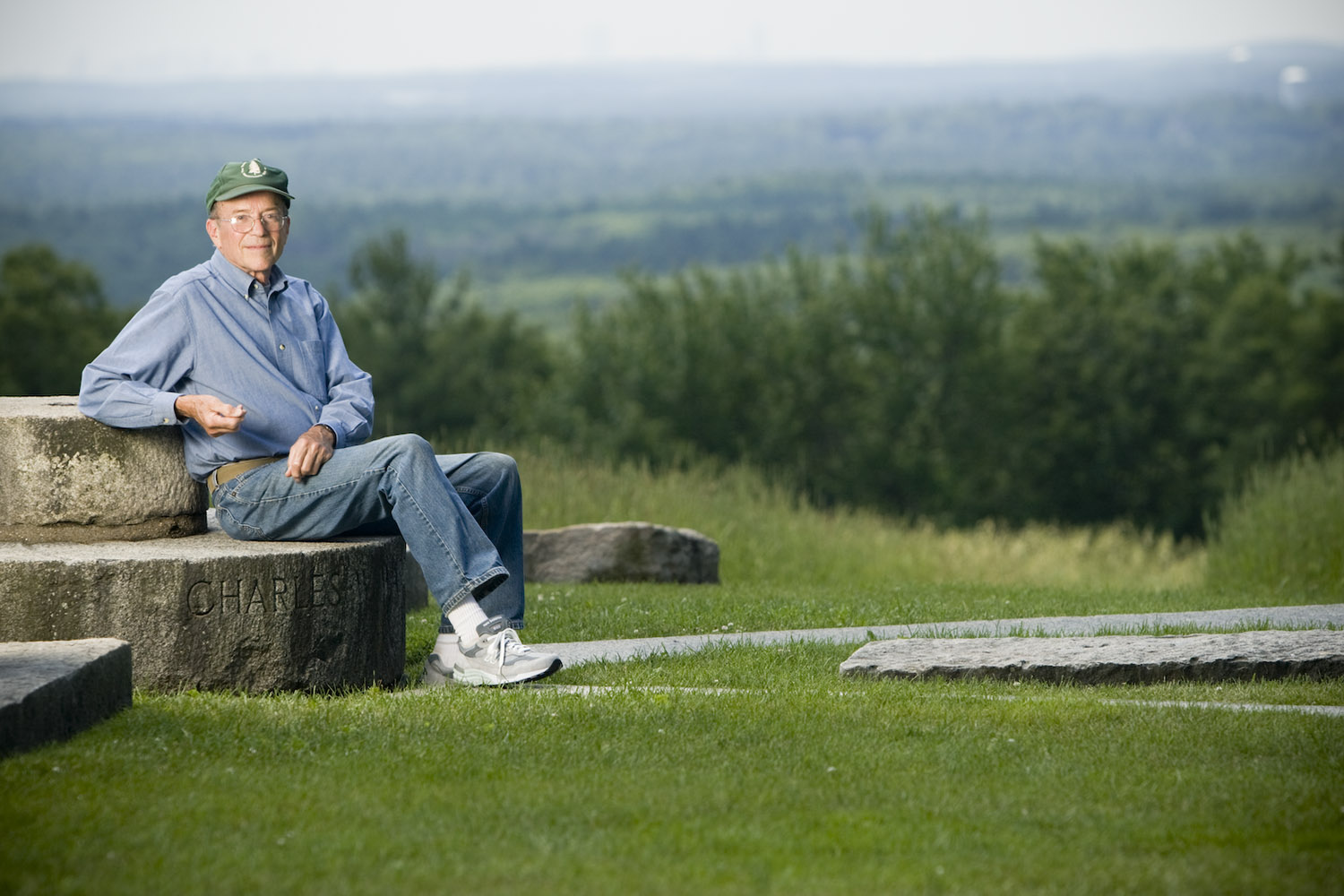
Dr. John Ward Kimball at the top of Holt Hill in 2008. Photo by Tom Kates.
Around the same time Wakeman was protecting land off the south coast of Massachusetts, another conservationist was hard at work on the state’s northern end. Dr. John Ward Kimball moved into his family’s home at the heart of Charles W. Ward Reservation in Andover in the late 1950s. His family had continually added new land to the reservation since its original donation of 107 acres in 1940 by Mabel Ward, Dr. Kimball’s grandmother. However, additional acreage was hard to acquire, mainly because more than 24 different individuals owned the surrounding parcels.
“In the 50s and 60s, when the highways were built around here, the land near Ward was under serious threat of being developed,” said Rollfs. “John took it upon himself to preserve as much of it as he could, spending his time and his own dollars to meet with landowners and purchase a good chunk of the acreage added in his lifetime.”
Dr. Kimball had been connected to this ecologically diverse landscape since childhood. He grew up down the street from Ward Reservation and spent the summer days of his youth helping his grandmother care for the property and keep it open to the public. When he moved into her home after she passed, he adopted the mantle of stewardship, all while teaching biology and chemistry at Phillips Academy – Andover, Tufts University, and eventually Harvard University.
“John took up stewardship of Ward singlehandedly for many years, doing the critical maintenance to ensure trails remained open, fields were cut, and land preserved,” said Rollfs. “He spent a lot of that time fighting invasive species. I feel like his whole retirement was basically spent combing through the land off-trail looking for invasives like bittersweet and multiflora rose. It was—and still is—a never-ending task.”
A lifetime spent exploring the reservation’s backwoods gave Dr. Kimball an intimate knowledge of the land. One of his enduring projects was sharing that knowledge through interpretive signage at his beloved Pine Hole Bog. After a short walk from the parking area, a boardwalk leads into the bog for close-up viewing of its botanical features. Six panels—all researched and written by Dr. Kimball—provide details in both English and Spanish on the various plants and terrain visitors encounter along the trail.
Dr. Kimball’s service to Ward Reservation led him to receive not only the 1997 Trustees Conservationist of the Year award but also to be inducted as a Life Trustee. One of the highest honors conferred by the organization, it recognizes those who have made “extraordinary gifts of property, financial assets, or service to The Trustees.”
Both Wakeman and Dr. Kimball were driving forces of conservation on their respective ends of the state. As 2026 marks the 50th anniversary of Wakeman’s donation of Mytoi and the recent passing of Dr. Kimball, The Trustees is inspired by the legacies of passion and dedication to the land they leave behind.