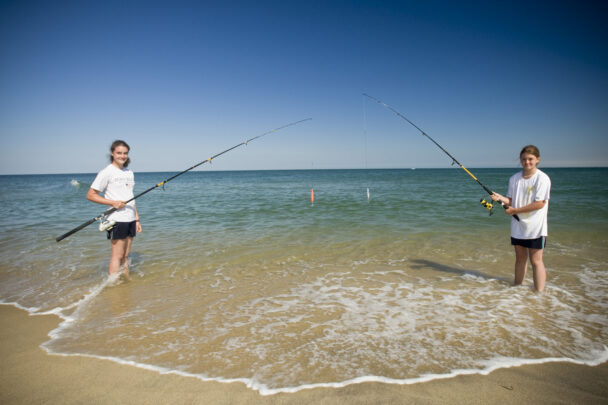
The Trustees has been protecting the Massachusetts shores for 130 years. In total we own and protect over 120 miles of coastline in Massachusetts with 35 properties including 75 miles of coastline located in 25 different communities, more than any other single private landowner in the state.
We often think of beaches as a constant in our lives, largely because of the emotional pull they have for so many of us. But beaches are also naturally fragile and dynamic sandy places, where storms can erode what currents may gradually restore. Climate change is disrupting this natural rhythm with sea level rise and stronger storms accelerating impacts to these landscapes. Our work on the coast continues to be a combination of conservation and targeted adaptation to address these challenges.
Learn more about current and projected impacts, projects, and adaptions, by exploring the content below.
Looking for beach closure information? On-site staff regularly post updates on Twitter (@TheTrusteesMV) and on our informational line (508.627.8390) when flooding, storms, or shorebird activity have any impacts on access.
Tick Prevention FAQs
The Northeast is seeing a surge in tick activity, and Martha’s Vineyard is no exception. Here are some tips regarding ticks and outdoor recreation.
What is The Trustees doing regarding tick management?
The Trustees performs a number of activities to minimize tick populations. Hunting on our properties to reduce the deer population, prescribed burns, and mowing our trails greater than four feet to minimize risk. Deer are a primary source of blood for ticks and play a major role in tick survival and movement. We also support island-wide efforts on Martha’s Vineyard to do the same.
Where can I expect to find ticks?
Ticks live in grassy, brushy, or wooded areas. They also live on animals. If you are spending time outdoors walking your dog, camping, or hiking, you could come into close contact with ticks.
Are ticks active all year round?
Ticks are most active in May and June, though they are active all year round. Risk of tick exposure is reduced outside of May and June in non-tick environments.
Are all ticks harmful?
Not every tick carries pathogens, so not all bites result in illness. If the germs are present, it takes varying times for the germs to move from the tick to the host. Transmission times range from minutes to 36 hours.
Are there steps I can take to avoid ticks?
Avoid wooded and brushy areas with tall grass and leaf litter. When walking on trails, walk down the center. Stay on the trail and avoid walking off trail.
Do ticks fall or jump out of trees?
No, ticks cannot fly or jump. They engage in a behavior called “questing,” which means they sit on the tips of grass and wait for a host (human or animal) to brush past and then latch on to them.
Is there clothing I should wear to protect myself?
We recommend you wear a light-colored, long-sleeved shirt with long pants and tuck your pants into your socks. While this can be difficult in hot weather, it will help keep ticks away from your skin and make it easier to spot a tick on your clothing. Also, you can treat your clothing, boots and outdoor gear with 0.5% permethrin, which will remain protective after several washings. Our staff who work outdoors find that permethrin-treated clothing does a good job of reducing the number of ticks on their person.
Are there insect repellents you can use to discourage ticks?
For your skin, use an EPA-registered repellent containing at least 20% DEET, picaridin, or oil of lemon eucalyptus, and no more than 10-15% DEET on children. Never use insect repellents on infants. Permethrin should only be used on clothing, boots or hiking and camping gear. If you are using sunscreen, apply the sunscreen first and then the insect repellent. When used properly, insect repellents are safe for pregnant or breast-feeding women.
Are there repellents to use for my pets?
It is best to consult your veterinarian for either a year-around topical or oral treatment for your pet.
How should I check for ticks on my body?
You should check for ticks immediately after being outdoors. Prompt removal of ticks reduces your risk. Ticks especially like areas between the toes, the back of knees, groin, armpits, neck, along the hairline, and behind ears. Make sure to also check your pets if they accompanied you on a hike. With dogs, make sure to check all over their body, as well as behind and inside their ears
What should I do if I find a tick on me?
If you find a tick on your skin, you should remove it immediately using a pair of clean, fine-tipped tweezers. Grasp the tick with the tweezers as close to your skin as possible and pull upward with steady pressure. Avoid using a twisting motion. Dispose of the live tick by taking one of these steps: place it in a sealed container; wrap it tightly in tape; flush it down the toilet; or put it in alcohol. Do not crush the tick with your fingers. After removal, clean the bite area and your hands with rubbing alcohol or soap and water. If you were bitten, it is important to monitor yourself for symptoms for 1-6 months. Symptoms include fever, headache, fatigue, rash, body aches, and swollen joints. Contact your physician if you develop these symptoms or if you develop a rash where you were bitten.
For more information on ticks in Massachusetts, including educational materials on prevention and different diseases and conditions caused by ticks, go to Mass.Gov/Tick-Borne-Diseases.