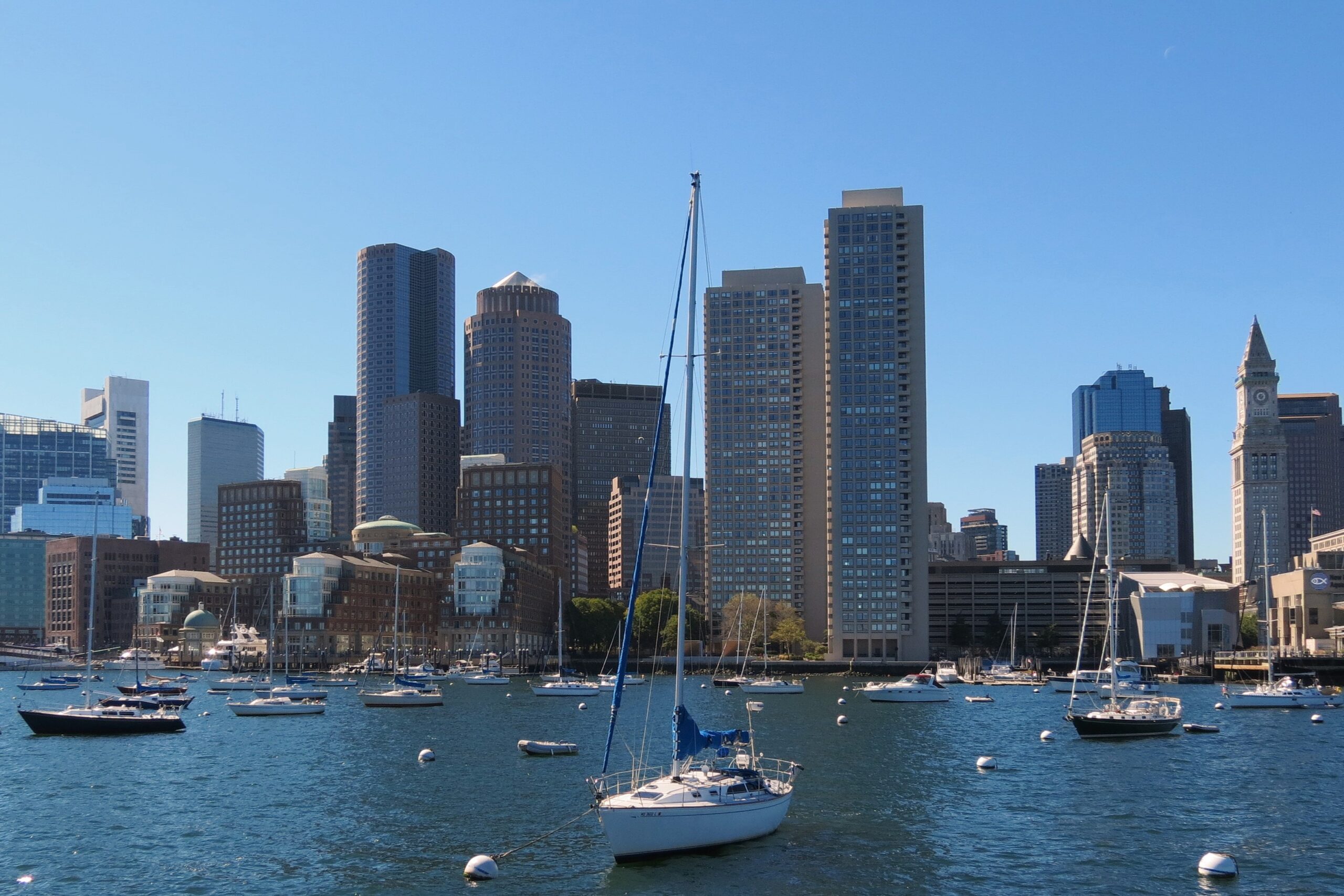
Photo of Boston Harbour by Bob Linsdell.
Soccer—or football to most places outside the U.S.—takes over Boston this June with seven World Cup games scheduled at Gillette Stadium south of the city. If you’re visiting from afar and looking to pass the time before or after your country’s game, we’ve compiled a list of our favorite places accessible through Boston’s public transportation. Spend a half or full day at any of these picture-perfect spots, only a train, bus, or walk away!
World’s End, Hingham
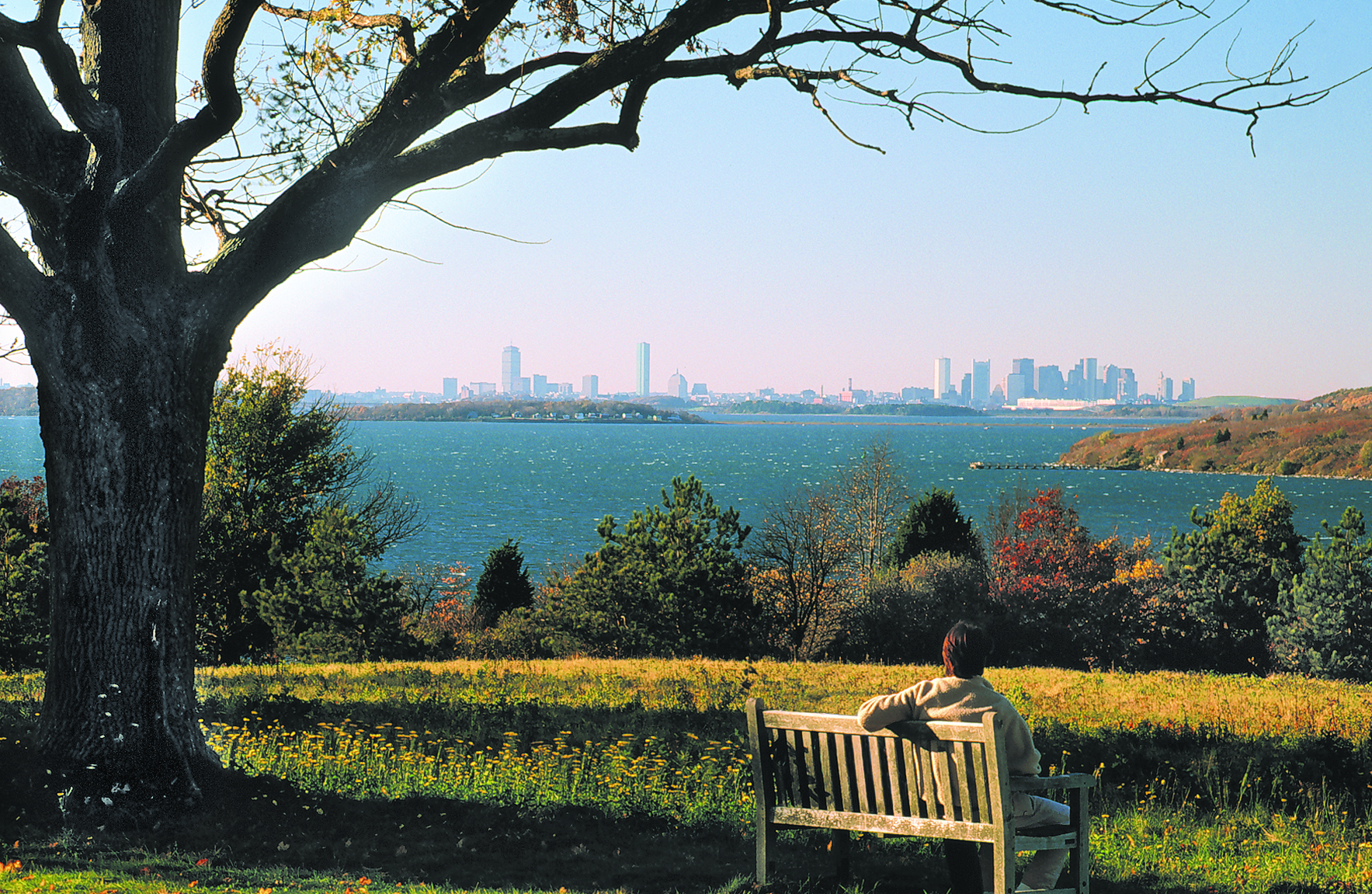
Photo by Richard Cheek.
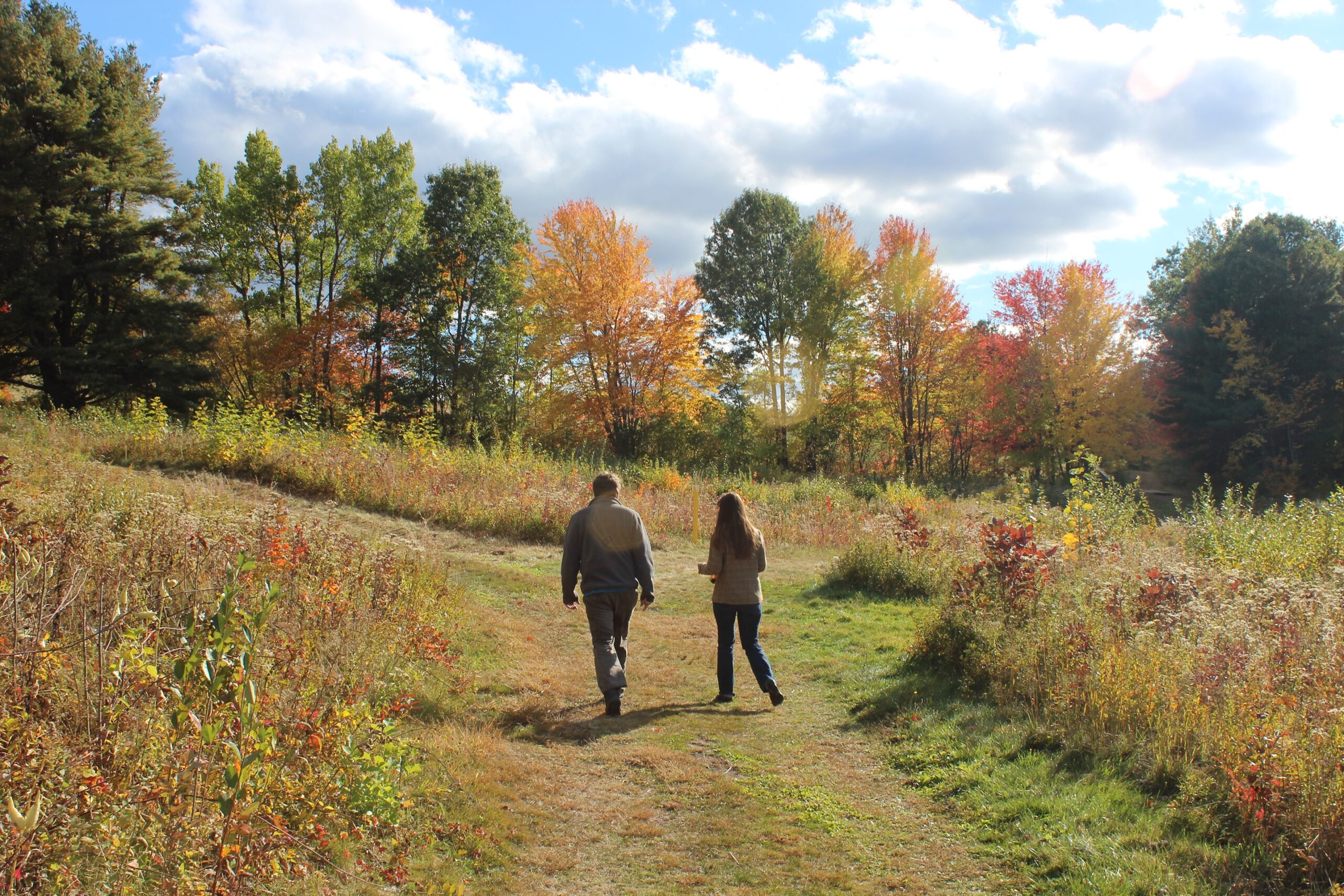
Rolling hills and rocky shorelines offer sweeping views of the Boston skyline, while tree-lined carriage paths designed by famed landscape architect Frederick Law Olmsted make delightful walking trails. This idyllic landscape is closer than you think, only a 20-minute (1 mile) walk from the Nantasket Junction train station along the Greenbush line of the MBTA Commuter Rail.
World’s End comprises four coastal drumlins—spoon-shaped hills formed by glaciers—extending into Hingham Harbor. John Brewer built a mansion here in 1856 and, over the next 30 years, acquired most of the peninsula’s 400-plus acres (as well as Sarah and Langley Islands). In 1890, Brewer asked Olmsted to design a 163-home residential subdivision. The drives were cut, but the development never came to fruition, nor did proposals for the United Nations Headquarters in the 1940s and a nuclear power plant in the 1960s.
Today, walking paths connect the drumlins, offering dramatic views of the Weir River, Hingham Harbor, and the Boston skyline. This landscape also features saltwater marshes, meadows, woodlands, and granite ledges covered with red cedars and blueberry thickets. Tree-lined paths are perfect for walking, jogging, cross-country skiing, or simply enjoying the outdoors.
Governor Hutchinson’s Field, Milton
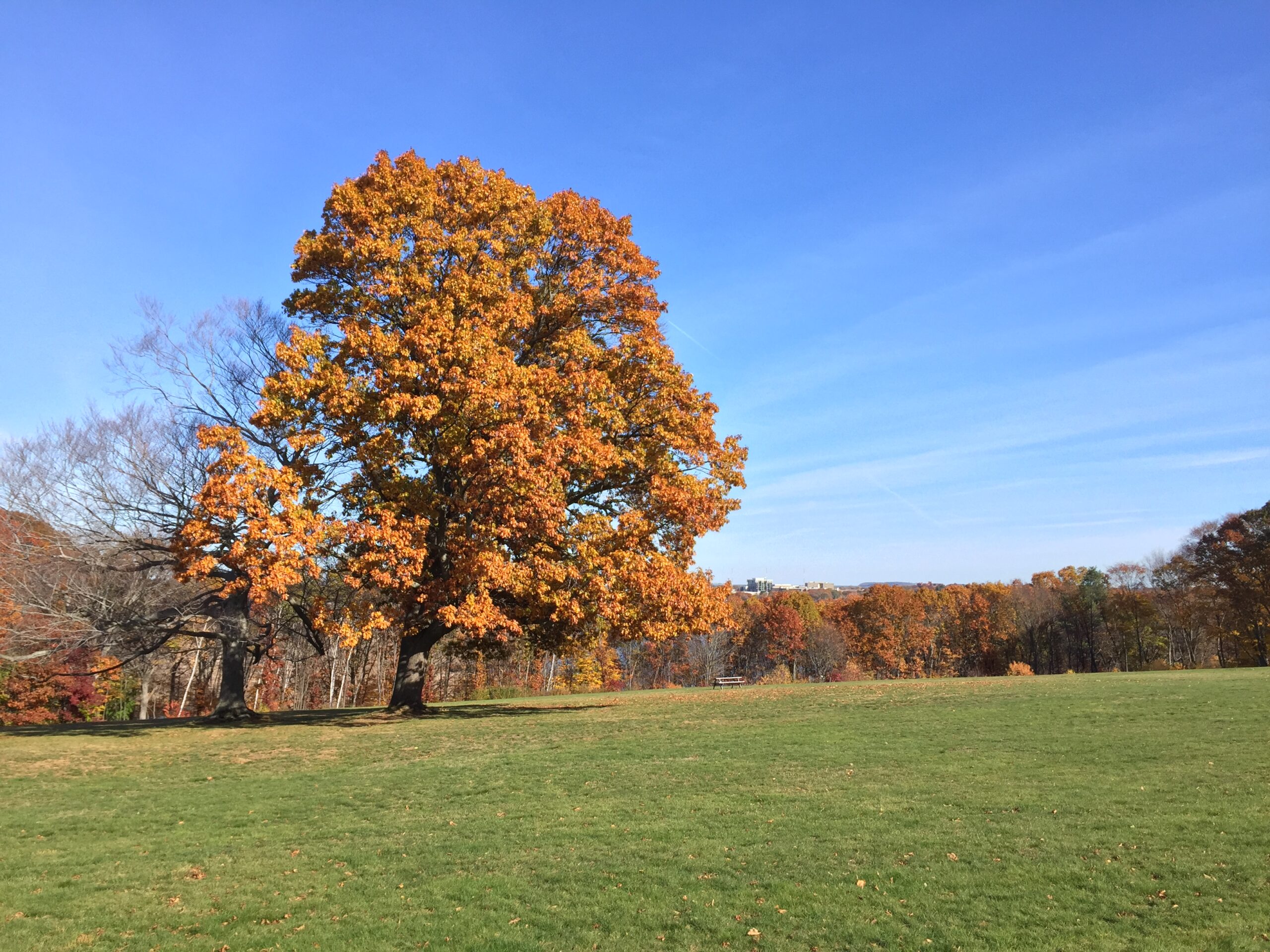
Photo by Peter Marotta.
Enjoy views of the Neponset River marshes and Boston Harbor from the hilltop site of the estate of the last Massachusetts Colonial governor. This site steeped in American history and natural beauty is only a 10-minute walk from the Milton stop along the Mattapan line.
In 1734, Gov. Thomas Hutchinson, the last royal Governor of the Massachusetts Bay Colony, built a country estate on Milton Hill. He was ridiculed for his loyalty to the crown, and, in 1774, shortly after the Boston Tea Party, Hutchinson fled to England. The site of his former estate, of which only the ha-ha (sunken fence) survives, boasts spectacular views of the Neponset River and its tidal salt marshes, the Boston skyline, and the Boston Harbor Islands.
During your visit, you can access the adjacent Pierce Reservation, a four-acre parcel of grassy slopes that run down to the tidal salt marshes that border the Neponset River—an easy quarter-mile trail runs along the river embankment.
City Natives, Mattapan
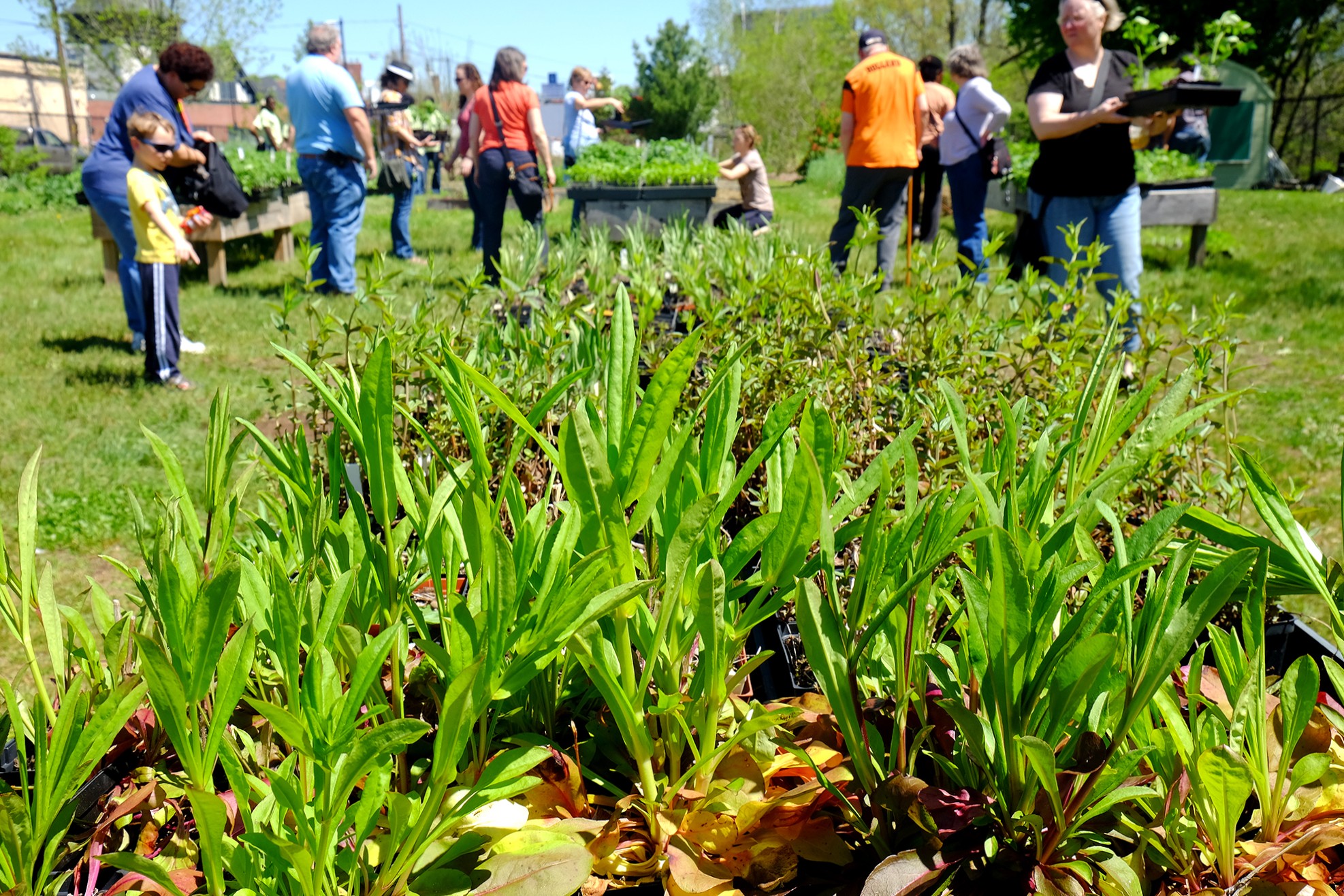
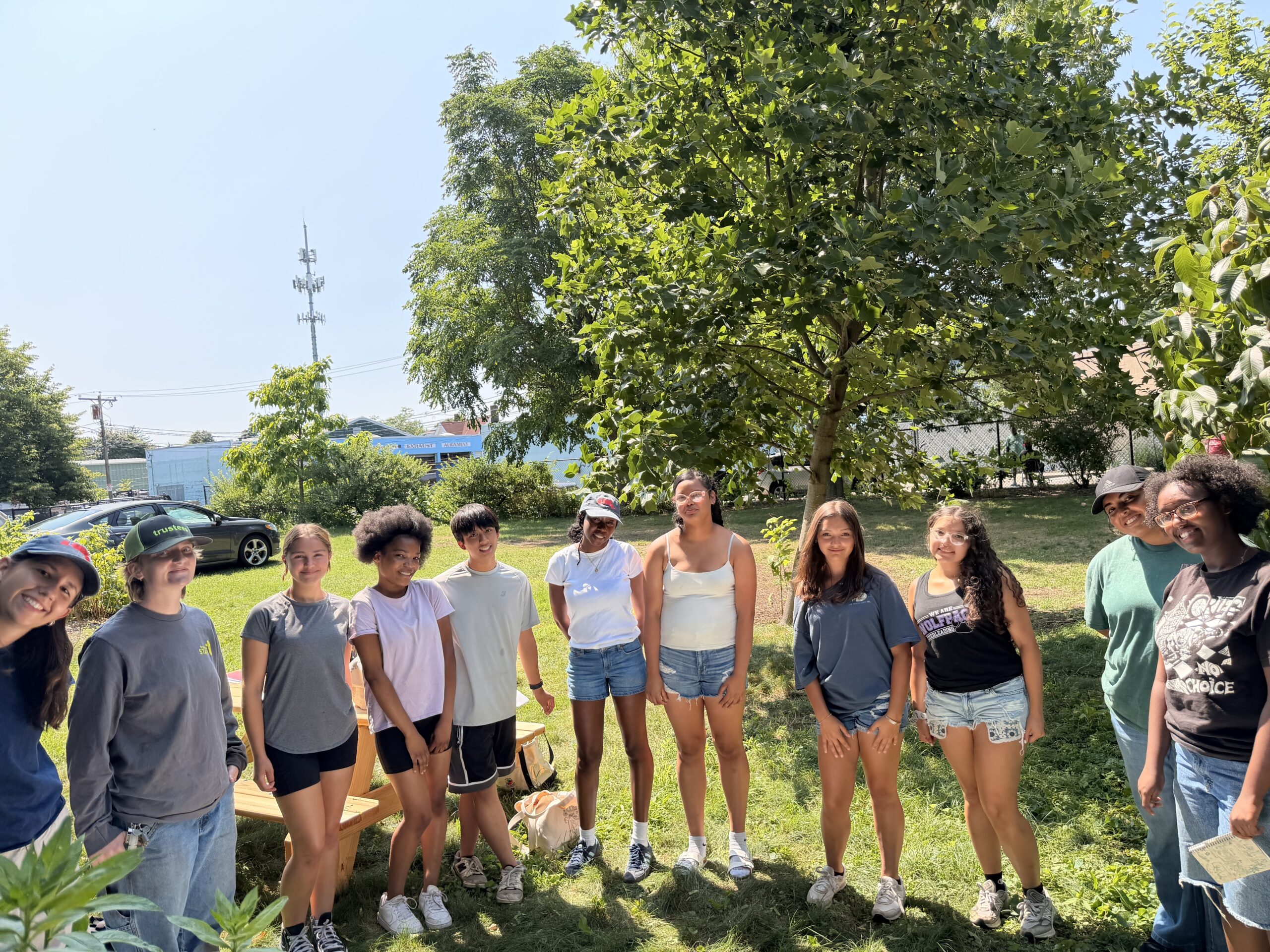
City Natives serves as The Trustees’ native plant nursery and horticultural learning center for the people of Boston and beyond. Positioned along the Neponset River Greenway Trail, you can find it a short walk from the Mattapan Square Trolley Station and Blue Hill Avenue bus lines.
Look through the modest greenhouse and nursery where we raise plants native to our local climate for community garden common areas and for restoration projects throughout the city. Then, head east or west along the Neponset Greenway Trail, a 9-mile paved, multi-use path that connects a series of parks along the river. It’s a great way to walk, bike, and enjoy the outdoors in an otherwise urban area. You can find a full PDF map of the trail here.
Weir River Farm, Hingham
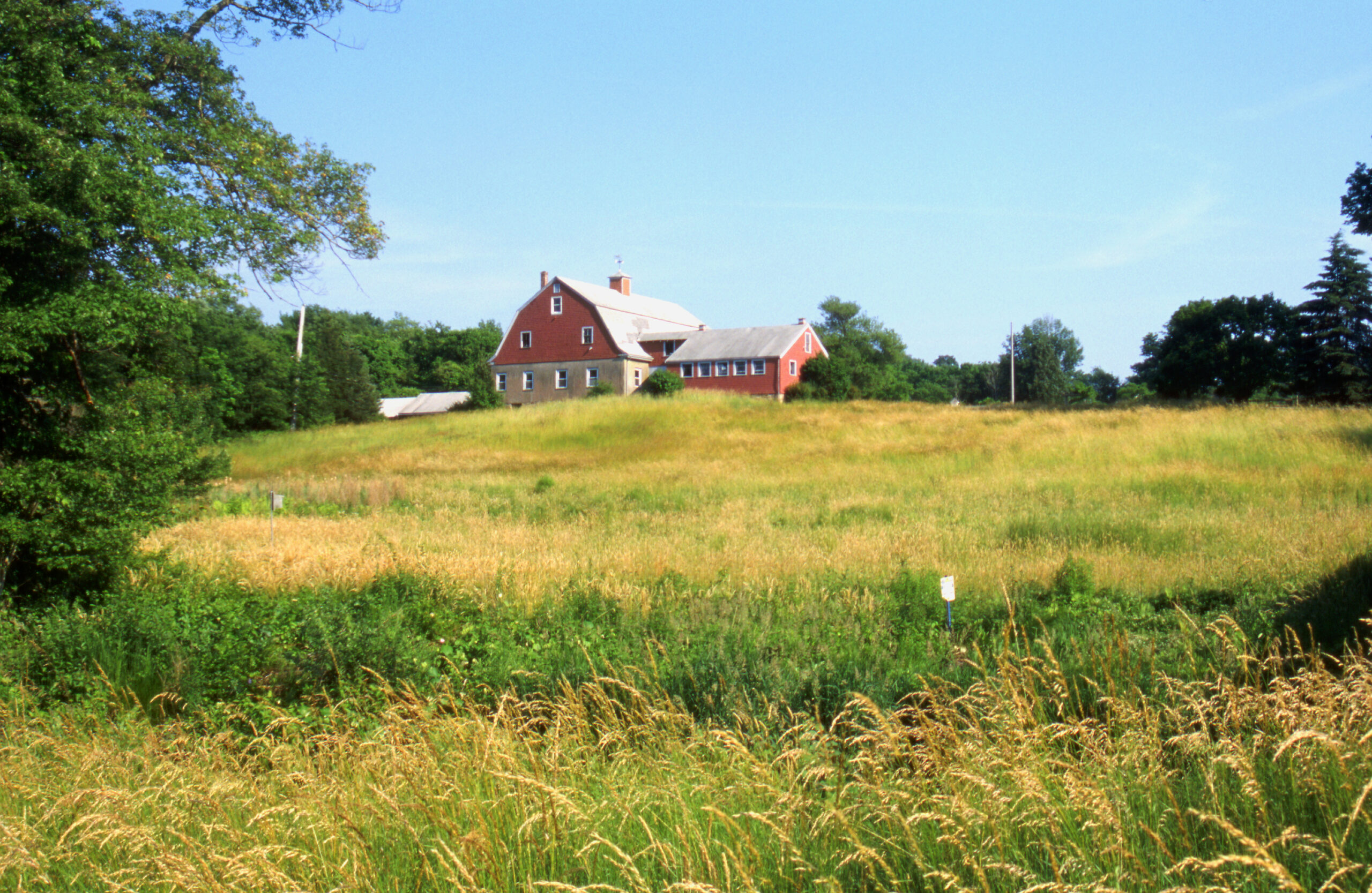
Photo by Richard Heath.
This family-friendly farm—one of the last in Hingham—enthralls visitors with its own “family” of horses, pigs, cows, chickens, and sheep around a 30-minute walk from the Nantasket Junction train station along the Greenbush line of the MBTA Commuter Rail.
Originally part of the picturesque, early-20th-century country estate of renowned artist Polly Thayer Starr, Weir River Farm today is a 75-acre working farm comprising fields and pastures surrounded by oak and red cedar woodlands. The farm supports diverse wildlife habitats, including upland grasslands.
From the entrance at the top of Turkey Hill, a footpath meanders downhill through open fields and woods. For families with young children and strollers, an easier path can be found directly across the street from the lower parking lot on Turkey Hill Lane. Another route cuts across two pastures before entering “The Grove,” woods with an open understory reminiscent of a British woodland. A “Garden Path,” bordered by flowering shrubs and flowers, within the Grove, creates a serene sanctuary.
Castle Hill on the Crane Estate, Ipswich
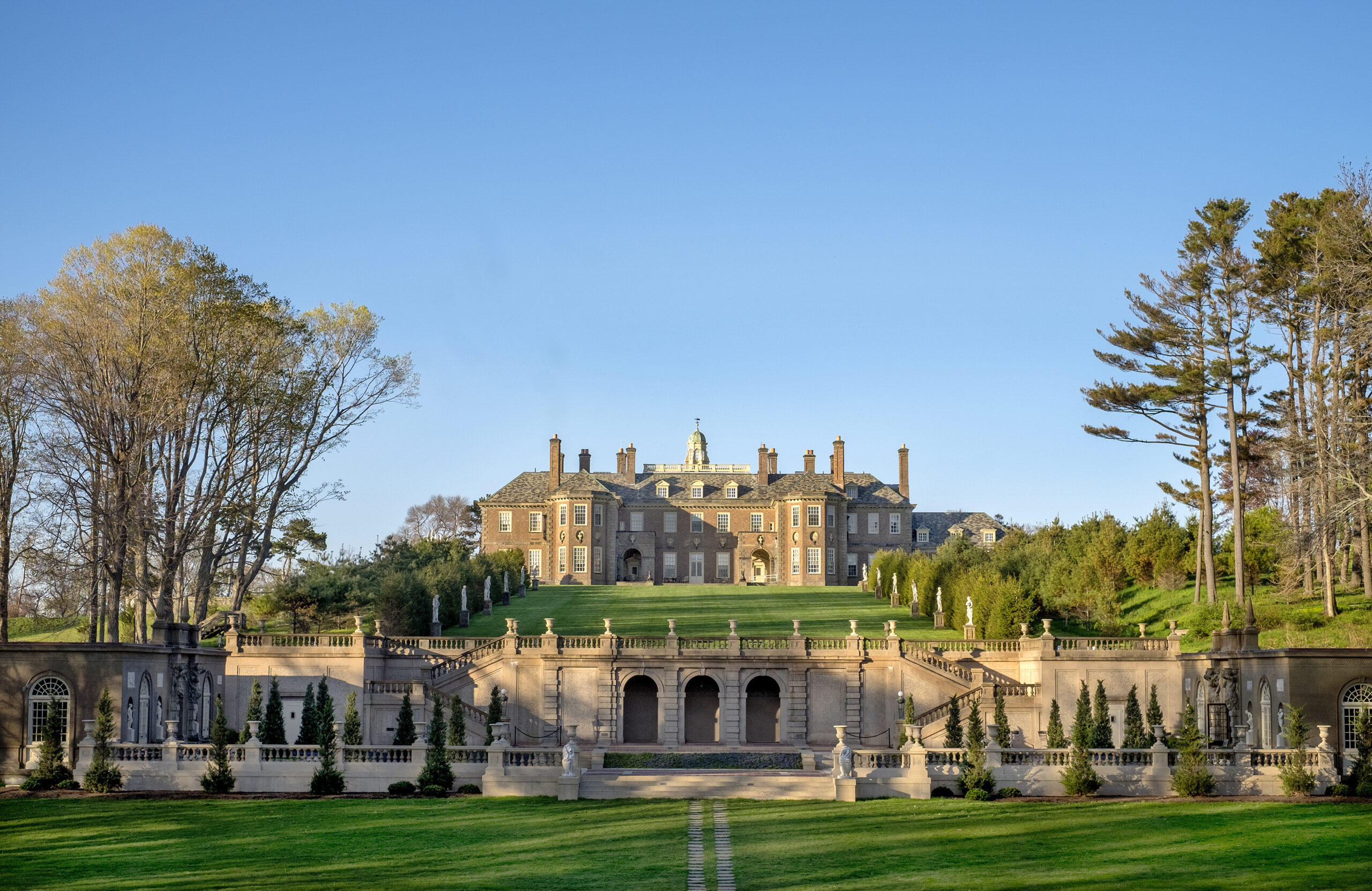
Photo by Mark Gardner.
Experience the grandeur of a 2,100-acre seaside estate and its marvelously landscaped grounds, notable for a broad, undulating lawn running down to the shore. It may seem far from Boston, but you can book a Keolis massAdventures Tour with travel and admission included. Or take the Newburyport MBTA Commuter Rail line to the Ipswich train station, then a Cape Ann Transportation Authority (CATA) shuttle.
Castle Hill was well known by Indigenous communities, who called the area Agawam, referring to its rich fishery. Beginning in the 1880s, J. B. Brown transformed Castle Hill Farm from an agricultural holding into a gentleman’s farm, improving roadways and plantings, and renovating his modest farmhouse into a rambling, shingle-style cottage that is now The Inn at Castle Hill.
After Chicago Industrialist Richard T. Crane, Jr., purchased the property in 1910, Castle Hill came to exemplify the American Country Place Era with its farm and estate buildings, designed grounds and gardens, and diverse natural areas. The first house built atop Castle Hill, an Italian Renaissance Revival villa designed by Shepley, Rutan and Coolidge, was razed and replaced in 1928 with the Great House, the 59-room Stuart-style mansion designed by architect David Adler you see today.