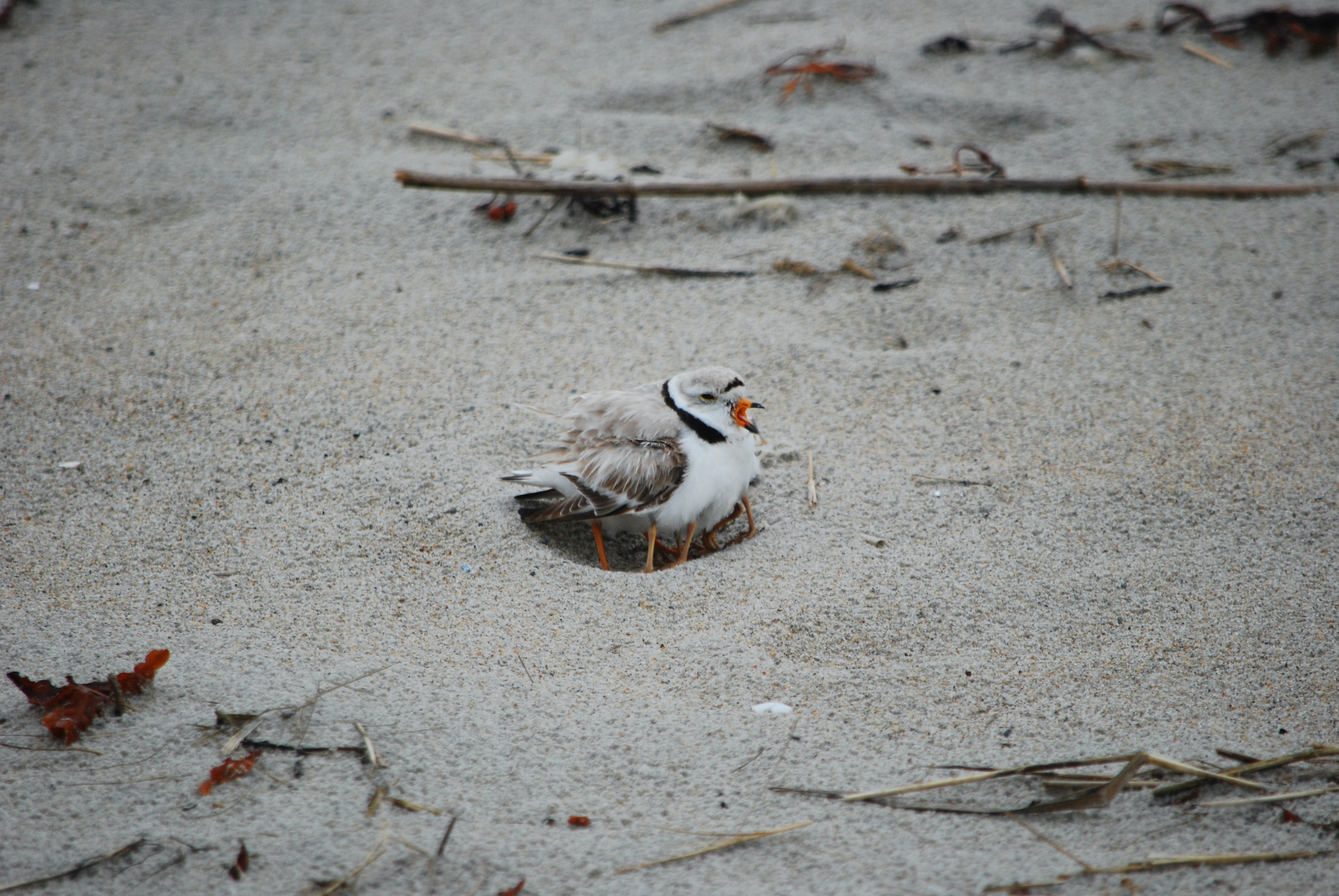
A parent plover brooding young chicks.
Overview: Why The Trustees Steward Shorebirds
Shorebirds are a class of birds experiencing large-scale global population declines in recent decades. According to the 2022 State of the Birds report, the US has lost 33% of its shorebird population since 1980. There are multiple contributors to this wide-spread decrease including habitat loss from shoreline development, human disturbance, increased predator populations subsidized by human activity, and climate change to name a few. These dramatic population declines have led to the most imperiled species (e.g., Piping Plover) being listed under national and state endangered species acts which regulate the protection of these species and their habitats. Given The Trustees protects some of the most significant habitat for shorebirds in Massachusetts, factoring them into our beach management is essential to fulfilling The Trustees mission.
Initiatives to protect rare shorebirds, are based in part on guidelines distributed by the United States Fish and Wildlife Service and the Massachusetts Division of Fish and Wildlife (MDFW 1993). While these guidelines specifically focus on shorebirds, they indirectly facilitate protection of coastal habitat which benefits a variety of other wildlife and facilitates natural processes that keep our beaches resilient, such as dune building. Thus, The Trustees shorebird management complements our goal to maintain resilient coastal habitat for wildlife while ensuring public access for human use and enjoyment.
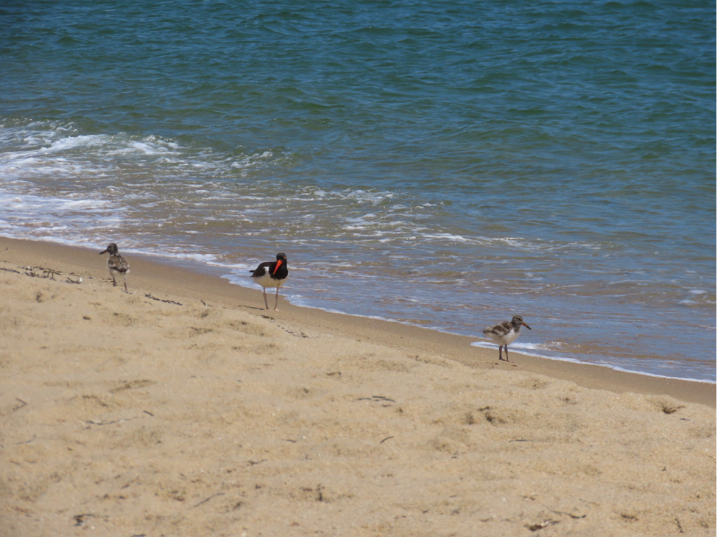
An American oystercatcher adult and two chicks on the shore of Cape Poge Wildlife Refuge on Martha's Vineyard.
Species The Trustees Steward
Our most frequent nesters (i.e., breeding) include the piping plover, least tern, and American oystercatcher. Common and roseate terns are less common. Plovers and all three tern species are listed under state and/or federal Endangered Species Acts. While oystercatchers are not listed, they are recognized as a Species of Greatest Conservation Need in Massachusetts’ State Wildlife Action Plan, and the Trustees provide them similar protections. Additionally, many thousands of non-breeding shorebirds rely on Trustees coastal properties for their migration to and from the arctic. These include the fastest declining species such as the red knot, now a threatened species under the federal endangered species act.
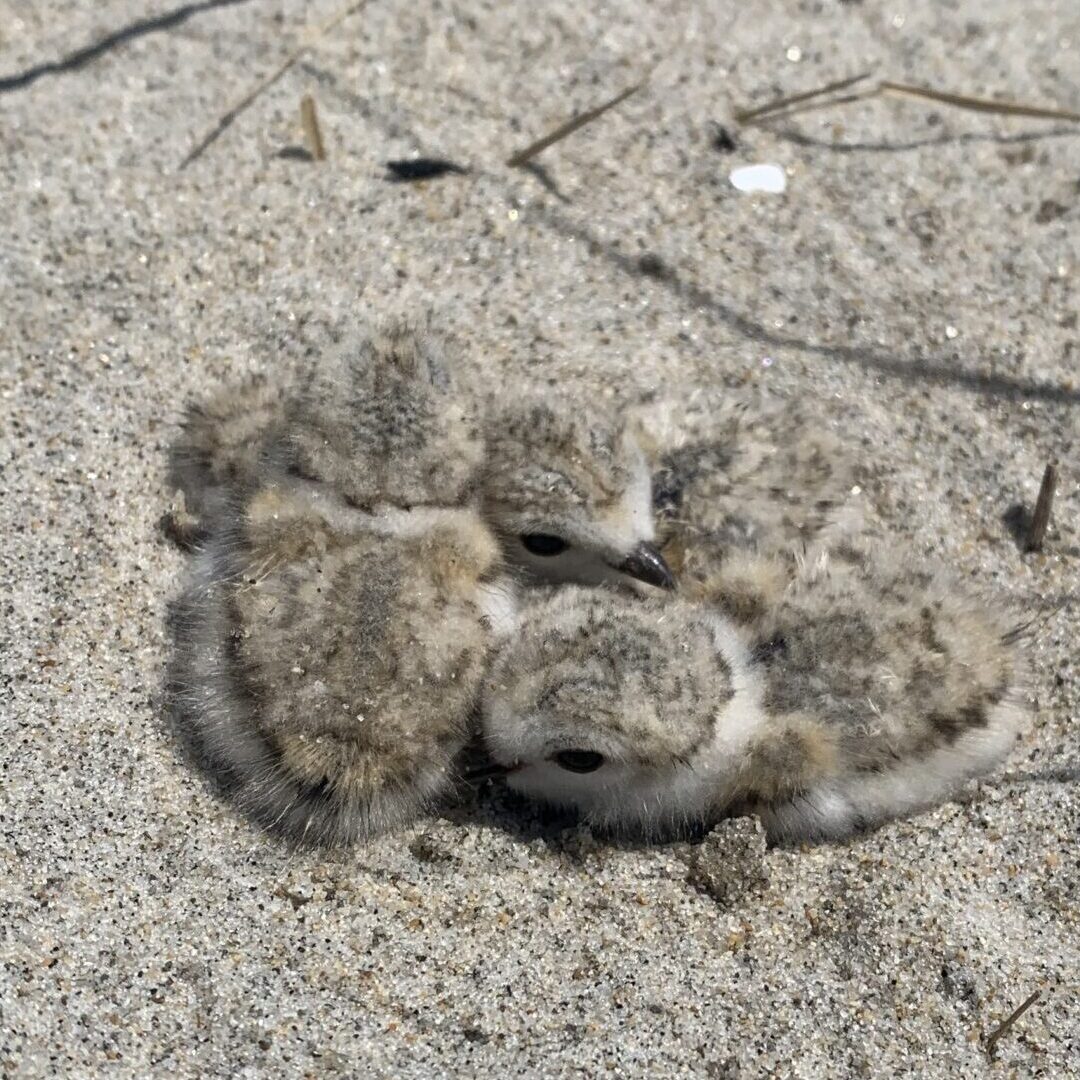
Newly hatched plover chicks at Crane Beach in Ipswich.
How Shorebirds Utilize our Beaches
Our beaches provide vital nesting habitat for shorebirds each spring and summer. These species typically nest on wide sandy beaches or sand spits with gently sloping dunes; the same areas popular with beachgoers. They lay well-camouflaged eggs in shallow divots in the sand called “scrapes,” sometimes adorned with pebbles or shell fragments. After eggs hatch, chicks are mobile and need safe spaces to learn about their new world, grow, and thrive. Creating protected, minimally disturbed areas for parents to raise their chicks is critical to successful fledging.
Our coastal properties also offer important places for birds to feed. Foraging habits and locales vary by species. Piping plovers and other short-billed shorebirds search for insects and invertebrates along the upper beach, wrack line, or intertidal zone. Long-billed species like the American oystercatcher forage in the intertidal zone, marshes, and mudflats, probing for marine worms, crustaceans, and shellfish. The non-breeding long distance migrants stage, or concentrate for several weeks at a time, at our beaches where they feed on tidal flats during low tides and rest on the beach during high tides – saving their energy to power their flight to their next staging area or final destination for breeding or wintering.
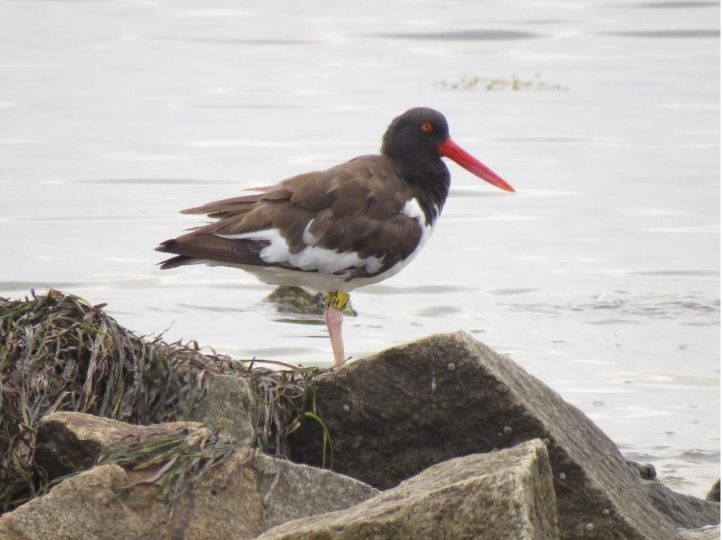
An American oystercatcher at Cape Poge Wildlife Refuge on Martha's Vineyard. Photo by Francesca Zern
Strategy: How The Trustees Protect Shorebirds
Breeding Shorebirds:
Seasonal and year-round staff work diligently to protect nesting shorebirds and monitor their progress throughout the season. The Trustees follow best management practices outlined in state and federal guidelines, including the 1993 Massachusetts Guidelines for Protecting Piping Plovers and Terns. These frameworks help us provide an environment that promotes nesting success while keeping us in compliance with state and federal endangered species laws.
Key Shorebird Protection Strategies
Symbolic Fencing
This is our primary management tool for shorebird and habitat protection. All suitable nesting habitat must be fenced by April 1st just as the birds are arriving from their wintering grounds. The fencing consists of posts, line, and signage and acts as a visual barrier to prevent people, pets (when leashed) and over-sand vehicles (OSVs) from entering shorebird nesting areas. It allows the birds enough space to set up territories without interference from visitors and creates buffers around nests and a safe space for chicks.
Limit Disturbance
We restrict certain visitor activities in nesting and chick rearing areas that are proven to upset shorebirds. Providing quiet spaces for incubating parents and broods vastly improves chick survival. When birds aren’t constantly in fight or flight mode, they can spend more time feeding, resting, and tending to their nests and chicks. Our teams work closely together to coordinate beach management that makes our beaches a place where people and shorebirds can coexist. Restricted or regulated activities include dog walking (even good dogs frighten birds), kite flying (perceived as an airborne predator), drone usage, over-sand vehicle driving (habitat destruction and crushing hazard). All these activities if left unregulated can cause habitat degradation, nest abandonment, the loss of adults or chicks, and/or destruction of nests.
Intensive Monitoring
Our staff monitor nesting sites 5–7 days a week, tracking nest locations, hatch dates, chick movements, and bird behavior. They also maintain symbolic fencing, educate the public, and record rule violations. This high level of oversight allows us to both protect birds and provide informed and responsible beach access for visitors.
Predator Management
Eggs and chicks face mounting threats from predators. Many such predators’ populations have exploded largely due to human activities that subsidize food availability like littering or poor refuse management near beaches. The Trustees implement non-lethal predator control methods (e.g., nest exclosures, relocation, carry-in carry-out policies for trash) to reduce nest, chick and adult predation. Less frequently, The Trustees uses lethal control. We take great care when undertaking lethal management, targeting specific predators known to pose a risk rather than eliminating all predators. The goal is to selectively reduce predator pressures enough to give shorebirds a fair chance at success.
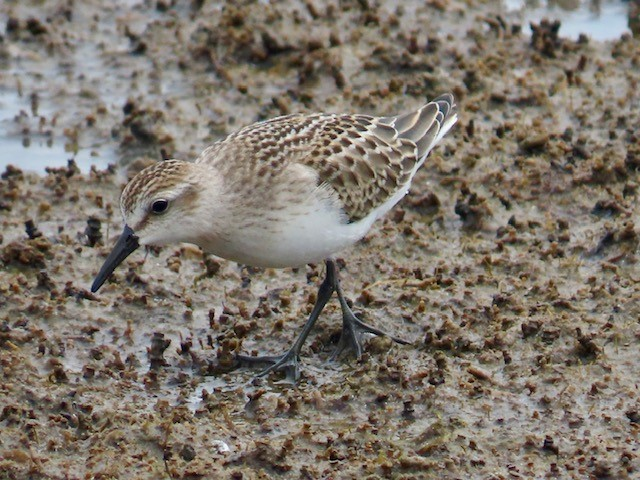
A Semipalmated sandpiper found on a Trustees beach.
Non-breeding Shorebirds
In addition to supporting nesting birds, Trustees’ coastal properties also provide migratory stopover habitat for shorebirds that breed far beyond Massachusetts. The Great Marsh- which the Trustees help steward- on the Northshore is a stunning example of this stopover habitat, hosting tens of thousands of shorebirds annually during migration. Its importance as a stopover location has even been recognized on a global scale, earning an Important Bird Area (IBA) designation by the National Audubon Society and identified as a regionally critical area by the Western Hemisphere Shorebird Reserve Network (WSHRN).
Species such as sanderlings, least sandpipers, ruddy turnstones, black-bellied plovers, and whimbrels depend on our beaches and marshes during their long-distance migrations. Many of these birds travel between Arctic breeding grounds and wintering areas in the Southern Hemisphere, making our coastal areas essential places for them to rest and replenish energy reserves.
The Trustees and other organizations around the state track migratory shorebird use on our properties and share these observations with national conservation networks. Areas that are highly utilized by migratory shorebirds are often symbolically fenced and accompanied by signage encouraging visitors to help protect these birds by reducing disturbance and allowing them space to rest and feed.
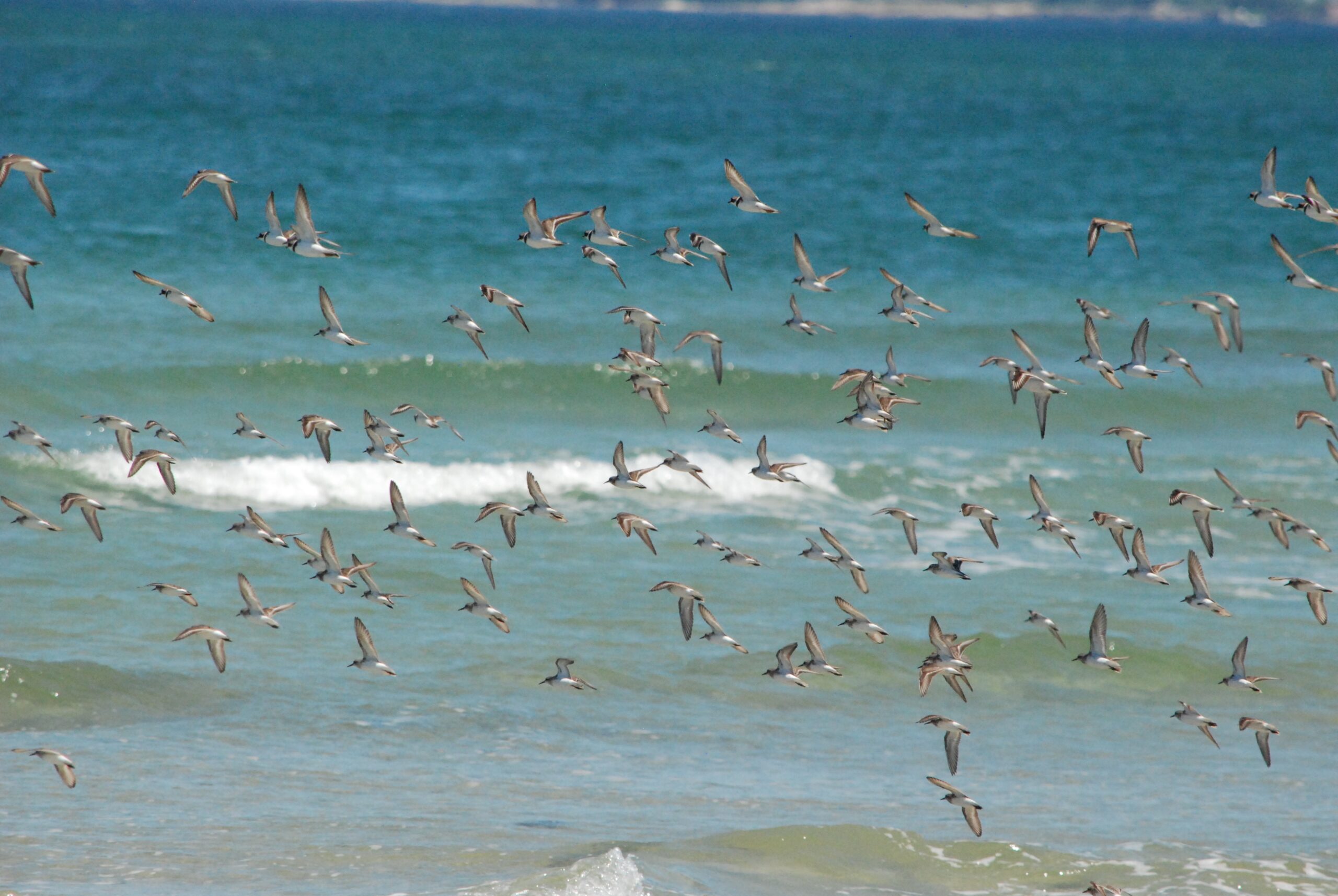
A flock of migratory shorebirds flies over the ocean at Crane Beach in Ipswich.
How You Can Help Shorebirds
- Follow dog rules for your beach
- Stay out of symbolically fenced areas and respect all signage
- Follow speed limits and area closures
- Give birds, especially flocks and chicks, plenty of space
- Carry out and clean up all trash on or near the beach to avoid attracting predators
- Stay curious and open to learning about these amazing birds and their incredible migratory feats.
- Use eBird and iNaturalist or similar apps to report bird sightings
Together, we can protect these remarkable species for generations to come.