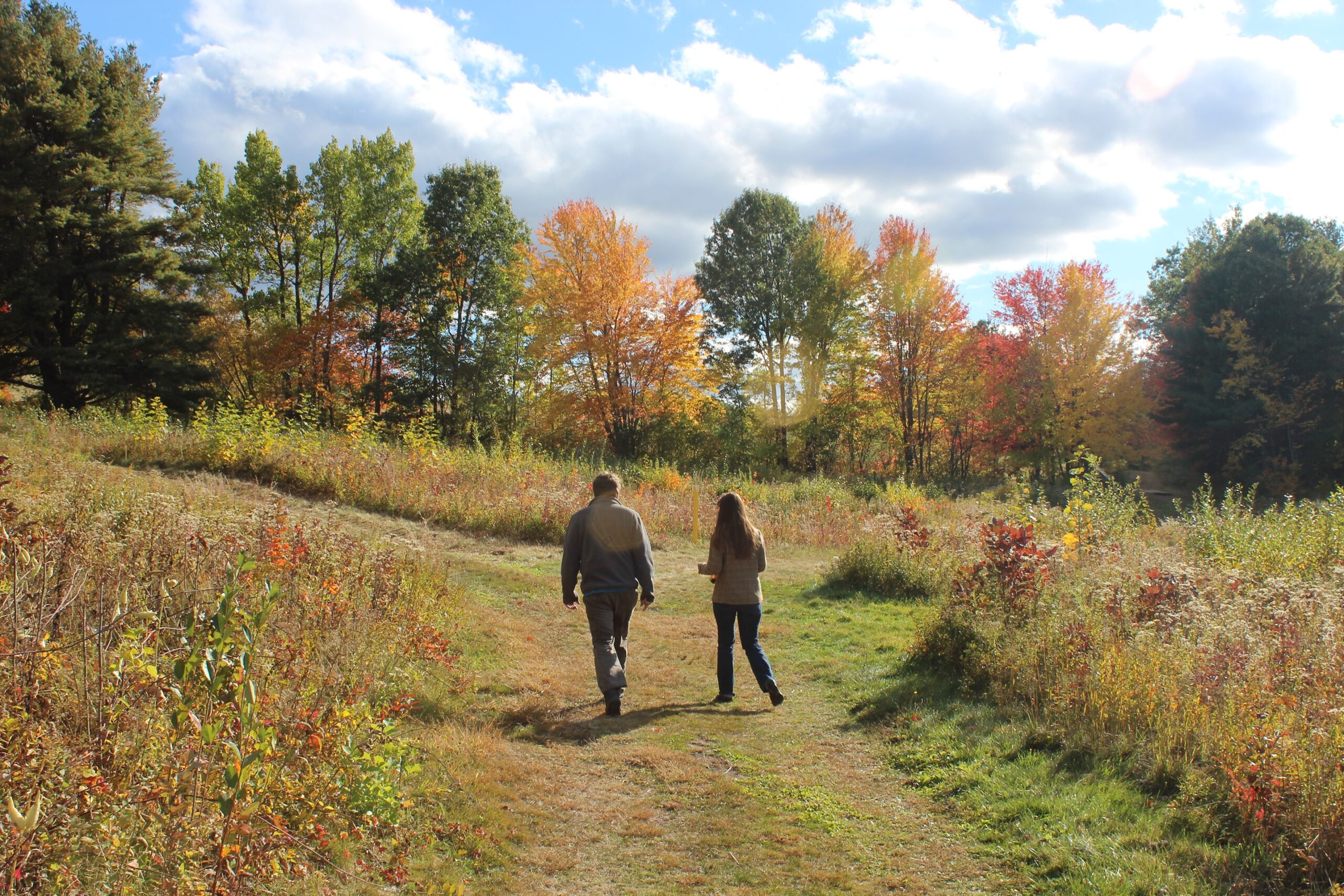
CC0 licensed photo by Jonathan Desrosiers from the WordPress Photo Directory.
If you’re arriving early or staying late for your country’s World Cup match at Gillette Stadium, escape the crowds and enjoy the beauty of Massachusetts. These five Trustees special places—all within a half-hour drive of Foxborough—offer sweeping views, dense woodlands, open fields, intriguing history, and opportunities to spot the region’s unique wildlife.
Moose Hill Farm, Sharon
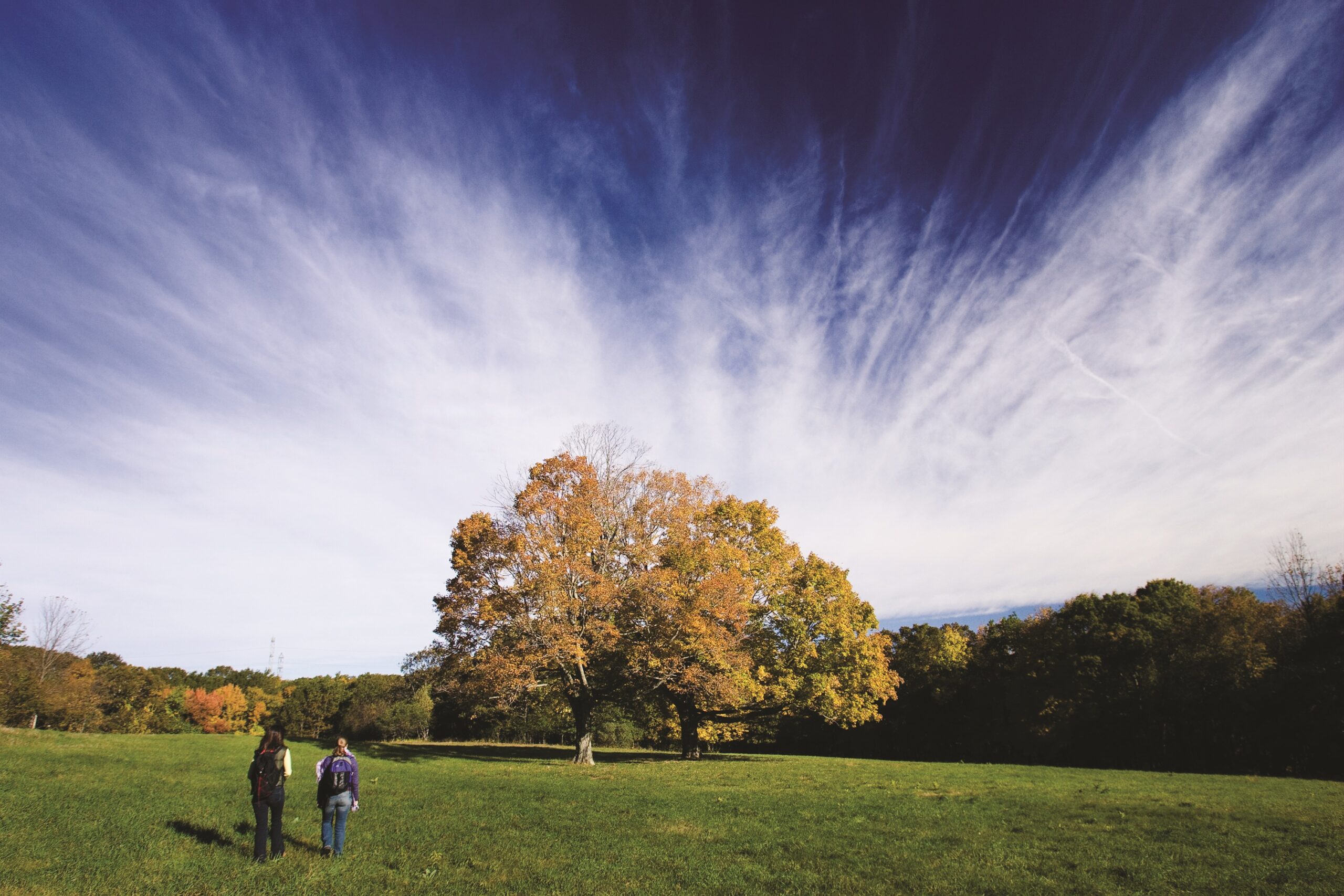
Photo by Tom Kates.
Follow a trail from the farmstead through restored woodlands to hillside hayfields and pastures, where you’ll enjoy views of Great Blue Hill and the Boston skyline, only six miles from Gillette Stadium.
Great Blue Hill at 635 feet is the only place taller than 466-foot Moose Hill between Boston and Providence. Miles of trails lead to summit fields, where grassland birds have found a home. The farm’s wooded hillsides still shelter some mature specimens of the American chestnut tree, a species that once dominated forests in the eastern United States. Look for the trees’ familiar, spiny-husked nuts, which traditionally nourished wild turkey and white-tailed deer, both of which call the farm home today.
This summer, Seaside Chestnuts—an outdoor artworks installation by May Babcock, part of the Art & the Landscape exhibition The Land Tells Our Stories—planted eleven American, Chinese, and hybrid chestnut varieties encircled by seaweed-like forms. They protect the young saplings as they grow and reference that this Trustees site lies along a projected future coastline if polar ice caps fully melt.
Francis William Bird Park, Walpole
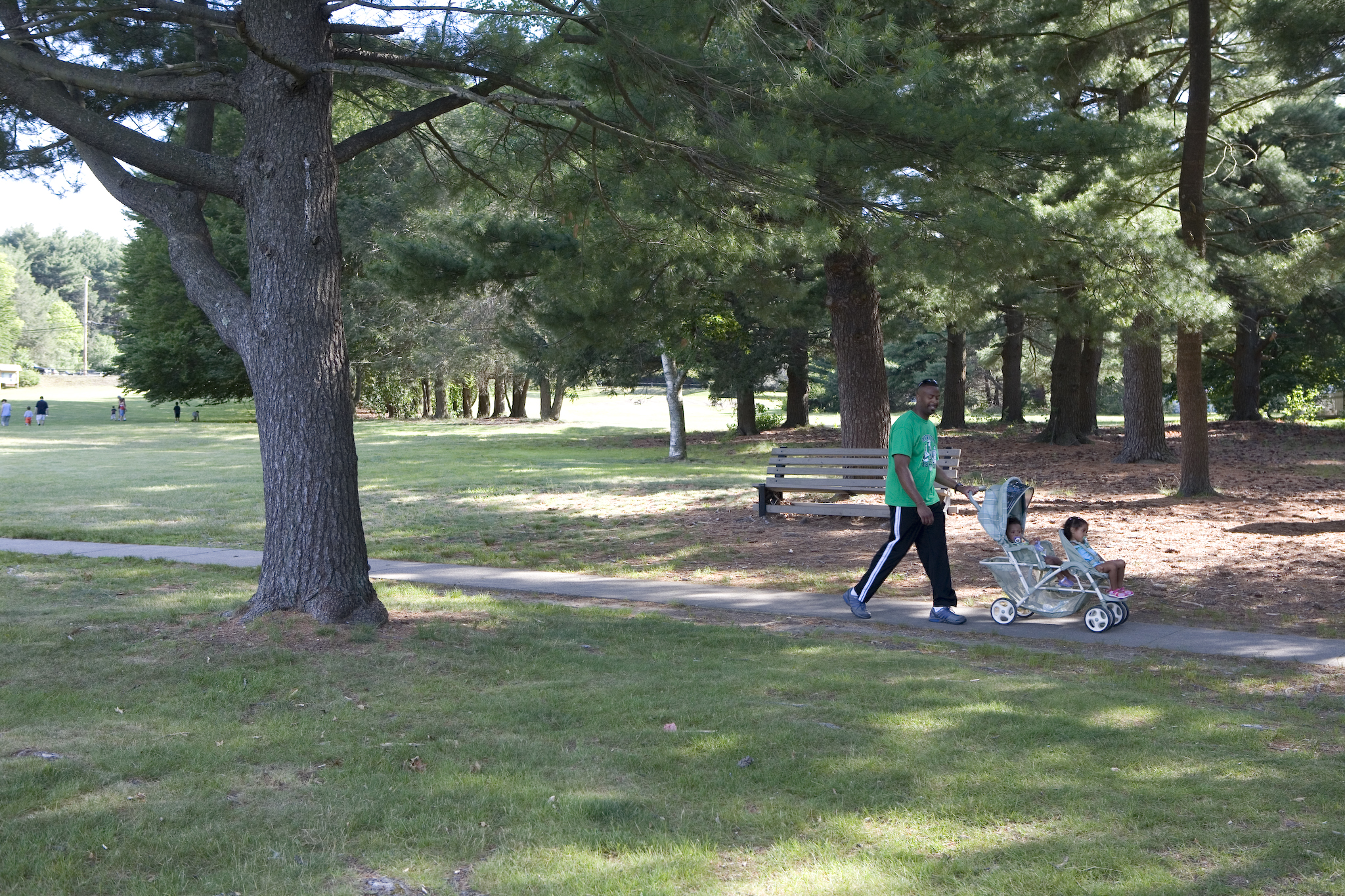
Photo by Jonathan Beller.
Stroll meandering pathways and cross artisan-built stone bridges at this family-friendly park six miles from Gillette Stadium, comprised of open fields, groves of trees, and frog ponds.
Rolling fields lined by tree groves, a trio of ponds, and gurgling brooks comprise a lovely natural tableau. Broad lawns provide perfect picnic spots, while tennis courts and a tot lot beckon the more active of all ages.
The park was created and endowed in 1925 by Charles Sumner Bird, Sr., and his wife, Anna, in memory of their eldest son, Francis William Bird (1881-1918). Landscape architect John Nolen, a disciple of Frederick Law Olmsted, designed the park to provide relaxation in nature along with opportunities for more active recreation. Today, you’ll still find the “spiritual uplift of nature” in the park’s woodlands, meadows, and water features, as well as the joy of active play in the park’s courts, fields, and playgrounds.
Signal Hill, Canton
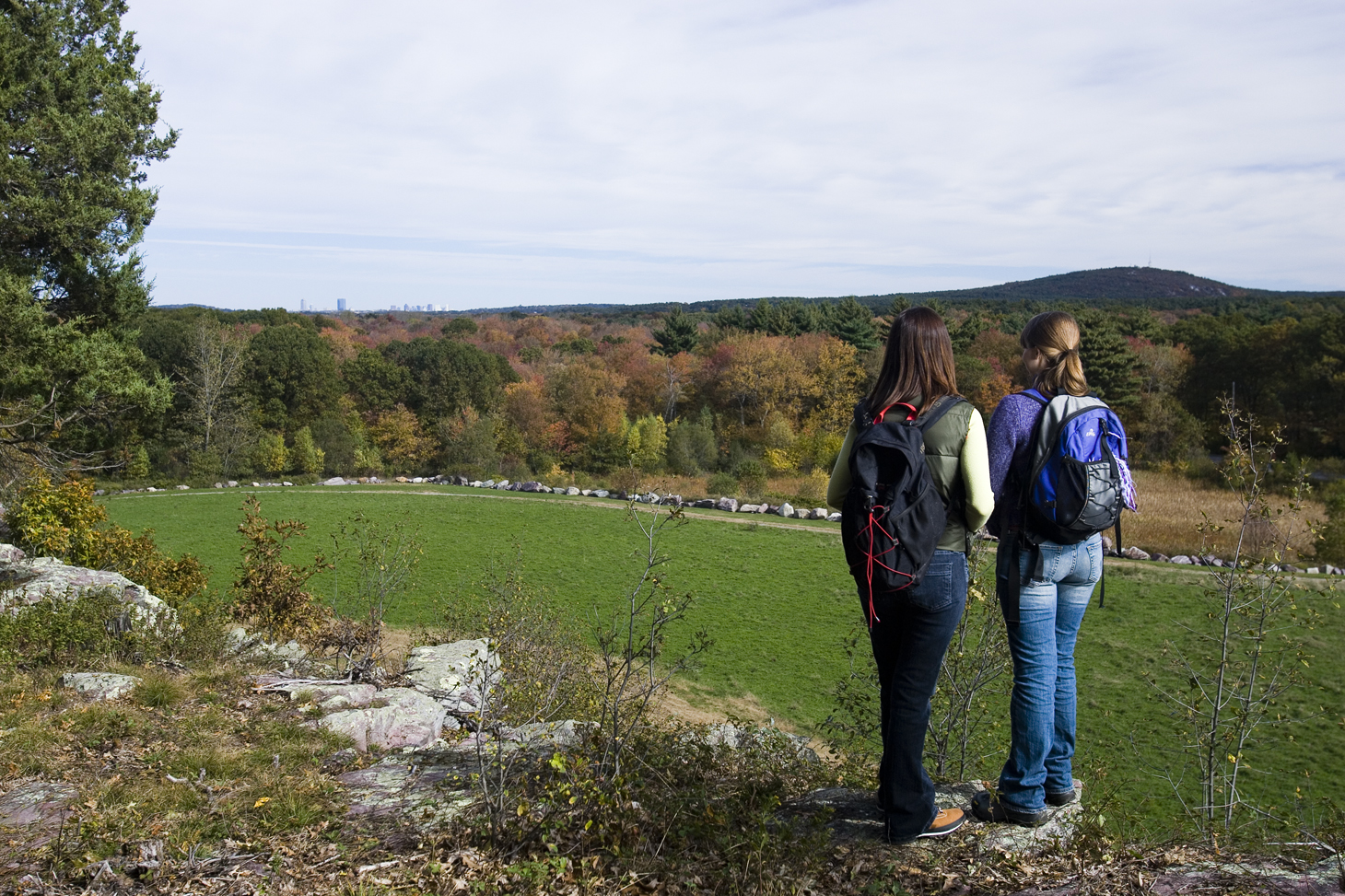
Photo by Tom Kates.
At the far end of an industrial park—eleven miles north of Gillette Stadium—you’ll discover a protected refuge that offers views of the Blue Hills and access to the Neponset River.
The 188-foot summit of this hill may be modest, but the views from the top are grand, taking in nearby Great Blue Hill and stretching to the distant Boston skyline beyond. A short, easy ascent up a former cart path leads to the top, while another, flat trail reaches the banks of the Neponset River. Here you’ll find a small launch site for canoes and kayaks to start your river trip here or simply take a break during a day of paddling.
Hawk watchers are drawn here by the variety of hawks riding thermal drafts between the Blue Hills and the Neponset River Valley. Signal Hill also offers a glimpse into the region’s post-Pleistocene history, having served as a seasonal home for the first peoples who settled what would become the Neponset River Valley as the last glacier retreated.
Rocky Woods, Medfield
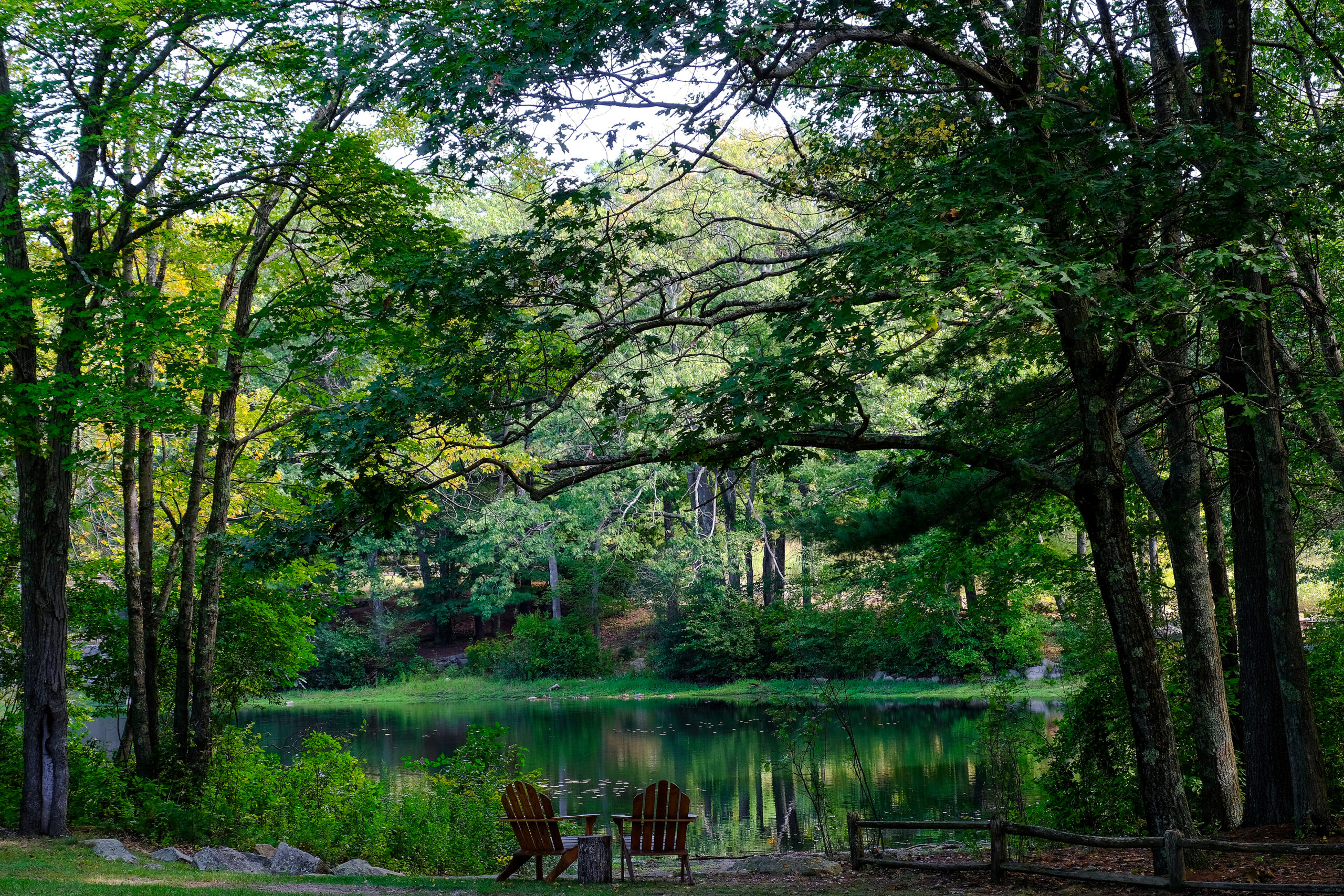
Photo by Mark Gardner.
Eleven miles west of Gillette Stadium, enjoy expansive views from atop Cedar Hill, amble along a trail to a former quarry site, or explore five ponds that dot this woody landscape.
With six and a half miles of trails winding through 491 acres of varied terrain, Rocky Woods is a year-round destination for outdoor lovers and a prized habitat for songbirds, bullfrogs, beavers, and painted turtles.
Rocky Woods has one foot within the Charles River watershed and the other foot within the drainage of the Neponset River. The area’s high water table forms wetlands throughout the reservation, and these varied habitats attract songbirds, particularly the towhee, with its “drink-your-tea” call.
Governor Oliver Ames Estate, Easton
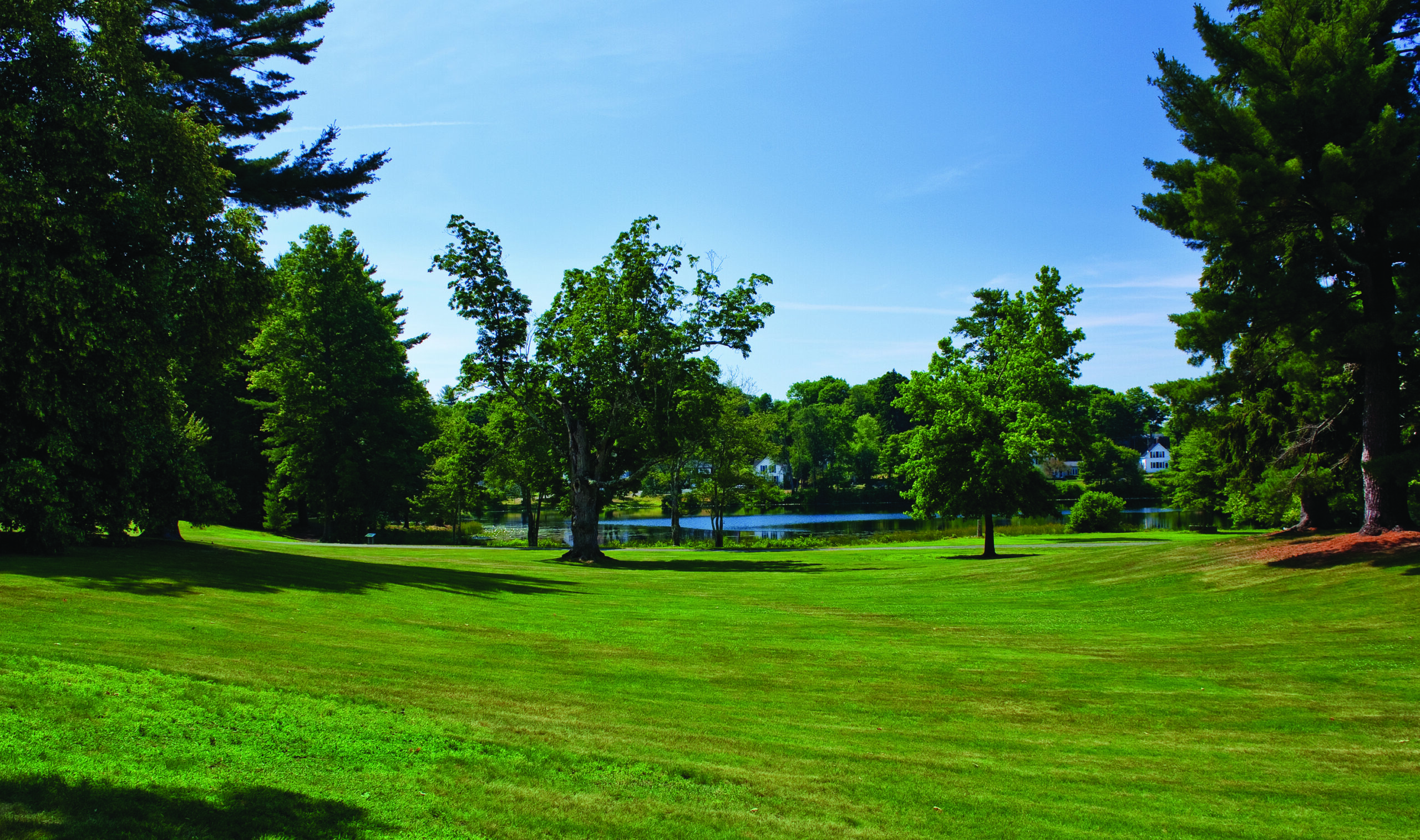
Explore a piece of Massachusetts history on this bucolic estate 13 miles east of Gillette Stadium, first settled by Oliver Ames, a Governor of the Commonwealth in the early 19th century.
The historic 42-acre Governor Oliver Ames Estate features rolling hills, meadows, ponds, a host of lovely and mature trees, and remnants of a storied and prominent past—all within walking distance of the North Easton National Historic District. Walk the gentle hills, picnic with friends, or enjoy quiet time among the trees that dot the property.
The Ames family helped shape Easton since the early 19th century. Their national renown was built on a shovel manufacturing company that supplied tools for the Civil War and the construction of the Transcontinental Railroad, and the property was home to Oliver Ames, who served as governor from 1887 to 1890. The family’s influence is still in evidence; among other things, their name graces the town library and high school as well as the imposing Oakes Ames Memorial Hall.