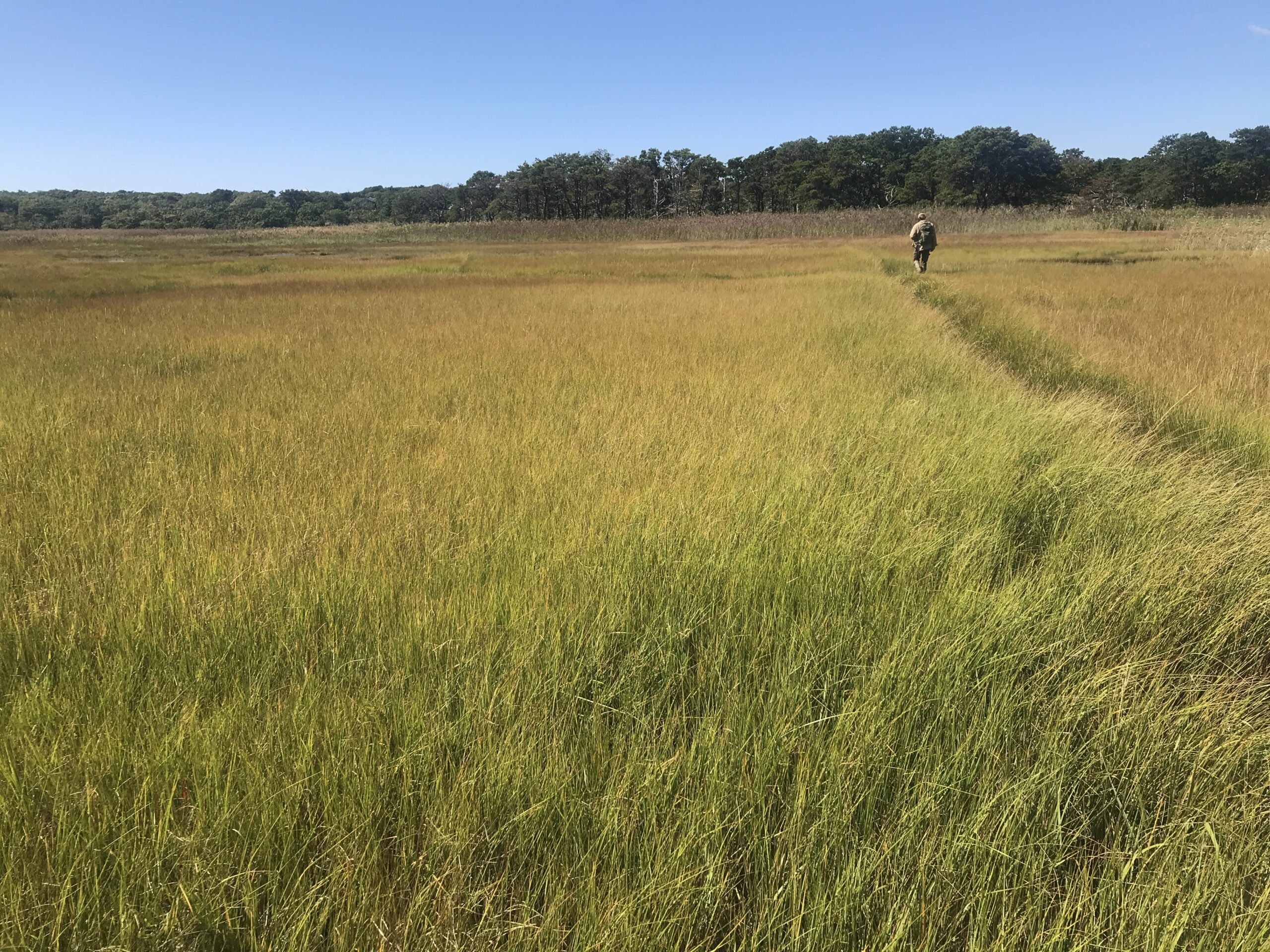
Massachusetts supports 47,000 acres of salt marsh. While this may sound like a high acreage, salt marsh is a limited resource with oversized value that is under threat due to sea level rise and habitat degradation.
Overview
Coastal marshes support biodiversity and critical wildlife habitat, sequester atmospheric carbon, and serve as a barrier against storm surge and sea-level rise. However, historical agricultural practices dating back to the colonial era have compromised marsh health. Ditches that were dug through the marsh have altered its natural hydrology, leaving it increasingly vulnerable to flooding and sea-level rise. The loss of salt marsh habitat in Massachusetts would have tremendous impacts on biodiversity and climate resiliency of coastal communities in the region. According to state models, marshes along the Massachusetts coastline are transitioning to tidal flats between 2050 and 2100 unless work is done to both restore this habitat and make it resilient to change.
The Trustees’ coastal program works to protect and restore vulnerable salt marsh habitat on Trustees properties and beyond. This effort includes our work in restoring the Great Marsh—the largest salt marsh in New England and the largest restoration project in the 133-year history of our organization—to restoring smaller salt marsh habitats along the coastline, especially where these efforts serve as a catalyst for partnerships and developing new restoration techniques.
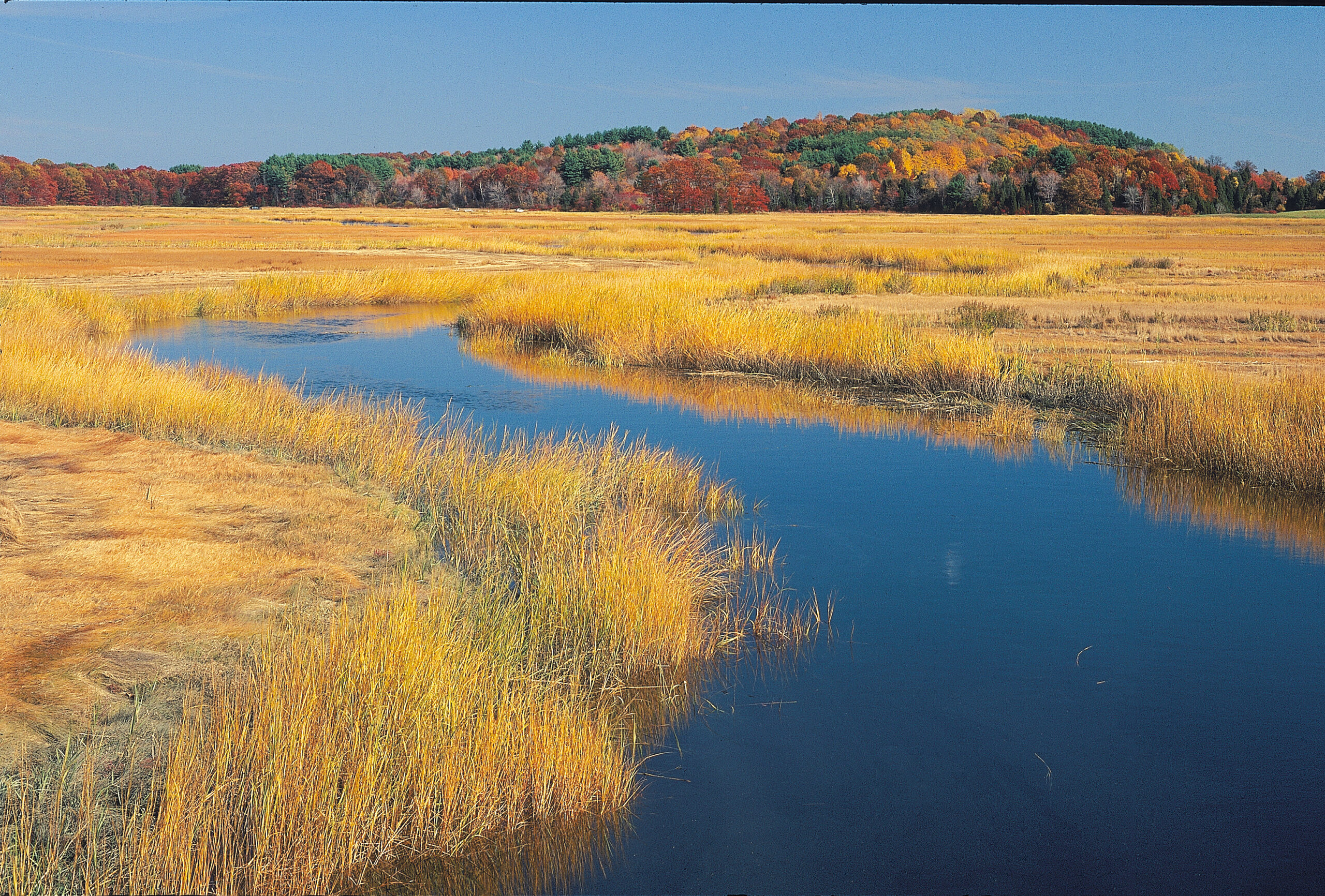
A view of the Great Marsh in Newbury.
Our Strategy
As a salt marsh owner in collaboration with partner organizations along the Massachusetts coast, The Trustees has been able to launch a coastal restoration initiative and scale up our projects to the landscape-level that seeks to address salt marsh restoration and resiliency through various innovative and nature-based techniques. These techniques aim to restore salt marsh habitat with the goal of making this habitat more resilient to rising sea levels by:
- restoring natural hydrology and remediating historical ditching created for agricultural and mosquito control,
- assessing and removing barriers to tidal flow,
- preventing further salt marsh erosion and encouraging regrowth, and
- increasing overall system resilience to sea level rise (SLR).
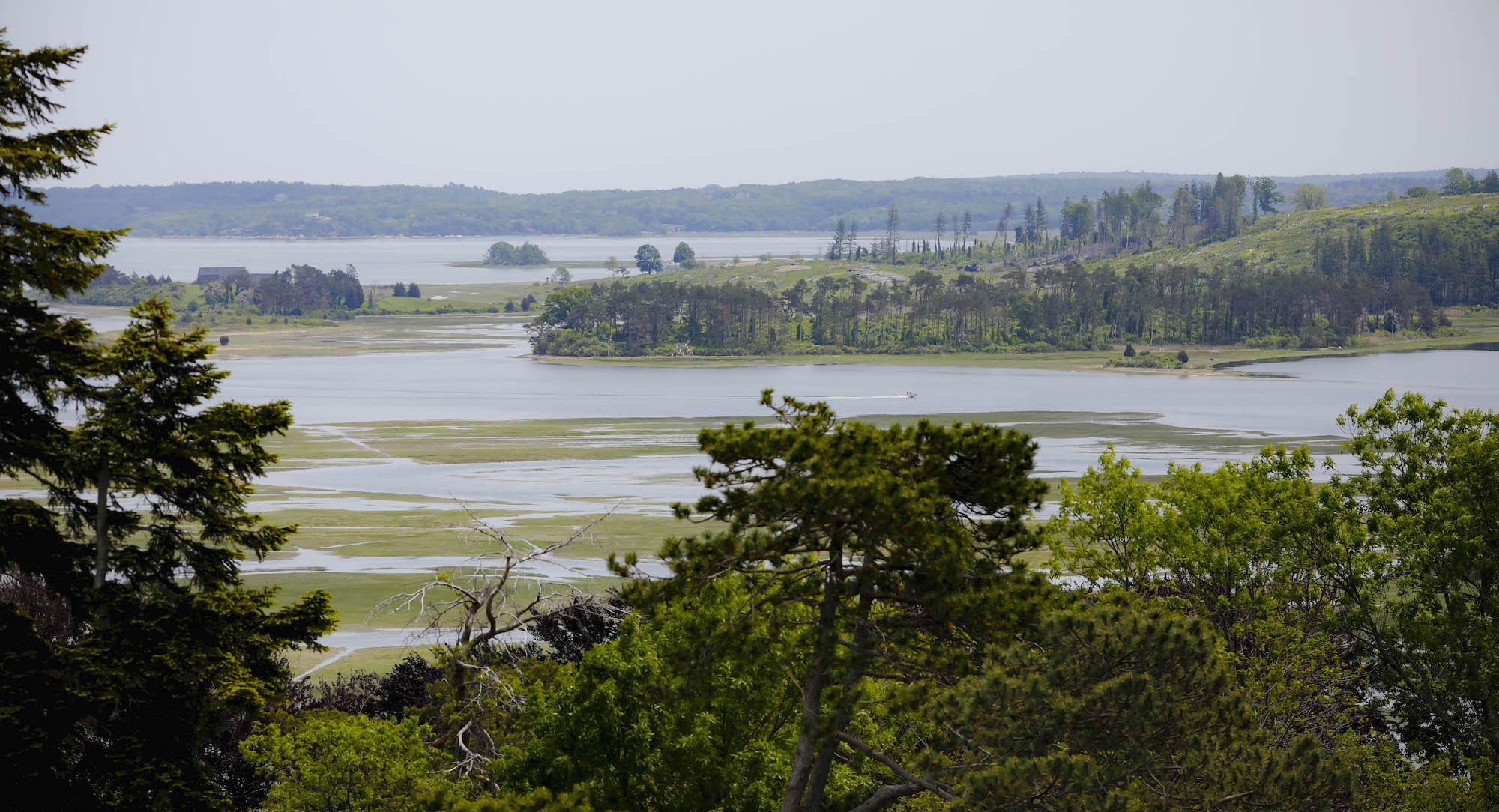
A view of the Great Marsh from Castle Hill on the Crane Estate in Ipswich.
To restore natural and beneficial hydrology to salt marshes, The Trustees and other practitioners are employing three key techniques: ditch remediation, runneling, and microtopography. These three nature-based techniques are frequently used together to 1) remediate ditches in the marsh from historic agricultural and mosquito control impacts (ditch remediation); 2) channelize tidal flow with shallow swales in areas experiencing waterlogging (runneling); and 3) beneficially reuse excavated material to increase heterogeneity on the marsh platform and provide higher-elevation habitat for species of concern, like the saltmarsh sparrow – a species in steep decline and now protected as a listed species in Massachusetts. The overall aim of applying these techniques is to stop marsh subsidence through restoring beneficial hydrology that allows the marsh to keep pace with SLR.
In addition to addressing hydrologic impacts on the surface of the marsh with the three-techniques described above, removing barriers to tidal flow is imperative to optimize restoration benefits to upstream marsh areas. Both historic and recent infrastructure within the marsh are impeding tidal flow, both restricting flow and salinity to upstream areas of marsh and/or increasing the residency time of water on the marsh at outgoing tides. These impacts are often seen around structures like culverts, roads, remains of old causeways, embankments, and others. To determine the impact of a barrier on the surrounding marsh, hydraulic and hydrologic assessments are carried out, which model current impacts and future predicted impacts under sea level rise scenarios as they relate to erosion and flooding around the site. Assessments then inform designs and permitting to replace, remove, or otherwise address the barriers to tidal flow.
The Trustees are also committed to exploring innovative restoration techniques for salt marsh habitat, including pilots that address marsh edge erosion, invasive species (e.g. Phragmites), and re-establish native vegetation in areas of die-off. Together with extensive monitoring for groundwater, vegetation, and wildlife response to restoration activities, these approaches ensure we’re addressing various active stressors to salt marsh simultaneously. A holistic approach to marsh restoration increases our ability to more effectively bolster the resilience of our marshes to sea level rise.