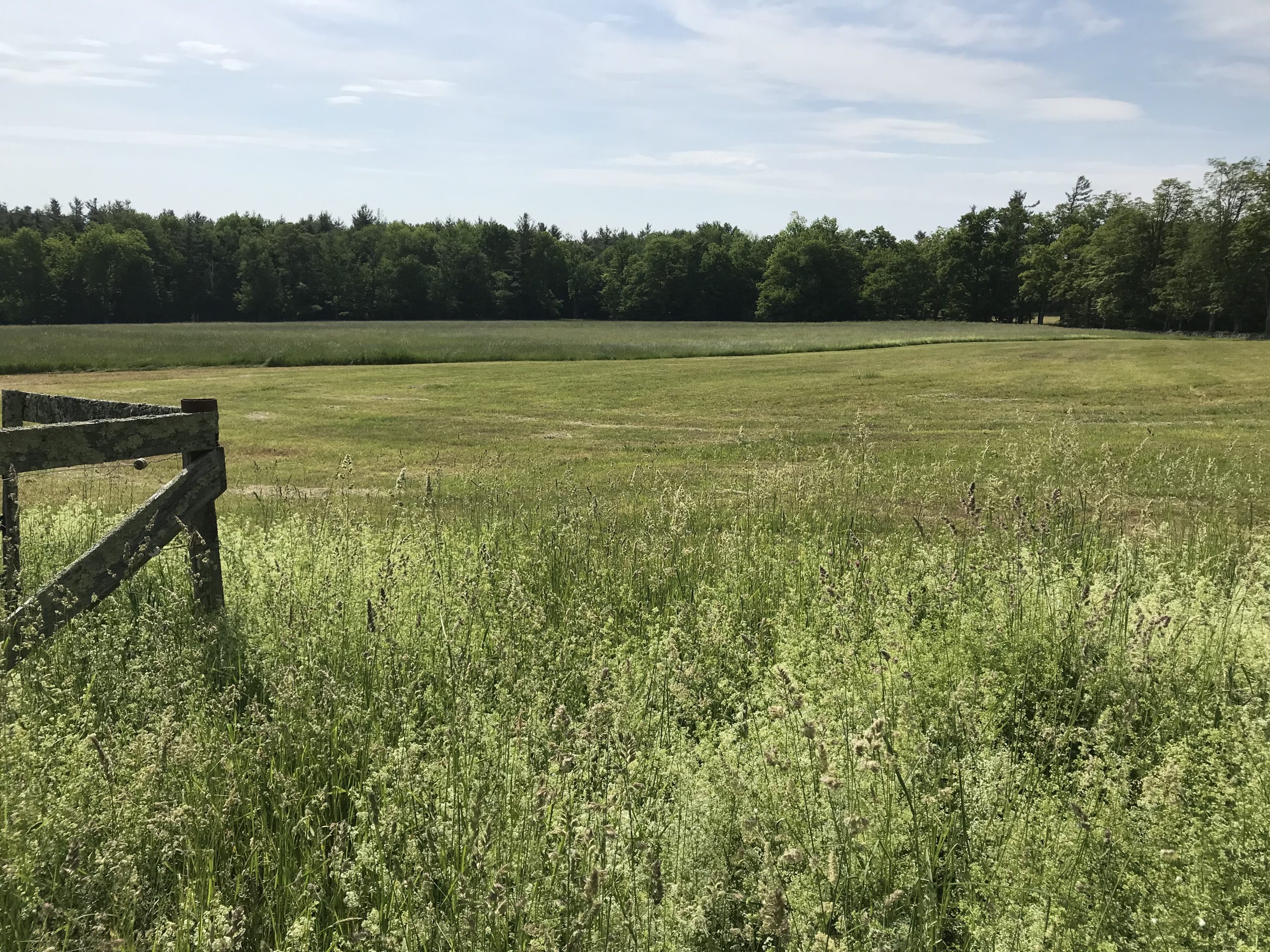
Grassland Habitat at the Bryant Homestead in Cummington.
Overview
Grassland habitats, including meadows, hayfields, pastures, and more, support a diversity of species such as wildflowers, pollinators, and grassland dependent birds. More than 70 grassland-dependent species have been identified by the Massachusetts State Wildlife Action Plan as Species of Greatest Conservation Need – a demonstration of the significance of grassland habitats to the biodiversity of the Commonwealth. Historically, the product of natural and anthropogenic disturbances including beaver flooding and fire, many of our grasslands in Massachusetts (and much of New England) now depend on anthropogenic disturbance such as prescribed fire, grazing of domestic animals, hay production, and periodic mowing. As a significant owner of grassland habitats across the Commonwealth, The Trustees has an opportunity to provide a rich variety of grassland habitats for Species of Greatest Conservation Need while also linking to the scenic, agricultural and cultural aspects of our properties.
Our vision is to have a diversity of grassland habitats (types and sizes) on our properties across the Commonwealth to support native diversity. To achieve this vision, we will maintain 2,000 acres of grassland habitats ranging from meadows dominated by native wildflowers to agricultural pastures and hayfields managed to support grassland dependent species and domestic livestock. The Trustees will maintain 1,000 acres (of the 2,000 acres) to directly support grassland-dependent birds (e.g. bobolink) which are species of conservation concern. In addition to the 2,000 acres, habitat for some grassland species can occur along edges of crop fields and other more intensively managed agricultural and cultural habitats. While certain grasslands have disproportionate significance for particular species (such as rare plants or grassland birds), it is the collection and extent of the habitat collectively that allows The Trustees to have impact at the state level.
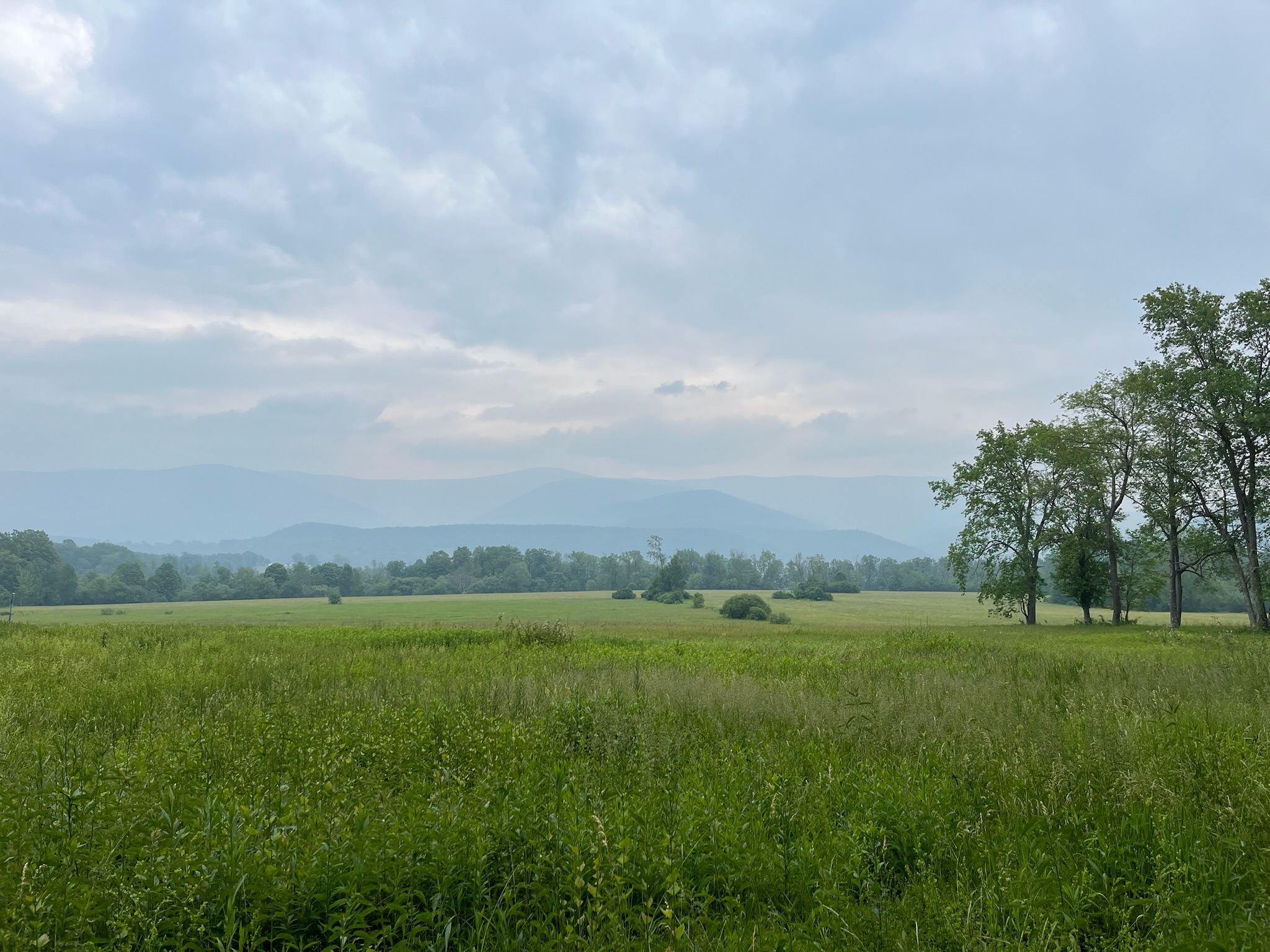
View at Field Farm in Williamstown while monitoring grassland birds.
Securing Habitat for Grassland Dependent Birds
Unfortunately, many grassland dependent bird species (such as bobolinks, meadowlarks, savannah sparrows) are declining as remaining grasslands revert to forest, are developed, are planted in row crops (corn and vegetables) or used to provide hay, invaded by non-native invasive plants, or are too small to support the birds’ habitat requirements.
To help counter this trend of declining grassland habitats suitable for species of greatest conservation need, The Trustees will continue our careful management, restoration and improvement of grassland habitats across the state. We have reclaimed the edges of fields where trees and shrubs have encroached and cleared trees to reconnect grasslands that were historically connected making them more viable for grassland birds that require grasslands to be at least 10 acres in size with a small edge to interior ratio. We continue to monitor and evaluate both the bird populations and the plant composition and structure of the grasslands to ensure our management supports grassland birds. Grasslands are some of the most complex habitats to manage – mow too early … bad for grassland birds, don’t mow enough…trees will grow and that is bad for the open habitat, mow too late… encourage forbs over grasses, mow in later summer…turtles may be nesting! Our managers have a lot to weigh when deciding how to care for these habitats.
Our agroecology program is actively working with our own livestock team at Appleton Farms to trial ways of supporting both livestock and grassland birds. This has included carefully timing when and how a field is grazed, monitoring of grassland bird nests and use of the fields, and more.
Our long-term management of these grasslands requires careful monitoring and adaptive management to ensure habitat conditions remain stable. We are at a critical point where altering the composition of grasses and wildflowers in our landscapes will help buffer them against shifting climatic conditions, including prolonged droughts. To do this, we can alter our mowing strategies and seed native grasses into fields dominated by non-native pasture grasses. This has been shown to work at several locations within New England, and we are poised to try it on several fields that have seen declines in grassland bird populations even while following best practices for management of grassland bird fields.
In addition to our own direct management of grasslands, we also lease fields to local farmers with restrictions that will support grassland birds. Grassland-dependent bird species such as bobolinks nest within fields of at least 10 acres that are dominated by grasses (primarily European pasture grasses). For this reason, hayfields of at least 10 acres which aim to support these birds, should not be hayed between May 15 – July 15 or later, to allow the birds to successfully nest and fledge their young. While this can come at a cost to farmers who lose out on a potential cut of hay during this time, this practice is essential for populations of grassland nesting birds. The Trustees actively collaborates with farmers to promote our grasslands as productive systems for both agriculture and wildlife by requiring that the fields are not cut during grassland bird nesting.
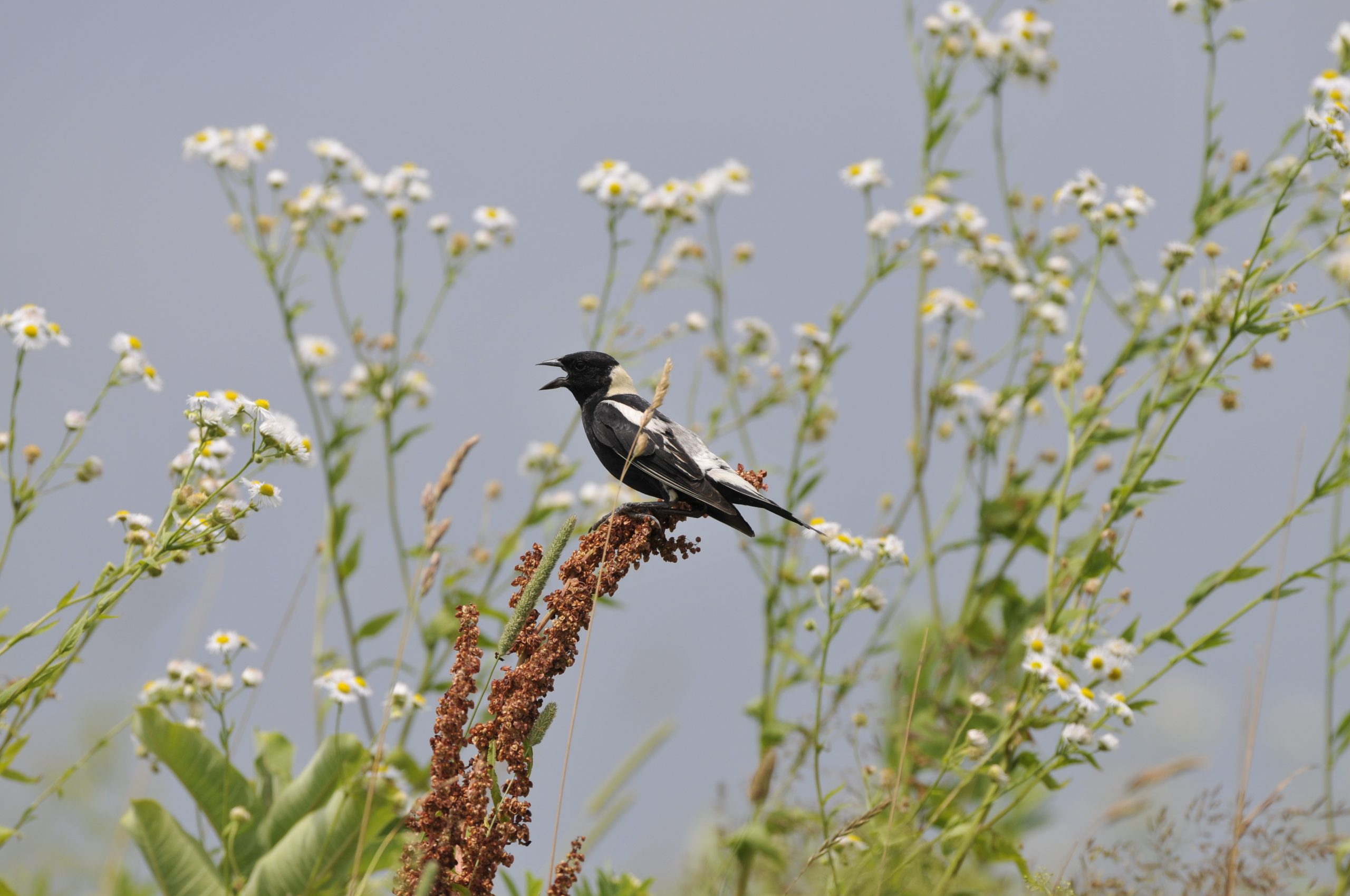
A male Bobolink perches in grassland habitat.
Securing Habitat for Native Plants and Pollinators
Grassland habitats, including old fields, wet meadows, and more, provide important areas for a variety of plants and animals, including a vast diversity of pollinators. As with the fields being managed as grassland bird habitat, these grasslands require periodic mowing to keep them open and free of invasive species. These habitats can be less than an acre to larger habitats of tens of acres or more and can be dominated by forbs as well as native and non-native grass species. Unlike fields dominated by pasture grasses, these habitats may include open patches, native bunch grasses, and native low shrubs (such as willows, meadowsweet, and dogwoods). The diversity of wildflowers provides floral, host plant, and nesting site diversity for the many species of pollinators (butterflies, bees, etc.) and other wildlife.
The Trustees manages many fields to support biodiversity of pollinators, native plants and wildlife through regular monitoring, mowing, and invasive plant control. These habitats also support scenic and cultural aspects of our properties. In addition to the fields, we are also looking at ways to incorporate components of these habitats at the edges of active farm fields and other heavy use areas to support native species.
At World’s End, we recently completed a pollinator enhancement project which planted a more diverse mix of native wildflowers and grasses within the open fields. In the coming years, we will continue to monitor these areas for native plant growth, to manage any invasive or undesirable species, and to document the change in species using the fields.
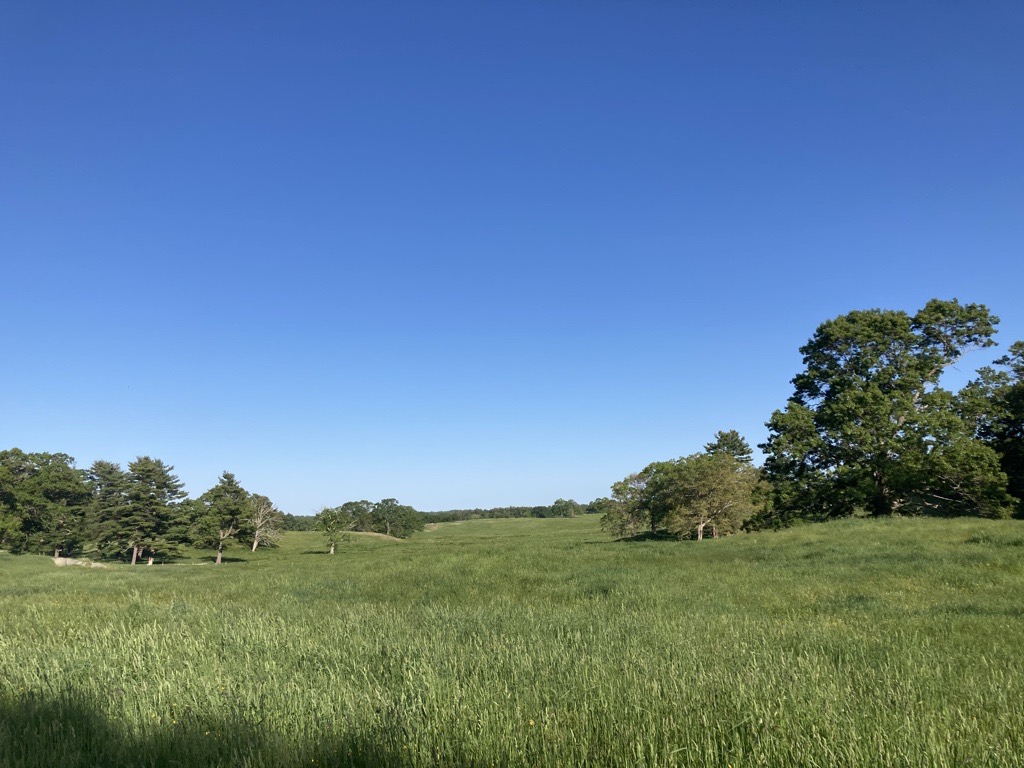
A grassland field in Appleton Farms in Ipswich.
Our Strategy
Ensuring that our grassland habitats, whether focused on grassland dependent birds, pollinators, and/or livestock, are managed well, we need to have clear goals and means to evaluate success. Our ecology team keeps close watch of the fields to ensure that the habitat characteristics meet our goals – the ratio of grass to wildflowers, populations of key species, etc. Our stewardship and ecology teams then work together to maintain or improve the grasslands through a variety of activities including:
- Controlling invasive plants that can degrade the grassland
- Mowing to enhance grasses and wildflowers and prevent shrubs and trees from taking over
- Engaging volunteers to annually monitor for grassland breeding birds and nest boxes
- Augmenting with native species when necessary, including transitioning fields to support more native grasses and wildflowers