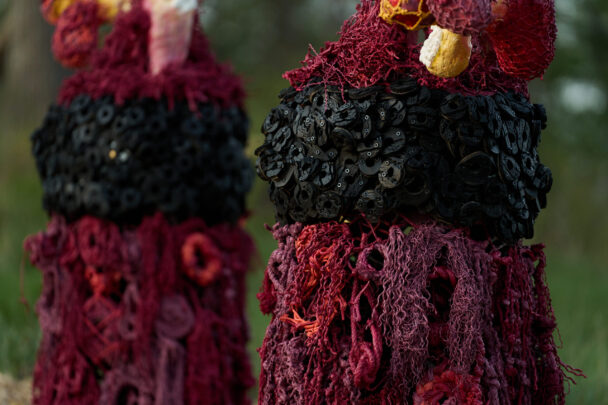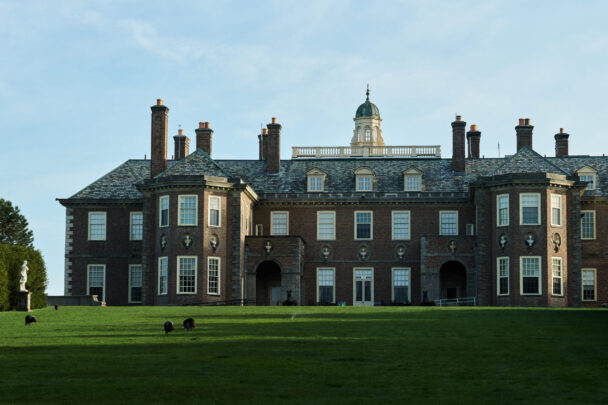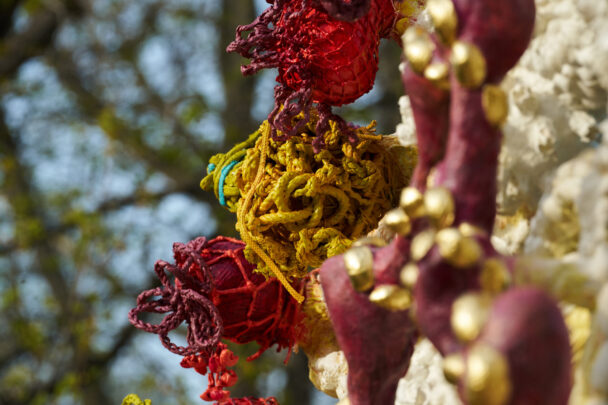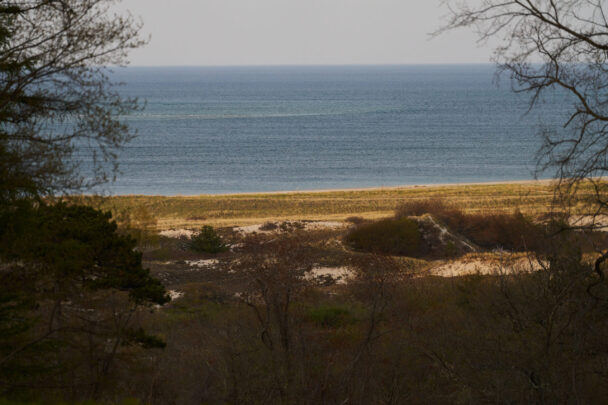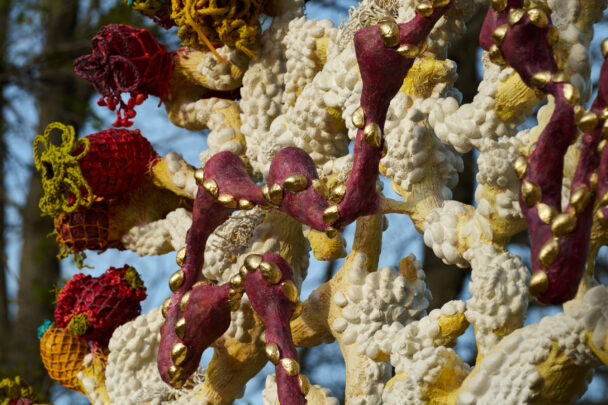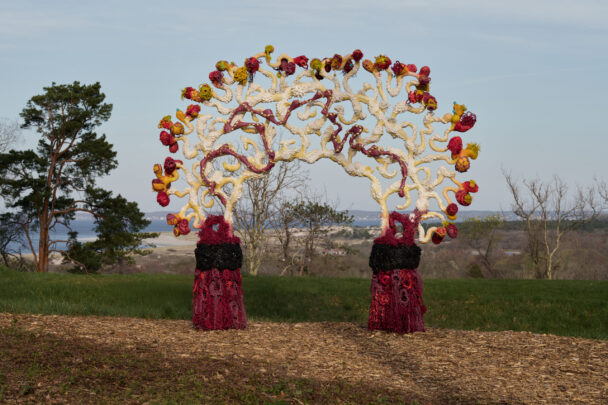
Second Wind rises at Castle Hill on the Crane Estate as a poetic response to the Great Marsh—an ancient sweep of tidal creeks and mudflats edged with drifting sea wrack. These ribbons of seaweed and marine plants are cast ashore by the tides and help nourish coastal ecosystems. The Great Marsh is now increasingly strained by climate change and encroaching development. Set within this shifting threshold where land and sea constantly negotiate their borders, the sculpture unfurls in a fan-shaped sweep of steel lacework that echoes the marsh’s restless winds and waters. Gold-leafed lines glint like tidal channels traced by the sun, while scallop shell and sea-wrack motifs draw together the marsh’s ecology and the Estate’s architectural memory. Composed of reclaimed materials transformed into something luminous and permeable, Second Wind becomes a quiet portal—an invitation to linger, to sense the pulsing interdependence of place, and to reckon with our shared responsibility for the fragile, enduring life of the Great Marsh.
Visit Castle HillAbout the Artist
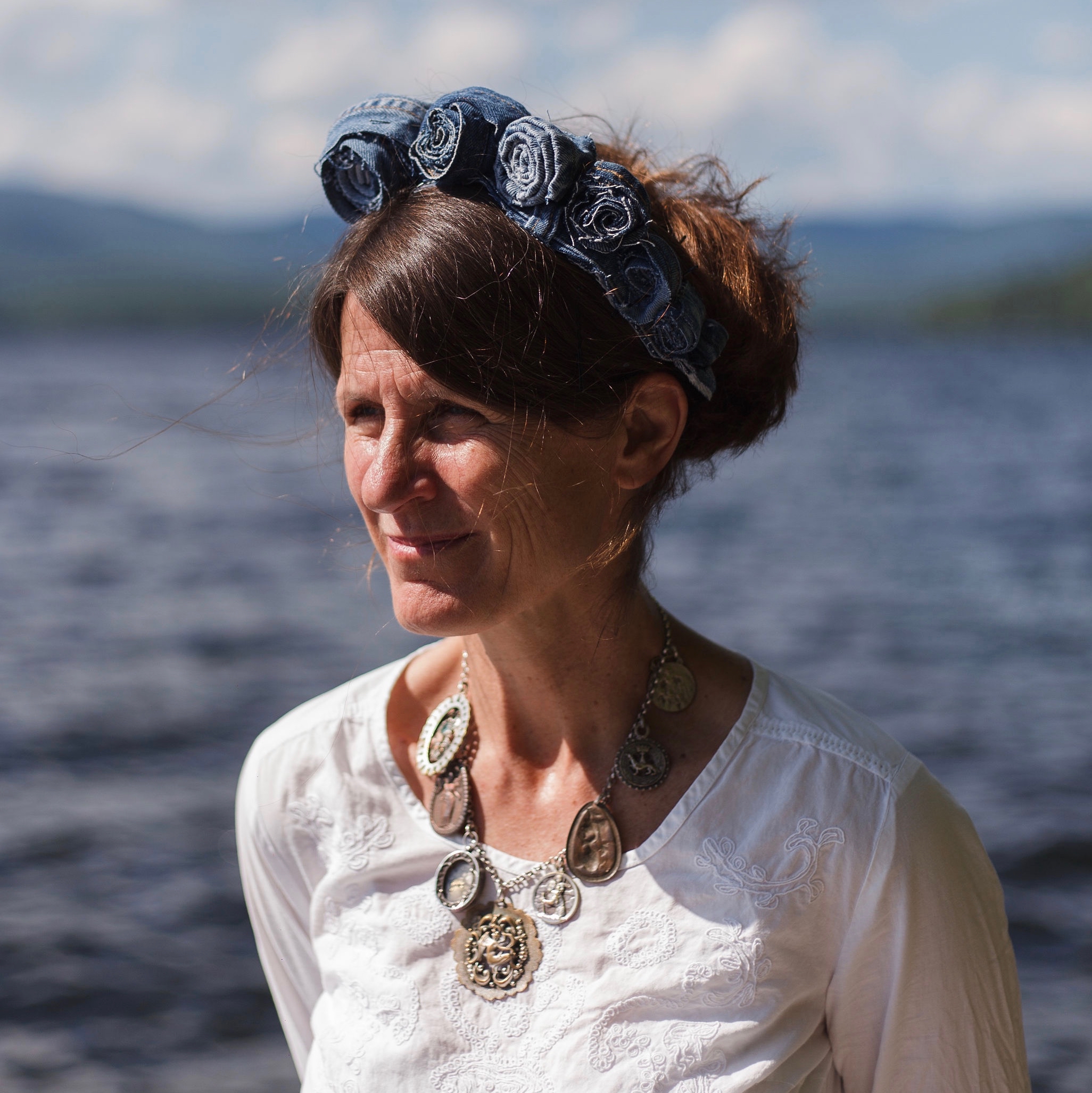
Pamela “Posey” Moulton (Franco-American, b.1961) fosters an ethos of generosity and creative exchange through both her artmaking and her deep connection to community collaborations. Working across continents, from her home base in Maine to communities in Albania and India, Moulton builds imaginative, participatory worlds that invite collective creation. Her large-scale, tactile installations transform everyday materials into immersive environments that inspire curiosity, connection, and environmental awareness. Moulton’s practice thrives at the intersection of sculpture, performance, and social engagement.
Central to Moulton’s work is her transformation of abandoned fishing equipment salvaged from Maine’s coastlines, commonly called “ghost gear.” By cleaning, dyeing, and weaving these materials into intricate sculptural forms, she turns marine debris into works of striking beauty. The resulting pieces evoke coral, plankton, or neural networks and are visual metaphors for interconnection and renewal. Her work is at once playful and profound, urging viewers to imagine sustainable futures through shared creativity.
For Moulton, sustainability extends beyond materials. It encompasses process, participation, and care for place. Her works are shaped by the people and environments that inspire them: the rhythm of the tides, the labor of those who fish in the waters, the resilience of coastal communities. Each installation is a temporal record of the hours spent salvaging, knotting, conversing, and collaborating.
More About Moulton