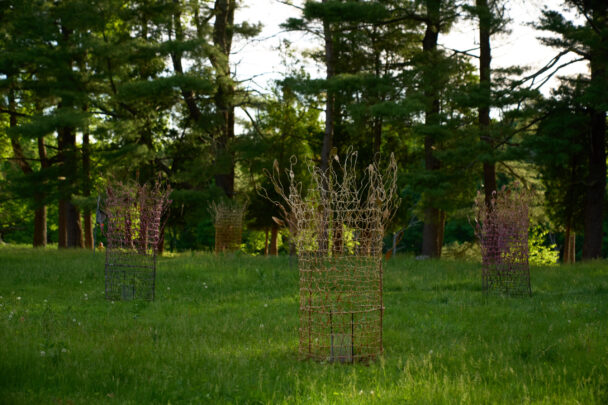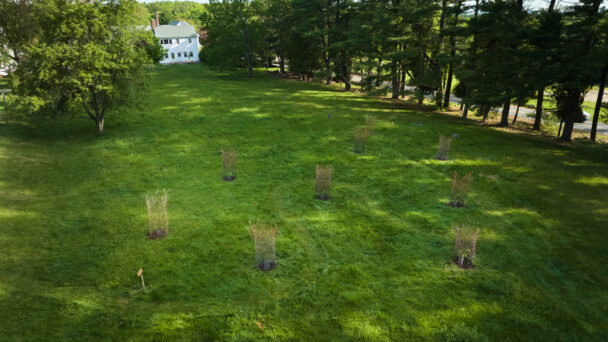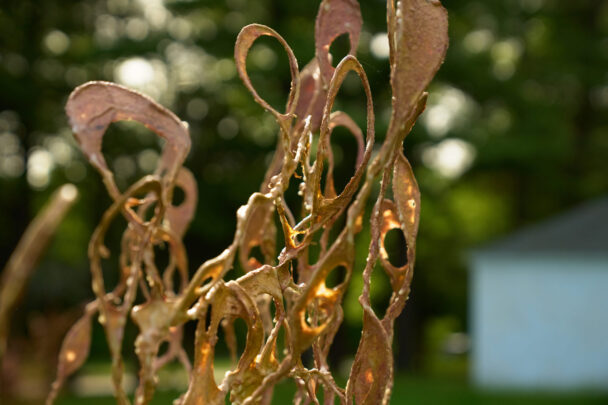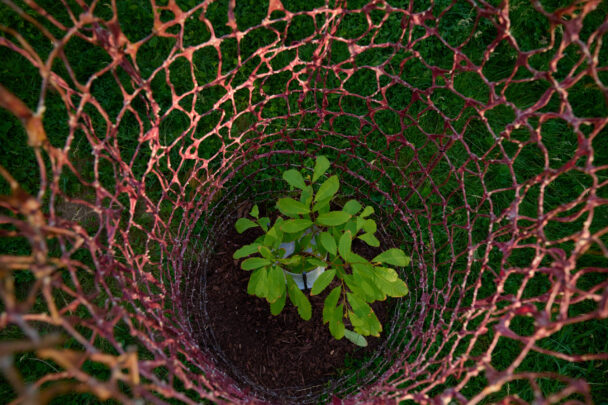
Once abundant across eastern North America, wild American chestnut trees are now extremely rare, their populations devastated by a century-old blight. Moose Hill Farm and the adjacent wooden landscape are home to several of these elder beings. For Seaside Chestnuts, Babcock plants eleven chestnut trees—American, Chinese, and hybrid varieties provided by The American Chestnut Foundation. Each tree is encircled by seaweed-like forms made from farm fencing and locally gathered papermaking plants from this very landscape. These forms protect the young saplings as they grow and reference that this Trustees site lies along a projected future coastline if polar ice caps fully melt. These sculptural “protectors” reference coastal ecologies and, for Babcock, echo the resilience and regenerative potential embodied by hybrid species.
Visit Moose Hill FarmAbout the Artist
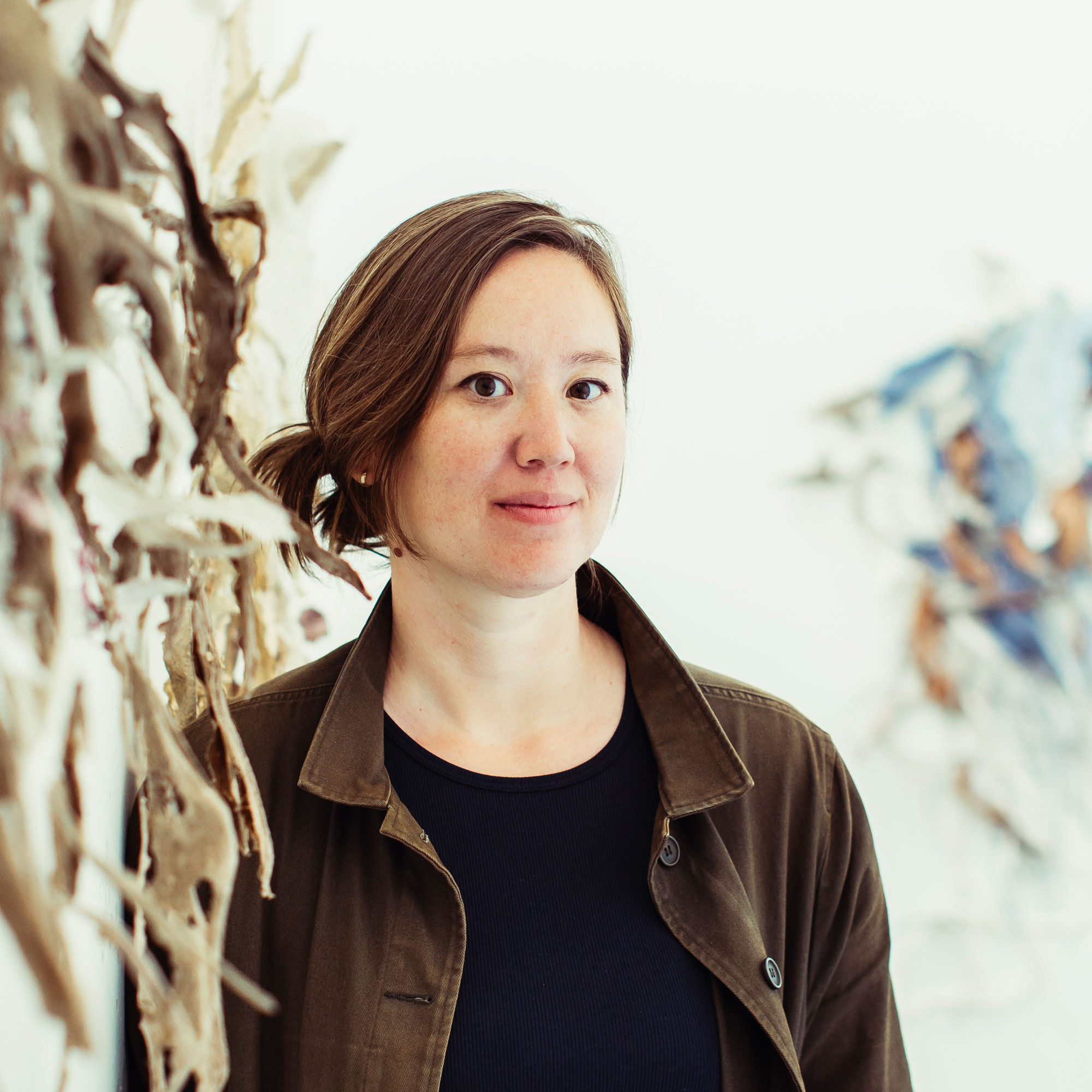
May Babcock (Taiwanese American) is an interdisciplinary artist whose work engages papermaking as a relational practice shaped by land, water, and time. Rooted in close observation of specific environments, her work begins with attentive encounters along riverbanks, shorelines, and forest edges, where plants, sediments, and fibers are gathered as carriers of place rather than raw material.
Her practice is grounded in slow, embodied processes that allow materials to guide form and meaning. Through handmade papermaking, pulp painting, and site-responsive installation, Babcock breaks down plant fibers and rebuilds them into fragile yet resilient surfaces. Color, water, and gravity play active roles in shaping each work, leaving visible traces of movement, erosion, and change. Papermaking becomes both method and metaphor—holding transformation, loss, and continuity within a single sheet.
Babcock’s work often draws connections between ecologies shaped by displacement and adaptation, finding resonance between human histories and the migration of plants across continents. Installed in space, her works remain open and porous, inviting viewers into a slower rhythm of looking and listening. Grounded in care and attentiveness, her practice positions land and water not as backdrop, but as collaborators in the ongoing act of making.
More on Babcock
In-kind support for Seaside Chestnuts is provided by The American Chestnut Foundation.