What does it mean to steward a landscape responsibly and successfully?
At The Trustees, the answer to this question goes beyond landscape alone. It encompasses a human element—our own willingness to not only listen to and learn from nature itself to know what it needs, but to work with partners and surrounding communities toward a shared goal of protecting it. Successful land stewardship supports both local landscapes and the human communities in and around them.
Looking at Trustees stewardship efforts over the past year offers a glimpse into the organization’s commitment to responsible care for its landscapes. Staff teams and partners work together to apply diverse techniques—many of them nature-based—to steward Trustees special places and surrounding communities thoughtfully. Highlights of recent work span a variety of environments, such as barrens habitats, salt marsh, cultural landscapes, and forests of all sizes.
Barrens, Hardly “Barren”
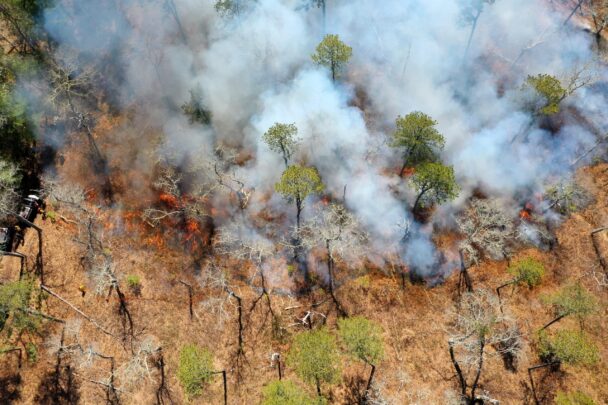
Barrens habitats currently under The Trustees’ purview, including several on the North Shore, Cape Cod, and Martha’s Vineyard, differ from other landscapes in their special need for fire in order to thrive. Care for barrens begins with tree thinning and mowing followed, occasionally, by prescribed burns to clear the barrens understory. This then encourages native plants to grow and improves Pitch Pine tree reproduction by allowing pinecones to open and spread their seeds. Barrens landscapes are also unique for the special role they play in supporting local biodiversity, supporting 40% of the state’s listed rare species.
“One of my favorite outcomes of [barrens stewardship] work is seeing how the plants and animals respond to our management,” says Russell Hopping, Director of Coastal Ecology at The Trustees. “We regularly find plant species, not previously observed, growing after a mowing or a fire as they emerge from the seedbank. These plants were just waiting for the next disturbance to reemerge and keep the lineage going.”
This past year, The Trustees completed four prescribed fires (covering nearly 120 acres) at four barrens sites in southeast MA and Martha’s Vineyard, working in partnership with state and local agencies. Stewardship of this kind not only supports barrens ecosystems, but benefits surrounding communities by reducing wildfire risk and providing opportunities for local fire departments to train.
“I really enjoy hearing visitors that may have been skeptical of our plans expressing their delight after the work has been implemented,” says Hopping. “Some skeptics have actually confessed later that these restored areas have become their favorite places.”
In addition to stewarding these landscapes, Hopping and his team have worked to involve and educate local communities in their efforts, participating in partnerships to spread the word about their work, presenting forums in communities where barrens occur, and sharing project information through on-site educational panels in multiple languages. Successful stewardship is, in this sense, two-fold: it engages both the local ecosystem and the surrounding human communities.
Marsh Magic
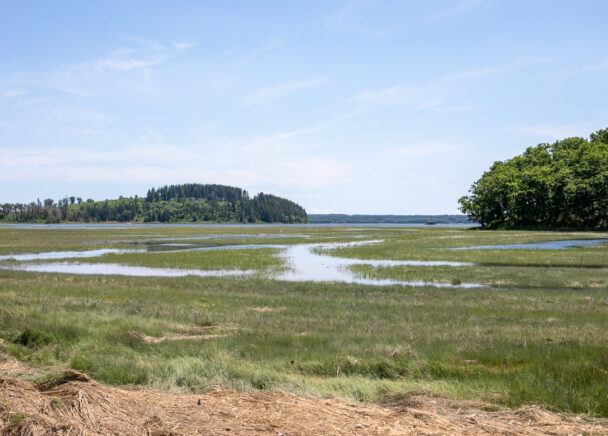
The 25,500-acre Great Marsh is New England’s longest contiguous stretch of salt marsh, running from Gloucester to Salisbury. The Trustees protects a significant portion of the Great Marsh and works to support this unique and important landscape and its nearby communities through responsible stewardship. Critical to local wildlife populations, some of whom are already threatened by habitat loss, the Great Marsh also shields local communities from the effects of climate change by storing carbon and protecting against storm surges.
“The marsh needs our help,” says Hopping, “since it is highly vulnerable to loss from sea level rise. Hundreds of years of ditching for agriculture and mosquito control have altered the marshes’ hydrology, resulting in vast areas of the marsh subsiding and eroding. While human alteration is currently driving its vulnerability, human intervention is also part of the solution.”
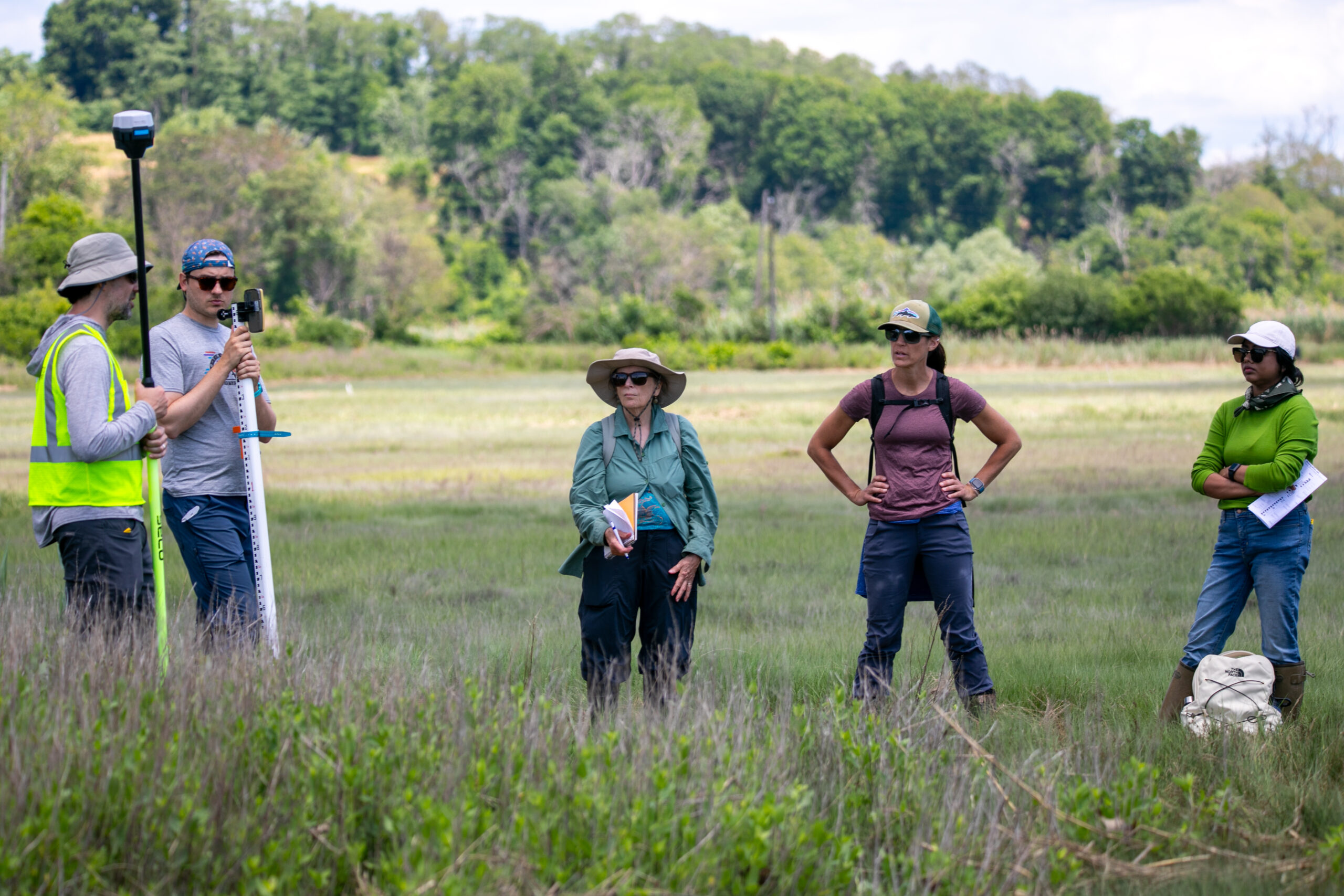
This past year, the Trustees Coastal Ecology team initiated the third phase of the organization’s Great Marsh restoration project, which includes a goal of restoring more than 1,000 marsh acres in Ipswich and Essex. Working with partners to provide nature-based solutions on the ground, volunteers and Trustees employees filled in legacy agricultural ditches with salt hay grass from the marsh itself, and constructed runnels (shallow ditches) to restore natural drainage.
“These techniques work together,” Hopping explains, “to restore the natural hydrology that allows the grasses to prosper and trap sediment, allowing the marsh to build in elevation and keep pace with sea level rise.” By restoring the marsh using its own natural elements, The Trustees not only supports the landscape itself, but involves and protects surrounding communities. Local partnerships have been key in completing this work. “Partners…work together for a shared goal,” says Hopping. “We support each other and share data, designs, and problem solving.”
Battling BLD
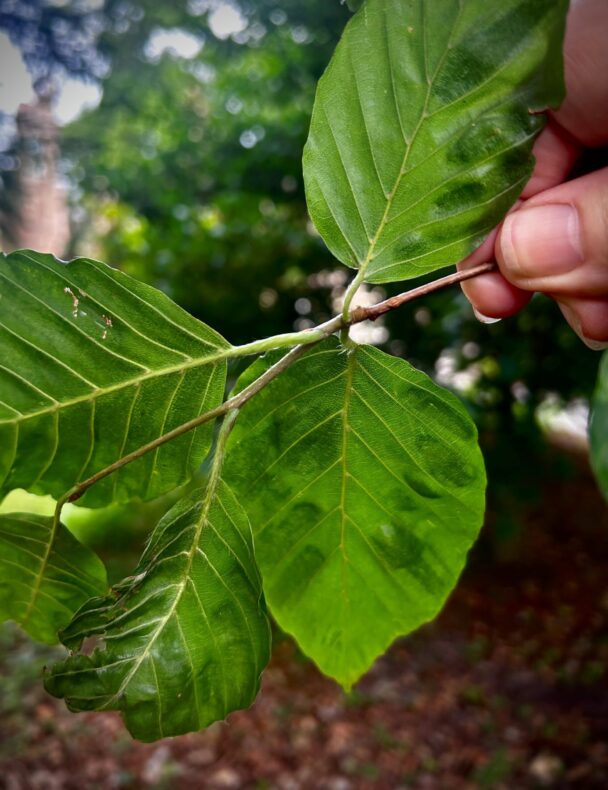
Partnerships have similarly provided a key ingredient to the organization’s efforts to combat Beech Leaf Disease (BLD)—a malady caused by a nematode that feeds on incipient beech tree leaves while in their buds, resulting in damaged leaves, reduced photosynthesis, and eventual starvation—on its properties.
“My favorite thing [about stewardship work],” says Joann Vieira, the Trustees Director of Horticulture, “is digging deep into science and collaborating with arborists, site teams, extension agents, and other public garden professionals across the northeast to learn from them and share our approach.”
To help protect beech trees currently under Trustees care, the organization’s horticulturists, stewardship partners, and consulting specialist arborist completed comprehensive inspections and soil testing for 81 specimen trees across 14 properties this past year, implementing nature-based solutions where possible to strengthen the trees’ natural immunity to the disease.
“Two chemical treatments [for BLD] are currently in use in the arboriculture industry,” Vieira notes, “but are not practical to use on landscape or forest scale. We deepen our commitment to supporting these important organisms using horticultural best practices like limiting foot traffic in rootzones, mitigating nutrient and pH deficiencies and applying specific nutrient drenches which help to stimulate the trees’ own defense system, applying well-rotted compost in light layers where organic matter is low, and retaining leaves and chips from pruning under the canopy.”
By stewarding beech trees using natural techniques—some of which are already available in these habitats—The Trustees works to foster biodiversity, which in turn supports surrounding landscapes and communities. The work goes beyond the trees and landscapes themselves to positively influence everything around them. Visitors are likewise engaged in the work being done in the Trustees’ efforts to battle BLD, prompting stimulating questions and conversations with staff and the consulting arborist.
“Beech trees are deeply intertwined in complex relationships with everything around them, both above and below the ground,” says Vieira, expressing a sentiment that might be applied to The Trustees’ land stewardship work as a whole. “For every interaction we have with a tree—whether finding relief in its shade or benefiting from the way it redirects the wind—there are thousands of other organisms interacting simultaneously, in their own way, for their own purpose and most often unseen, with the same tree. That, in itself, is miraculous.”