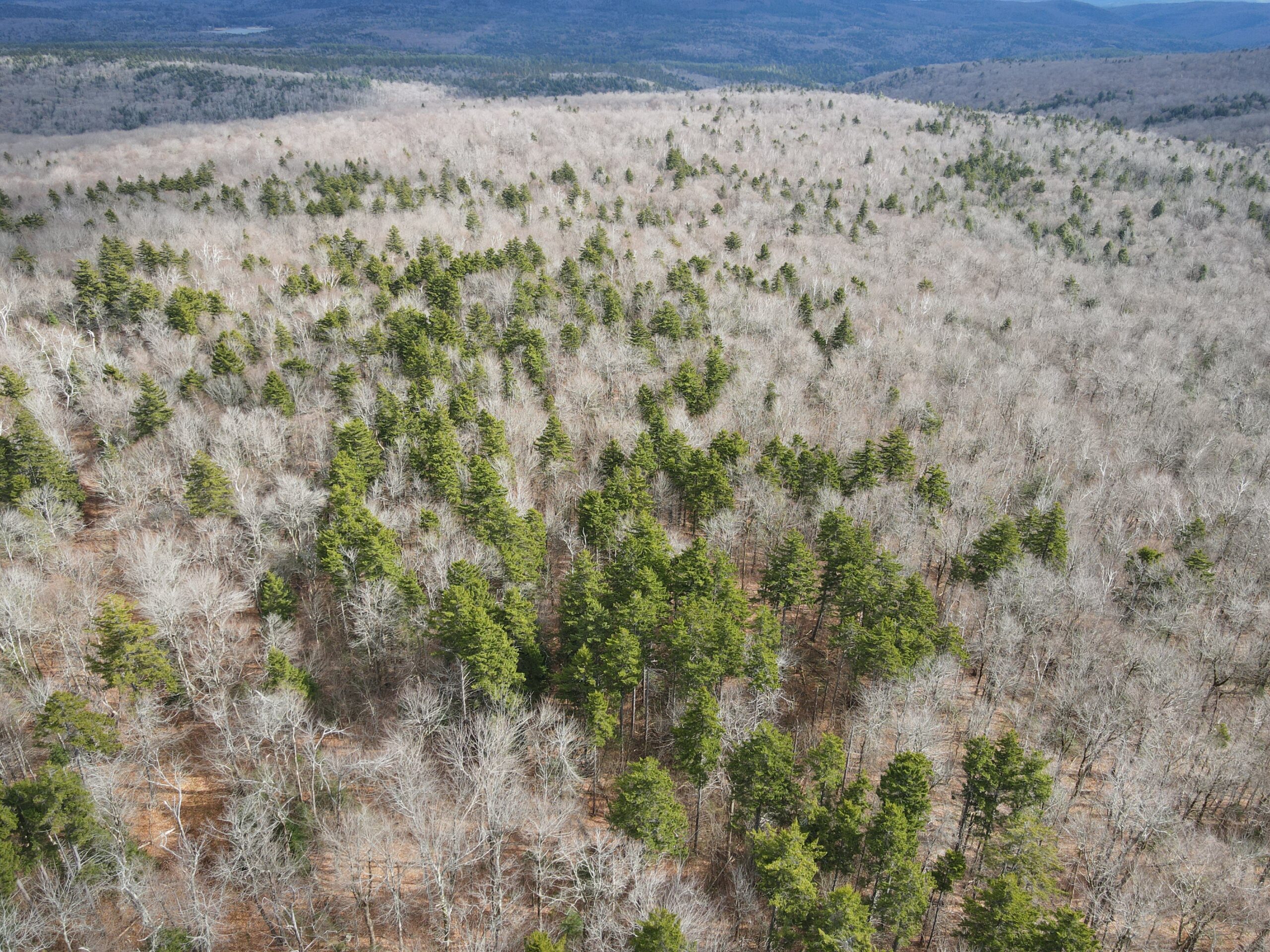
2025 saw unprecedented strides forward for climate resilience work at The Trustees, particularly in forest stewardship, coastal resilience and protection work, and decarbonization efforts. Using nature- and science-based solutions to increase climate resiliency, these efforts, as well as those from previous years, have begun to bear fruit—healing local landscapes, strengthening communities, and bolstering climate hope throughout the state.
There has never been a more urgent need for climate resilience work across the Commonwealth. As Decarbonization Project Manager Amy Dorfman notes, “Climate change is happening. Reducing our emissions is like taking our foot off the gas, and carbon sequestration is like stepping on the brake. We can slow down and lessen the impacts of climate change.”
In 2025, Trustees staff, volunteers, and partners came together in the following bold new ways to rise to this challenge of our time.
Forests for the Future
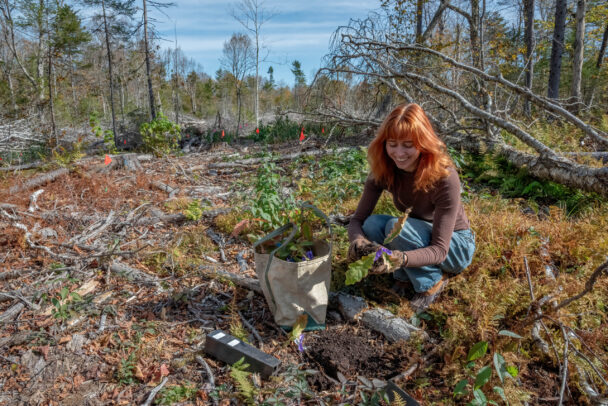
Notchview, the Trustees’ popular cross-country ski and snowshoe center in the Berkshires, boasts more than 3,100 acres of dense forests and scenic grasslands. But the forest at Notchview primarily comprises tree species—such as red spruce and balsam fir—that are predicted to decline in Massachusetts as the climate warms, placing local forest ecosystems at risk. Native hardwood trees like red oak and hickory, however, are projected to adapt well, throughout New England—a fact not lost on the Notchview climate resilience team. Seeking solutions that can support the forest into the future, Trustees Natural Resources staff and nearly 40 volunteers and TerraCorps Service Members planted approximately 1,500 southern hardwood tree seedlings which will then provide for the next generation of trees at Notchview.
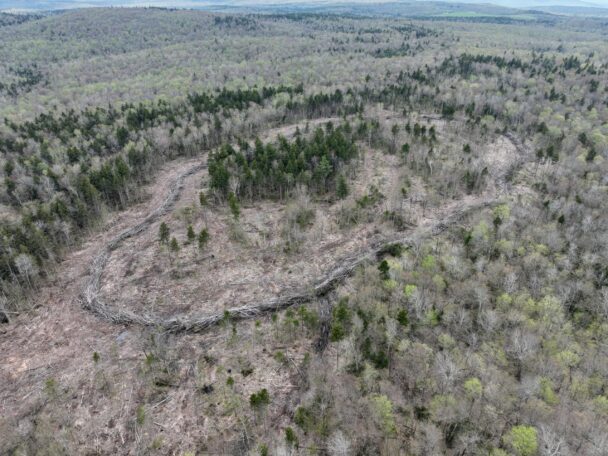
This initiative to encourage species that are better able to adapt to the changing climate conditions first required the creation of a slashwall—a barrier made of cut trees and their branches—in order to keep deer from feasting on the tender saplings. Created last year, the slashwall has already begun to yield significant results. Climate Resilience Project Manager Kate Conlin notes, “In just one growing season (pre-planting!), the conditions inside the slashwall and outside are noticeably different, with natural regeneration occurring inside and lacking outside.” In coming years, staff and volunteers will continue to monitor the regeneration in hopes that they will build resilience into the Notchview forest.
As part of the For Everyone, Forever strategic plan, The Trustees is also launching a new Forests for the Future initiative, intended to increase forest resilience to climate change statewide and protecting carbon stores and biodiversity on our more than 18,000 acres of forestland. Most recently, The Trustees announced—with Kestrel Land Trust—the permanent protection of more than 2,000 acres of forest in Pelham and Belchertown as part of this initiative (see Land Conservation).
Advancing Coastal Resilience
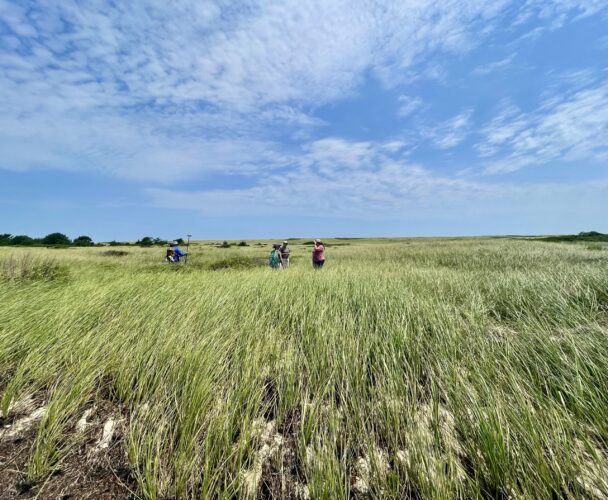
New England faces a more accelerated rate of sea level rise than anywhere else in the world, threatening coastal towns and habitats. The Trustees’ nature-based solutions, designed and implemented to help build climate resilience and protect local communities, were expanded in 2025. In the Great Marsh Project, staff and volunteers completed a third year of nature-based treatment on 273 acres of salt marsh (Phase II of the project) and acquired all necessary permits to begin Phase III.
In partnership with various local organizations and landowners, The Trustees also completed feasibility studies and preliminary designs for salt marsh restoration and barrier beach resilience on the Islands, including the barrier beach system at Coskata-Coatue Wildlife Refuge (Nantucket) and more than 200 acres of salt marsh within Cape Poge and Poucha Pond on Chappaquiddick Island (Martha’s Vineyard).
“Nature is resilient and ever-changing, and it can also be our greatest teacher,” says Vice President of Natural Resources Cynthia Dittbrenner. “The Trustees is learning to work with nature to increase the resilience of our ecosystems to climate change. At Coskata-Coatue Wildlife Refuge, for example, instead of building a wall, we are building a marsh.”
Plans for the coming year include expanded efforts in the Great Marsh to restore an additional 1,000 acres—the largest restoration project in Trustees history—and the organization will apply $200,000 in funding to advance designs and permitting for restoration and resilience work on Chappaquiddick and Coskata-Coatue.
Bringing Decarbonization Home
Recent progress has also been made on internal decarbonization efforts, bringing climate resilience work “home” to Trustees buildings and facilities more than ever before. “2025 brought our building decarbonization initiatives from plans into action,” notes Dorfman. “With the goal of significantly reducing our greenhouse gas emissions by 2030, we are aiming to complete energy retrofits on roughly 30 buildings a year for the next five years. Once completed, this will reduce our internal emissions by roughly 50%.”
In Fiscal Year 2025, The Trustees launched twelve energy retrofits and completed three—installing electric HVAC systems and improving building insulation and air sealing. The initiative expanded to 21 buildings as 2025 progressed, with six being fully completed by the end of the year. This work, completed in partnership with PowerOptions—a New England-based nonprofit that assists other nonprofits and municipalities with energy procurement and decarbonization efforts—and partially supported by rebates and incentives from the Mass Save program, is the beginning of a larger effort to bring decarbonization to scale across the organization.
Within the next year, The Trustees plans to onboard its full utility portfolio into a digital tracking system facilitated by PowerOptions, in order to accurately report decarbonization success to date, with a larger goal of reducing operational emissions by 50% by 2030 and fully eliminating them by 2050.
Leading By Example
Climate resilience and decarbonization are central to The Trustees’ For Everyone, Forever strategic plan, supporting and aligning with each of its five pillars. Thoughtful, future-focused stewardship of forests and coastal landscapes using nature- and science-based solutions reflects an elevation of stewardship and inspires climate hope, while decarbonization work similarly inspires hope by serving as an organizational example of what is possible.
Both ventures welcome and connect people to Trustees spaces and each other by increasing accessibility to beloved landscapes and protecting communities, and by bolstering a sense of shared purpose through connection to nature. Finally, they evolve the organization to create more energy-efficient (and energizing) spaces for staff and visitors to enjoy. Now more than ever, The Trustees is poised to set an example for organizations and individuals following in this work.
“With our broad-reaching and diverse member base, our sphere of influence is large—meaning we have an opportunity and responsibility to lead by example,” says Dorfman. “Every bit of emissions we can reduce is one step closer to a low carbon future for us all.”
Header image: Aerial photography supported by Lighthawk Conservation Flying