Overview
The term “barrens” describes a suite of natural community types that occur in areas where water can be scarce for at least part of the year. Specific habitats can range from heathlands and grasslands with well drained sandy soils to closed canopy pitch pine and oak forests on deep outwash soils or drumlins. A majority of these habitats are considered Priority Habitat Types under the Massachusetts State Wildlife Action Plan (SWAP). Poor soil quality makes it difficult for plants not adapted to these conditions to grow, but these environments counter the desolate imagery the name “barren” provokes. Many species have adapted to—and thrive in—these harsh environments. Plants like scrub oak, pitch pine, blueberry, and specialized shrubs, grasses, and herbs dominate the landscape. In addition, many southern species are at their northern limit in Massachusetts barrens and this trend is expected to continue as our climate warms and southern species expand north. Indeed, due to the many factors that define barrens, these habitats are disproportionate to more common habitats in their importance for maintaining biodiversity.
Approximately 42% of species listed under the Massachusetts Endangered Species Act (MESA) and other Species of Greatest Conservation Need identified in the State Wildlife Action Plan (SWAP) rely on barrens habitat for food sources or habitat in which to reproduce. Given the ecological significance of barrens, The Trustees has prioritized their protection, restoration and management.
Our Strategy
The Trustees have protected and restored barrens at Long Point Wildlife Refuge (West Tisbury), Wasque Reservation (Edgartown), Menemsha Hills (Chilmark), Appleton Farms Grass Rides (Hamilton), Weir Hill (North Andover), Charles W. Ward Reservation (Andover), Lyman Reserve (Wareham), and Mashpee River Reservation (Mashpee). Collectively, The Trustees manages over 800 acres of barrens habitat across these eight properties from the Northshore to Cape Cod and the Islands.
Depending on the barren’s habitat goals and species supported at each property, a range of management activities occurs. The primary management activities consist of thinning the tree canopy, mowing, prescribed fire, and selective use of herbicide (e.g., exotic invasive plants).
Canopy thinning is the first activity conducted within barrens where the restoration goal is to create a shrub and wildflower dominated understory. This process accelerates natural canopy reduction from disturbance and stimulates the understory that was shaded out by canopy trees – generally the canopy is thinned to 25%-50% cover.
Mowing is used to reset understory conditions and prevents the habitat succeeding back into forest. Mowing frequency is dependent upon habitat goals, where low shrubs and herbaceous plants are desired, mowing is more frequent to prevent taller shrubs outcompeting lower vegetation.
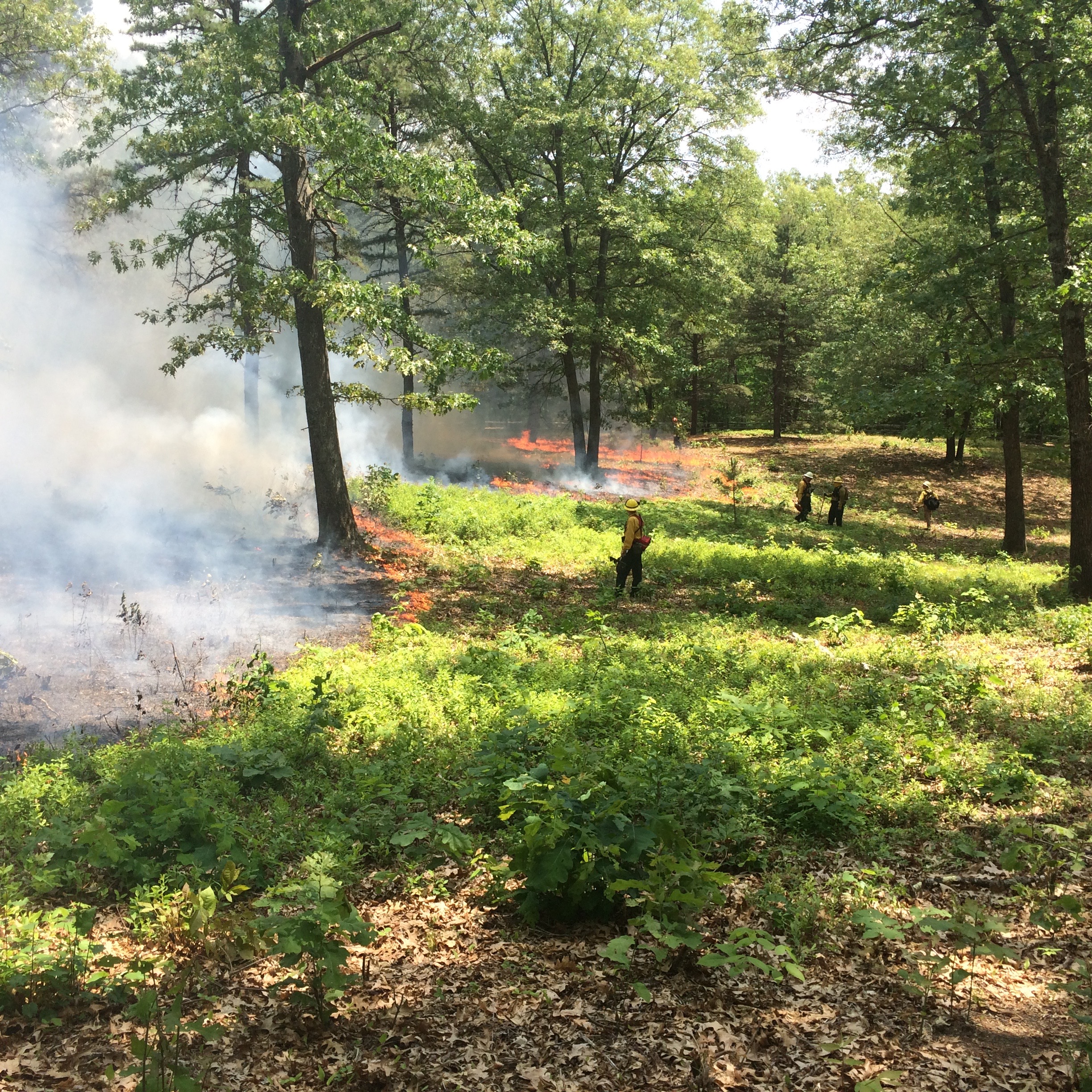
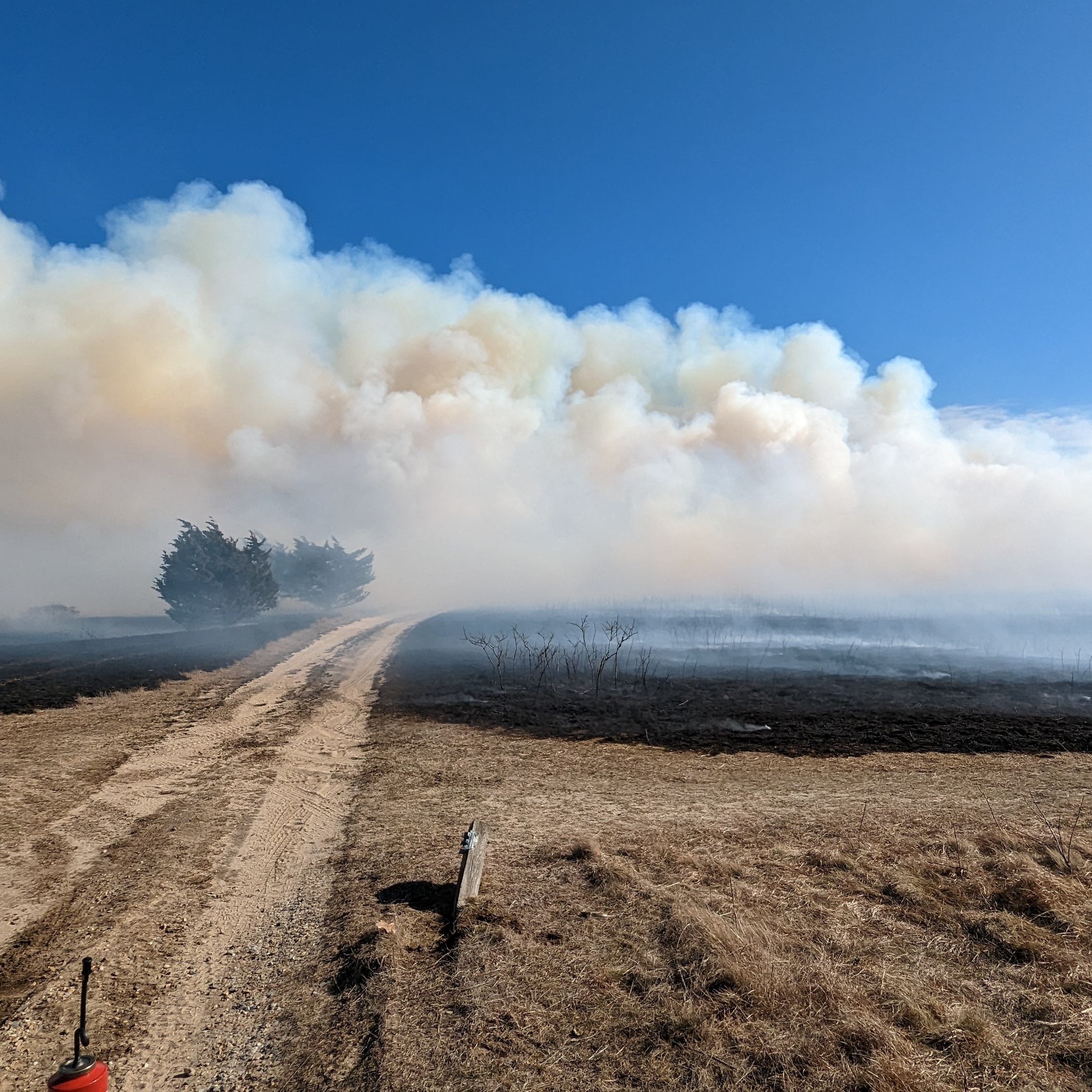
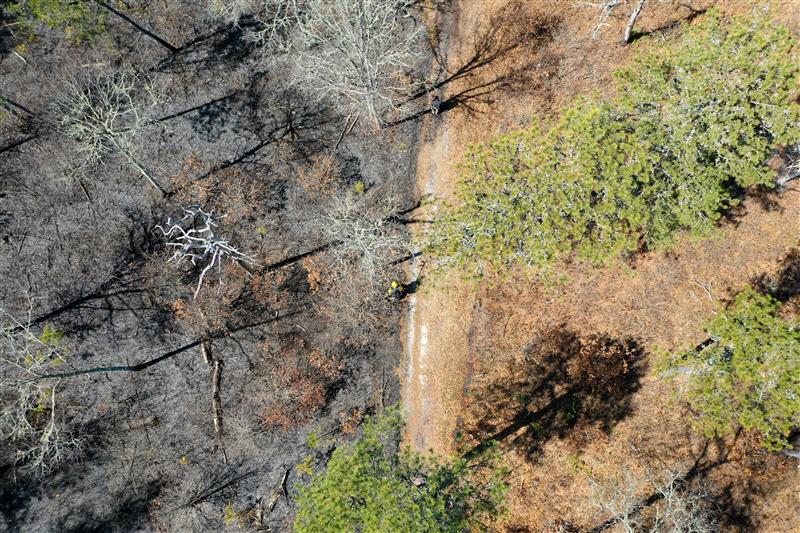
Prescribed fire replicates the primary natural disturbance that has historically maintained barrens. Similar to mowing, it is used to prevent barrens succeeding to forest. However, unlike mowing prescribed fire is critical for burning off built-up organic material to maintain dry, nutrient poor soils, and killing species, like white pine that are fire intolerant that can impact habitat quality in the barrens
Hand pulling and herbicide is used to control invasive species and native species that become too abundant and outcompete other plants and reduce habitat quality for wildlife of conservation concern. Herbicide application is carefully applied by licensed staff or contractors on a limited and as-needed basis only.
Given the ecological significance of these globally rare habitats, the work put into restoring and maintaining them is well worth the effort. Furthermore, unlike other habitats, barrens habitat is expected to remain resilient, especially to drought and increased frequency of wildfire, as climate change progresses, presenting refugia for many species during a time of rapid ecosystem upheaval.